
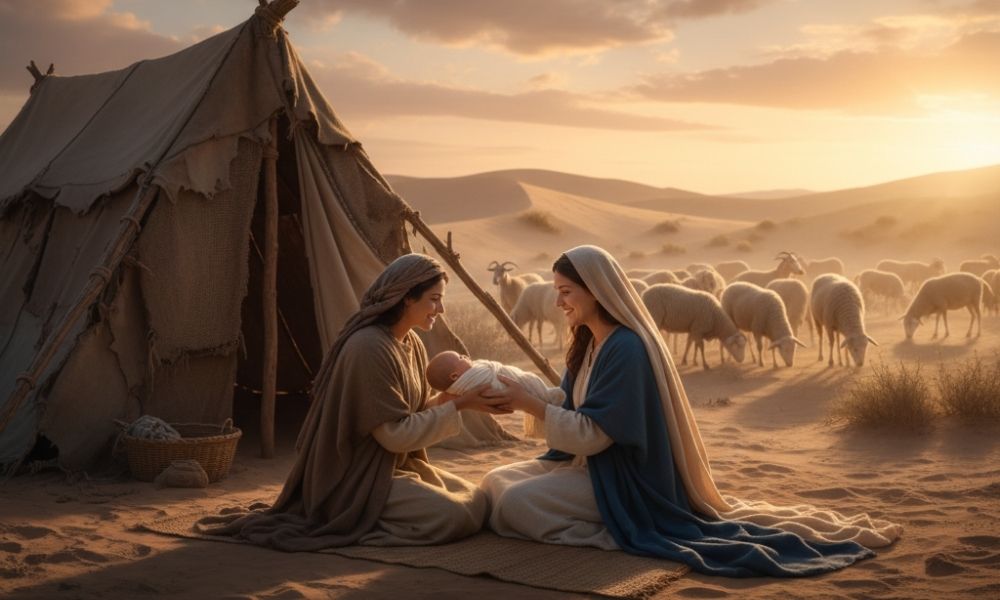
Zilpah was Leah’s handmaid and one of Jacob’s concubines. Like Bilhah, she played a crucial yet humble role in the fulfillment of God’s covenant promise to multiply Jacob’s descendants. Though her name appears only briefly in Scripture, Zilpah’s obedience and faithfulness contributed to the foundation of the twelve tribes of Israel through her sons Gad and Asher. Her story reminds us that even those with quiet or lowly positions are used by God for great purposes.
Name: Zilpah (Hebrew: Zilpāh, meaning “Trickling” or “Dropping,” possibly “Fragrance”)
Tribe/Nation: Aramean (from Haran, servant in Laban’s household)
Era: Patriarchal Period (~19th century BCE)
Master/Mistress: Leah (daughter of Laban)
Husband (by concubinage): Jacob
Children: Gad and Asher
Home: Haran → Canaan
Book: Genesis (Chapters 29–35)
Key Virtues: Obedience, humility, quiet strength
Legacy: Mother of two tribes of Israel — Gad and Asher
Symbol: Olive sprig — representing fruitfulness and peace
Name Meaning
Zilpah means “trickling” or “flowing,” suggesting gentleness and grace. Her name may also symbolize the quiet outpouring of life and blessing, reflecting her role in the household — one who served faithfully and brought forth new generations of God’s covenant people.
Lineage / Family Background
Zilpah was given to Leah by her father Laban as a maidservant when Leah married Jacob (Genesis 29:24). Like Bilhah, she was likely Aramean and part of Laban’s extended household in Haran.
- Master: Leah
- Husband: Jacob (as a concubine)
- Children: Gad and Asher
- Sister-handmaid: Bilhah (Rachel’s maid)
Major Roles / Identity
- Maidservant to Leah
- Concubine to Jacob
- Mother of two patriarchs of Israel
- Quiet servant through whom God’s covenant continued
Key Character Traits
- Obedient: Submitted to Leah’s authority and Jacob’s household order.
- Faithful: Fulfilled her duty without complaint or ambition.
- Humble: Served quietly but was used by God for lasting legacy.
- Fruitful: Her sons became heads of tribes that flourished in Israel’s history.
Main Life Events
- Given to Leah: Laban presented Zilpah to Leah upon her marriage to Jacob (Genesis 29:24).
- Leah’s Barrenness: When Leah ceased bearing children, she offered Zilpah to Jacob as a wife to increase her family’s portion (Genesis 30:9).
- Birth of Gad: Zilpah’s first son was named Gad (“Good fortune” or “Luck has come”), expressing Leah’s joy (Genesis 30:11).
- Birth of Asher: Zilpah’s second son was Asher (“Happy” or “Blessed”), for Leah declared, “How happy I am! The women will call me happy” (Genesis 30:13).
- Life in Jacob’s Household: Zilpah remained within the family, sharing in the blessings of Jacob’s covenant line and journeying with him from Haran to Canaan.
Major Relationships
- Leah: Her mistress and the one who offered her to Jacob; Leah named Zilpah’s sons as her own.
- Jacob: Patriarch and father of her two sons.
- Gad and Asher: Her children, who became leaders of two tribes of Israel.
- Rachel and Bilhah: Shared in the complex family dynamic between Jacob’s wives and their handmaids.
Notable Passages
- Genesis 29:24: “And Laban gave his maid Zilpah to his daughter Leah as a maid.”
- Genesis 30:9–11: “When Leah saw that she had stopped having children, she took her maid Zilpah and gave her to Jacob as a wife. Then Zilpah bore Jacob a son. Leah said, ‘What good fortune!’ So she named him Gad.”
- Genesis 30:13: “Then Leah said, ‘How happy I am! The women will call me happy.’ So she named him Asher.”
Legacy & Impact
Zilpah, though a servant, became the mother of Gad and Asher, two tribes that would inherit fertile lands in the promised land. Her quiet obedience helped fulfill God’s promise to Abraham that his descendants would become a great nation.
- Mother of two of Israel’s twelve tribes
- Example of humility and divine inclusion
- Reminder that God honors the lowly and uses all for His purposes
Symbolism / Typology
- Zilpah’s Fruitfulness: Represents God’s blessing flowing even through humble means.
- Her Role as Handmaid: Symbolizes those who serve faithfully in the background of divine history.
- Gad and Asher: Their names (“Fortune” and “Happiness”) embody the joy and prosperity of God’s covenant people.
Extra-Biblical References
- Jewish tradition honors Zilpah as one of the Imahot Ketannot — “the lesser mothers” of Israel, along with Bilhah.
- Her story illustrates that no act of service or obedience is too small in God’s plan.
- Some ancient commentaries see her as a symbol of hidden faithfulness, overshadowed by others but eternally remembered through her children.







Leave a Reply