
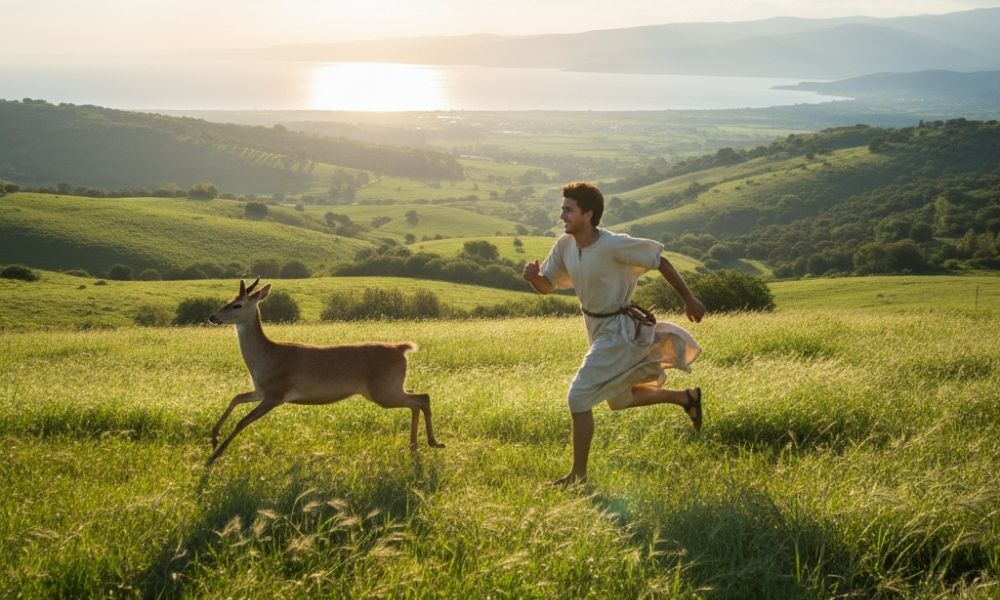
Naphtali was the sixth son of Jacob and the second born to Bilhah, Rachel’s handmaid. His name means “My Struggle,” reflecting Rachel’s words that she had wrestled with her sister Leah and prevailed. The Tribe of Naphtali became known for swiftness, eloquence, and faith, and its land in northern Galilee later became the setting for much of Jesus’ ministry, fulfilling prophecy that light would shine there first.
Name: Naphtali (Hebrew: Naftālî, meaning “My Struggle” or “My Wrestling”)
Tribe/Nation: Israel (Tribe of Naphtali)
Era: Patriarchal Period (~19th century BCE)
Father: Jacob (Israel)
Mother: Bilhah (Rachel’s maid)
Brother: Dan (same mother)
Half-Brothers: Reuben, Simeon, Levi, Judah, Joseph, Benjamin, and others
Home: Canaan
Book: Genesis (Chapters 30, 49; Numbers; Deuteronomy)
Key Virtues: Agility, faith, eloquence
Key Traits: Zeal, grace, perseverance
Legacy: Ancestor of the Tribe of Naphtali, known for courage and spiritual vitality
Symbol: Deer or hind — symbolizing speed, beauty, and freedom
Name Meaning
Naphtali means “My wrestling” or “My struggle,” from Rachel’s declaration:
“I have had a great struggle with my sister, and I have prevailed” (Genesis 30:8).
The name captures both Rachel’s rivalry with Leah and the perseverance that would characterize Naphtali’s descendants.
Lineage / Family Background
Naphtali was born to Jacob and Bilhah, Rachel’s servant, during Jacob’s years in Haran. As the younger of Bilhah’s two sons, he was considered Rachel’s child by proxy and part of her contest with Leah for Jacob’s affection.
- Father: Jacob
- Mother: Bilhah
- Brother: Dan
- Tribal Role: Warrior tribe from the northern region of Israel
Major Roles / Identity
- Sixth son of Jacob
- Second son of Bilhah
- Patriarch of the Tribe of Naphtali
- Symbol of freedom, eloquence, and speed
Key Character Traits
- Graceful: Compared to a swift deer — agile and free.
- Faithful: Known for loyalty in battle and devotion to God.
- Courageous: Contributed brave warriors to Israel’s defense.
- Uplifting: His name and blessing reflect joy, movement, and fruitfulness.
Main Life Events
- Birth: Rachel gave Bilhah to Jacob, and Naphtali was born as Rachel declared her victory in struggle (Genesis 30:8).
- Jacob’s Blessing: “Naphtali is a deer let loose; he gives beautiful words” (Genesis 49:21) — symbolizing freedom, grace, and eloquence.
- Moses’ Blessing: “O Naphtali, satisfied with favor and full of the blessing of the LORD; possess the west and the south” (Deuteronomy 33:23).
- Tribal Settlement: The Tribe of Naphtali received fertile land in northern Galilee, near the Sea of Galilee (Joshua 19:32–39).
- In Battle: Naphtali’s warriors joined Deborah and Barak in defeating Sisera’s army (Judges 4:6–10).
- Messianic Prophecy: Isaiah foretold that the Messiah’s light would shine first in “Galilee of the nations” — the land of Zebulun and Naphtali (Isaiah 9:1–2), fulfilled in Matthew 4:13–15 when Jesus began His ministry there.
Major Relationships
- Rachel: His mistress, who claimed him as her own child.
- Bilhah: His mother, Rachel’s servant.
- Dan: His full brother.
- Jacob: His father, who blessed him with beauty of word and freedom of spirit.
- God: His tribe found special favor and blessing, dwelling in a land later honored by Christ’s presence.
Notable Passages
- Genesis 30:8: “Then Rachel said, ‘I have had a great struggle with my sister, and I have prevailed.’ So she named him Naphtali.”
- Genesis 49:21: “Naphtali is a deer let loose; he gives beautiful words.”
- Deuteronomy 33:23: “O Naphtali, satisfied with favor, and full with the blessing of the LORD.”
- Matthew 4:13–15: Jesus dwelt in Capernaum, “in the regions of Zebulun and Naphtali… so that what was spoken by Isaiah the prophet might be fulfilled.”
Legacy & Impact
The Tribe of Naphtali became known for bravery, freedom, and blessing. Their territory was rich and fruitful, and their spirit was joyful and generous. Most significantly, their land was where Jesus began His public ministry, bringing light to Israel and the nations.
- Tribe known for eloquence and spiritual vitality
- Played a vital role in Israel’s early victories
- Their land became the cradle of the Gospel
- Symbol of divine favor and grace-filled strength
Symbolism / Typology
- Deer/Hind: Symbol of grace, speed, and freedom in God’s service (Psalm 18:33).
- Beautiful Words: Represents proclamation and joy — fulfilled in Christ’s ministry of good news in Galilee.
- Naphtali’s Blessing: Prefigures the believer’s spiritual freedom and fruitfulness in God’s favor.
Extra-Biblical References
- In Jewish tradition, Naphtali’s swiftness is linked with messengers of peace and good news.
- Midrashic writings praise his tribe’s eloquence and faithfulness.
- Christian commentators see Naphtali as a type of evangelism — swift to bring the message of salvation.







Leave a Reply