
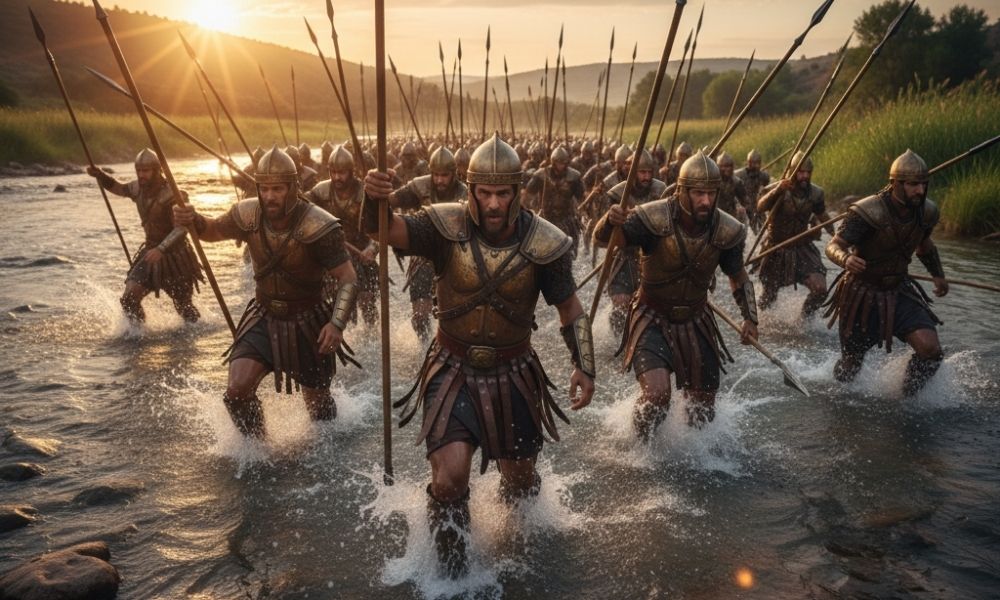
Gad was the seventh son of Jacob and the first born to Zilpah, Leah’s handmaid. His name means “Good Fortune” or “Troop,” expressing Leah’s joy at his birth. The Tribe of Gad became known for bravery, strength, and loyalty, settling east of the Jordan River and serving as mighty warriors who stood firm in battle. Gad’s story reflects God’s blessing, courage, and steadfastness in defending His people.
Name: Gad (Hebrew: Gāḏ, meaning “Good Fortune” or “Troop”)
Tribe/Nation: Israel (Tribe of Gad)
Era: Patriarchal Period (~19th century BCE)
Father: Jacob (Israel)
Mother: Zilpah (Leah’s maid)
Half-Brothers: Reuben, Simeon, Levi, Judah, Issachar, Zebulun, and others
Home: Canaan → Transjordan (east of the Jordan River)
Book: Genesis (Chapters 30, 49; Numbers; Deuteronomy; Joshua)
Key Virtues: Bravery, loyalty, faithfulness
Key Traits: Strength, discipline, readiness
Legacy: Founder of the Tribe of Gad, known for courage and defense of Israel
Symbol: Warrior or tent — representing strength and vigilance
Name Meaning
Gad means “Good fortune” or “Troop,” from Leah’s joyful exclamation at his birth:
“What good fortune!” (Genesis 30:11).
His name reflects both God’s blessing and the future military might of his descendants.
Lineage / Family Background
Gad was born to Jacob and Zilpah, Leah’s handmaid, during Jacob’s years in Haran. Though of secondary status in the family, Gad’s tribe rose to prominence for its valor and steadfast loyalty.
- Father: Jacob
- Mother: Zilpah
- Tribal Role: Warrior tribe settled east of the Jordan
- Brother: Asher (same mother)
Major Roles / Identity
- Seventh son of Jacob
- Firstborn of Zilpah
- Patriarch of the Tribe of Gad
- Model of courage, unity, and faithfulness
Key Character Traits
- Brave: Mighty in battle and skilled with weapons.
- Loyal: Faithful to God and Israel despite distance from the Promised Land.
- Protective: Guarded Israel’s borders with courage.
- Disciplined: Known for military readiness and strength in adversity.
Main Life Events
- Birth: Leah declared, “What good fortune!” upon Gad’s birth (Genesis 30:11).
- Jacob’s Blessing: “Gad shall be attacked by raiders, but he shall raid at their heels” (Genesis 49:19) — a prophecy of endurance and victory.
- Moses’ Blessing: “Blessed is he who enlarges Gad! He dwells as a lion, and tears the arm and the crown of his head” (Deuteronomy 33:20).
- Tribal Settlement: The Tribe of Gad chose fertile pastureland east of the Jordan (Numbers 32:1–5). Though distant, they honored God’s command by fighting alongside the other tribes before returning home (Joshua 4:12–13).
- Courage in War: Gadite warriors were famous for strength — “faces like lions and swift as gazelles” (1 Chronicles 12:8). They joined David early in his reign, symbolizing their loyalty to God’s anointed king.
Major Relationships
- Leah: His mistress, who received Zilpah as a gift and claimed Gad as her son.
- Zilpah: His mother, Leah’s faithful maidservant.
- Jacob: His father, who blessed him as a warrior and protector.
- Asher: His full brother and companion.
- Tribe of Reuben and Manasseh: Neighboring tribes east of the Jordan who often fought alongside Gad.
Notable Passages
- Genesis 30:11: “Then Leah said, ‘What good fortune!’ So she named him Gad.”
- Genesis 49:19: “Gad shall be attacked by raiders, but he shall raid at their heels.”
- Deuteronomy 33:20: “Blessed be he who enlarges Gad; he dwells as a lion.”
- 1 Chronicles 12:8: “Mighty men of valor, trained for battle, whose faces were like lions.”
Legacy & Impact
The Tribe of Gad became renowned for courage and loyalty. Though settled east of the Jordan, they never abandoned their brothers. Their warriors embodied the strength and faithfulness of God’s covenant people.
- Brave defenders of Israel’s borders
- Joined David in loyalty and faith (1 Chronicles 12)
- Symbol of endurance and victory after hardship
- Reminder that strength is blessed when used in service to God
Symbolism / Typology
- Lion and Warrior Imagery: Symbolizes courage and divine protection.
- Fighting Back (Genesis 49:19): Represents perseverance and triumph through faith.
- Eastern Settlement: Shows strength at the boundary — standing guard for God’s people.
- Foreshadowing Christ’s Strength: Gad’s tribe points to Christ, the Lion who conquers through endurance and faithfulness.
Extra-Biblical References
- Jewish tradition honors Gad as a symbol of valor and steadfast defense.
- Rabbinic writings describe his tribe as disciplined and devoted to Israel’s unity.
- Christian interpretation sees Gad’s “troop” as a type of the Church — steadfast in spiritual warfare and secure in divine protection.






Leave a Reply