
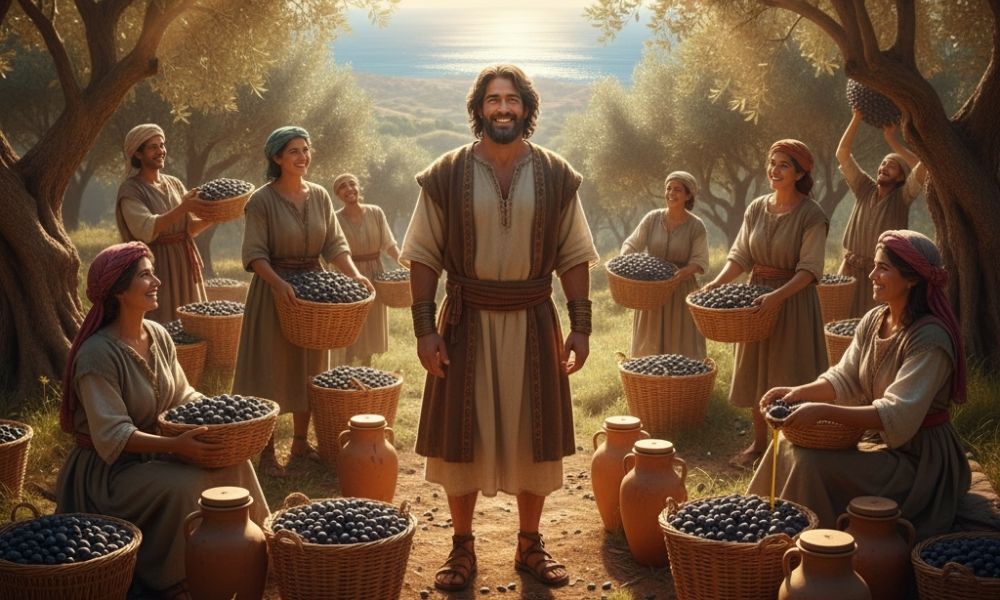
Asher was the eighth son of Jacob and the second born to Zilpah, Leah’s maidservant. His name means “Happy” or “Blessed,” reflecting Leah’s joy when he was born. The Tribe of Asher became known for abundance, prosperity, and favor, dwelling in a fertile region of northern Israel. Asher’s story symbolizes God’s goodness, fruitfulness, and the happiness found in His blessing.
Name: Asher (Hebrew: ’Āšēr, meaning “Happy” or “Blessed”)
Tribe/Nation: Israel (Tribe of Asher)
Era: Patriarchal Period (~19th century BCE)
Father: Jacob (Israel)
Mother: Zilpah (Leah’s maid)
Brother: Gad (same mother)
Half-Brothers: Reuben, Simeon, Levi, Judah, Issachar, Zebulun, and others
Home: Canaan → Promised Land (northern coast)
Book: Genesis (Chapters 30, 49; Deuteronomy; Joshua)
Key Virtues: Joy, fruitfulness, generosity
Key Traits: Blessed, prosperous, content
Legacy: Founder of the Tribe of Asher, known for wealth and favor
Symbol: Olive branch or overflowing basket — representing blessing and abundance
Name Meaning
Asher means “Happy” or “Blessed” — from Leah’s joyful declaration at his birth:
“How happy I am! The women will call me happy.” (Genesis 30:13).
His name captures gratitude and the sense of divine favor that would define his descendants.
Lineage / Family Background
Asher was born to Jacob and Zilpah, Leah’s maidservant, during Jacob’s years in Haran. Though not Leah’s biological son, she claimed him as her own, rejoicing in God’s continued blessing.
- Father: Jacob
- Mother: Zilpah (Leah’s maid)
- Brother: Gad
- Tribal Role: Prosperous tribe in northern Israel, rich in olive oil and produce
Major Roles / Identity
- Eighth son of Jacob
- Second son of Zilpah
- Patriarch of the prosperous Tribe of Asher
- Symbol of joy and abundance in God’s blessing
Key Character Traits
- Joyful: His name and blessing both celebrate happiness and contentment.
- Fruitful: His descendants prospered in fertile lands.
- Generous: Associated with sharing blessing and plenty.
- Peaceful: Lived in harmony and abundance near the sea.
Main Life Events
- Birth: Leah rejoiced at his birth, exclaiming her happiness (Genesis 30:13).
- Jacob’s Blessing: “Asher’s food shall be rich, and he shall yield royal delicacies” (Genesis 49:20) — symbolizing prosperity and blessing.
- Moses’ Blessing: “Most blessed of sons is Asher; let him be favored by his brothers, and let him dip his foot in oil” (Deuteronomy 33:24).
- Tribal Inheritance: The Tribe of Asher settled along Israel’s northern coast, in a fertile region known for olive trees, vineyards, and rich trade (Joshua 19:24–31).
- Participation in National Life: Asher’s descendants supported Deborah and Barak in battle (Judges 5:17).
- New Testament Connection: Anna the Prophetess, who rejoiced at the birth of Christ, was from the Tribe of Asher (Luke 2:36–38) — a fitting continuation of Asher’s joyful legacy.
Major Relationships
- Leah: His mistress, who rejoiced over his birth.
- Zilpah: His mother, Leah’s faithful handmaid.
- Jacob: His father, who blessed him with abundance.
- Gad: His full brother and fellow warrior-tribe leader.
- God: Source of Asher’s blessing and prosperity.
Notable Passages
- Genesis 30:13: “Then Leah said, ‘How happy I am! The women will call me happy.’ So she named him Asher.”
- Genesis 49:20: “Asher’s food shall be rich, and he shall yield royal delicacies.”
- Deuteronomy 33:24: “Most blessed of sons is Asher; let him be favored by his brothers, and let him dip his foot in oil.”
- Luke 2:36–38: Anna the prophetess from the Tribe of Asher rejoiced to see the Messiah.
Legacy & Impact
Asher’s descendants became known for wealth, peace, and abundance. His tribe’s land was among the most fertile in Israel, rich with olive oil and produce — a sign of God’s blessing. Spiritually, Asher represents joy overflowing from God’s favor.
- Tribe symbolized prosperity and fruitfulness
- Enjoyed peace and favor among the tribes
- Represented happiness rooted in God’s goodness
- Continued to bless future generations — even to the coming of Christ
Symbolism / Typology
- Olive Oil and Food: Represent the abundance of God’s provision and the anointing of joy.
- “Dipping the Foot in Oil”: Symbol of overflowing blessing and divine favor.
- Name “Happy”: Reflects the joy found in God’s grace and contentment.
- Prophetess Anna (Luke 2): Fulfillment of Asher’s legacy of rejoicing in the Lord’s salvation.
Extra-Biblical References
- Jewish tradition celebrates Asher as the happiest of Jacob’s sons, symbolizing prosperity without pride.
- Rabbinic writings describe the women of Asher’s tribe as especially blessed and virtuous.
- Christian commentators see Asher as a type of the believer’s joy in Christ and the Spirit’s fruit of gladness.







Leave a Reply