
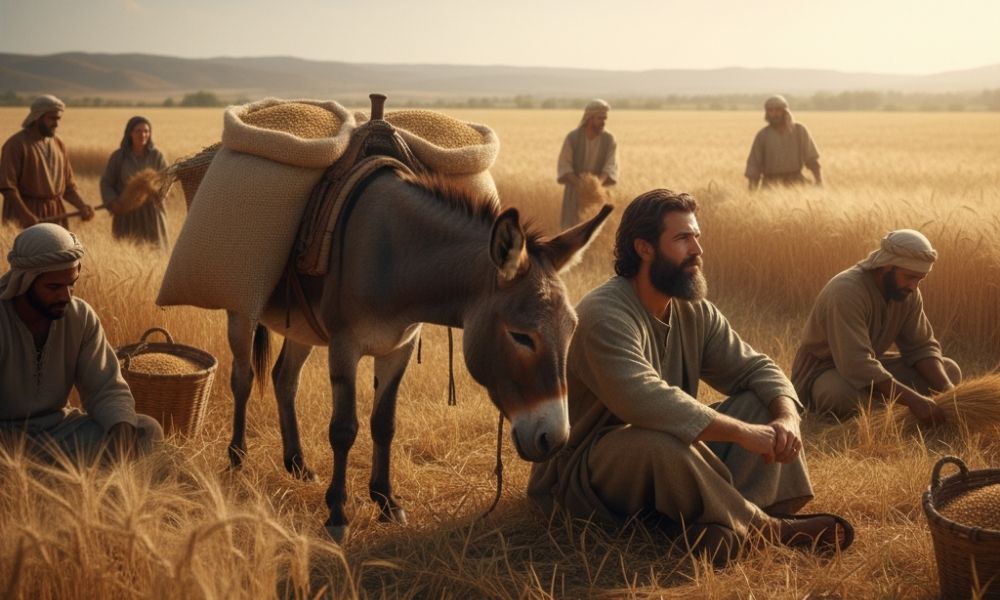
Issachar was the ninth son of Jacob and the fifth born to Leah. His name means “Reward” or “Wages,” given in gratitude after God blessed Leah with another child. The Tribe of Issachar became known for its wisdom, diligence, and discernment — especially for understanding the times and knowing what Israel should do. Issachar’s story reflects devotion, hard work, and spiritual insight guided by God’s blessing.
Name: Issachar (Hebrew: Yissākhār, meaning “Reward” or “Recompense”)
Tribe/Nation: Israel (Tribe of Issachar)
Era: Patriarchal Period (~19th century BCE)
Father: Jacob (Israel)
Mother: Leah
Half-Brothers: Joseph, Benjamin, Dan, Naphtali, Gad, Asher, and others
Home: Canaan
Book: Genesis (Chapters 30, 49; Numbers; Deuteronomy; 1 Chronicles)
Key Virtues: Wisdom, diligence, understanding
Key Traits: Insightful, loyal, industrious
Legacy: Founder of the Tribe of Issachar — known for discernment and labor
Symbol: Sun and book, or donkey — representing knowledge and steady strength
Name Meaning
Issachar means “Reward” or “He brings recompense.” Leah named him saying,
“God has rewarded me for giving my maid to my husband” (Genesis 30:18).
His name signifies God’s blessing as a reward for faithfulness and labor.
Lineage / Family Background
Issachar was born to Jacob and Leah during Jacob’s years in Haran. His birth followed Leah’s desire for honor and recognition, and his tribe would later reflect her perseverance and devotion.
- Father: Jacob
- Mother: Leah
- Full Brothers: Reuben, Simeon, Levi, Judah, Zebulun
- Tribal Role: Agricultural and scholarly tribe within Israel
Major Roles / Identity
- Ninth son of Jacob
- Fifth son of Leah
- Patriarch of the Tribe of Issachar
- Symbol of labor, wisdom, and spiritual understanding
Key Character Traits
- Hardworking: Associated with diligence and perseverance in labor.
- Wise: Known for understanding God’s times and guidance.
- Peaceful: Preferred quiet service over conflict.
- Spiritually Insightful: Played a key role in Israel’s moral and prophetic direction.
Main Life Events
- Birth: Leah named him Issachar, declaring that God had rewarded her (Genesis 30:18).
- Jacob’s Blessing: “Issachar is a strong donkey lying down between two burdens; he saw that rest was good… and bowed his shoulder to bear a load” (Genesis 49:14–15) — symbolizing humility, diligence, and a peaceful, productive life.
- Moses’ Blessing: “Rejoice, Issachar, in your tents” (Deuteronomy 33:18) — reflecting joy and contentment in simple faithfulness.
- Tribal Inheritance: The Tribe of Issachar received fertile land in the Jezreel Valley, ideal for agriculture and prosperity (Joshua 19:17–23).
- In Leadership: The men of Issachar were praised for their discernment:
“The men of Issachar, who understood the times and knew what Israel should do” (1 Chronicles 12:32).
Major Relationships
- Leah: His mother, whose steadfastness reflected in his character.
- Jacob: His father, who blessed him with the imagery of diligence and peace.
- Zebulun: His younger full brother and close tribal ally.
- God: Source of the reward, wisdom, and prosperity that defined his legacy.
Notable Passages
- Genesis 30:18: “Then Leah said, ‘God has rewarded me…’ So she named him Issachar.”
- Genesis 49:14–15: “Issachar is a strong donkey lying down between two burdens.”
- Deuteronomy 33:18: “Rejoice, Issachar, in your tents.”
- 1 Chronicles 12:32: “Men of Issachar… understood the times and knew what Israel should do.”
Legacy & Impact
Issachar’s descendants became known for wisdom, discernment, and faithful labor. They contributed to Israel’s stability — both agriculturally and spiritually — and were esteemed for their insight into God’s purposes.
- Tribe prospered in fertile land and peace
- Produced leaders known for spiritual wisdom
- Partnered closely with Zebulun in trade and teaching
- Symbol of reward through faithful service
Symbolism / Typology
- Donkey Imagery: Represents humble strength and patient labor in God’s service.
- Understanding of the Times: Symbolizes spiritual discernment — knowing God’s will and timing.
- Reward: Foreshadows the truth that God honors those who serve Him faithfully.
Extra-Biblical References
- Jewish tradition honors Issachar as a symbol of Torah study and wisdom. His tribe is often paired with Zebulun — Zebulun supporting commerce, Issachar dedicating itself to learning.
- Rabbinic writings describe his descendants as scholars and judges.
- Christian commentators see Issachar as a type of the faithful servant who labors quietly but wisely in God’s kingdom.







Leave a Reply