
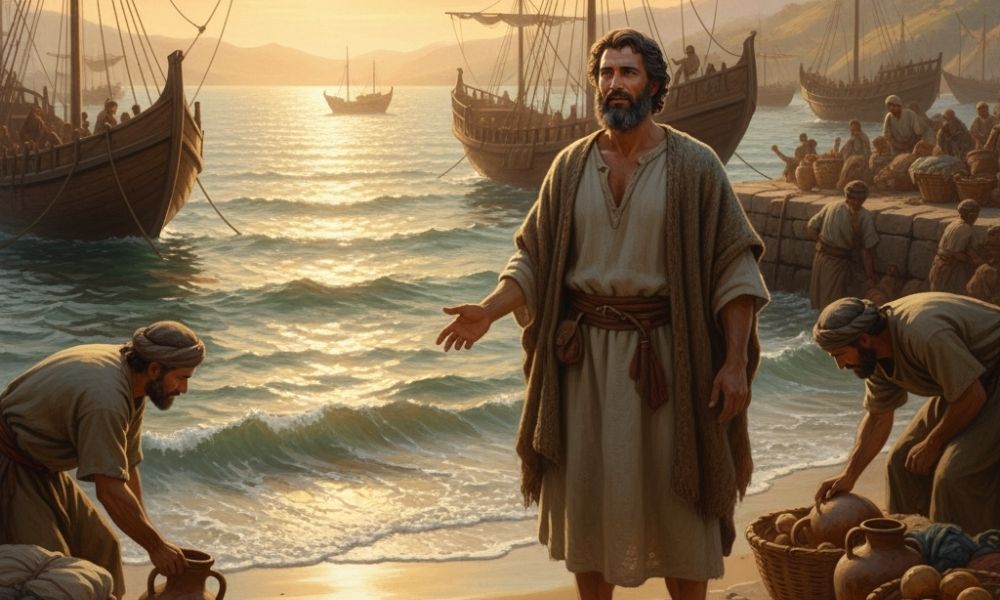
Zebulun was the tenth son of Jacob and the sixth born to Leah. His name means “Dwelling” or “Honor,” given by Leah in gratitude that her husband might now honor her. The Tribe of Zebulun became known for prosperity, trade, and partnership, providing resources and support for others — especially for the scholarly tribe of Issachar. Zebulun’s story reflects faithful service, provision, and the joy of honoring God through generosity.
Name: Zebulun (Hebrew: Zevulun or Zevulon, meaning “Dwelling” or “Exaltation/Honor”)
Tribe/Nation: Israel (Tribe of Zebulun)
Era: Patriarchal Period (~19th century BCE)
Father: Jacob (Israel)
Mother: Leah
Full Brothers: Reuben, Simeon, Levi, Judah, Issachar
Half-Brothers: Joseph, Benjamin, Dan, Naphtali, Gad, Asher
Home: Canaan
Book: Genesis (Chapters 30, 49; Deuteronomy; Joshua)
Key Virtues: Generosity, faithfulness, partnership
Key Traits: Industrious, loyal, prosperous
Legacy: Founder of the Tribe of Zebulun — known for supporting others and honoring God through provision
Symbol: Ship — representing trade, blessing, and partnership
Name Meaning
Zebulun means “Dwelling” or “Honor.” Leah said at his birth:
“God has endowed me with a good gift. Now my husband will dwell with me, because I have borne him six sons” (Genesis 30:20).
The name signifies hope for belonging, recognition, and enduring blessing.
Lineage / Family Background
Zebulun was born to Jacob and Leah, during Jacob’s years in Haran. As Leah’s sixth and final son, he represented the culmination of her long desire for her husband’s affection — and God’s continued faithfulness.
- Father: Jacob
- Mother: Leah
- Full Brother: Issachar (often paired with him in Scripture)
- Tribal Role: Merchant and supporter tribe; known for trade and generosity
Major Roles / Identity
- Tenth son of Jacob, sixth of Leah
- Patriarch of the Tribe of Zebulun
- Provider and partner tribe to Issachar
- Symbol of prosperity and generosity in God’s service
Key Character Traits
- Generous: Shared abundance to support others in God’s work.
- Faithful: Committed to unity within Israel.
- Prosperous: Skilled in trade and maritime ventures.
- Supportive: Partnered with Issachar — provision and wisdom working together.
Main Life Events
- Birth: Leah rejoiced, naming him Zebulun — “Dwelling” — expressing her hope for honor (Genesis 30:20).
- Jacob’s Blessing: “Zebulun shall dwell at the seashore; he shall become a haven for ships, and his border shall be at Sidon” (Genesis 49:13) — foretelling a tribe of trade and prosperity.
- Moses’ Blessing: “Rejoice, Zebulun, in your going out, and Issachar, in your tents” (Deuteronomy 33:18) — emphasizing partnership between commerce and learning.
- Tribal Inheritance: The Tribe of Zebulun received land between the Sea of Galilee and the Mediterranean, rich for trade and travel (Joshua 19:10–16).
- In Battle: Joined Deborah and Barak against Sisera, fighting bravely for Israel (Judges 5:18).
- Messianic Connection: The region of Zebulun and Naphtali became known as “Galilee of the nations” — where Jesus began His ministry (Isaiah 9:1–2; Matthew 4:13–15).
Major Relationships
- Leah: His mother, whose perseverance and faith defined his birth.
- Jacob: His father, who blessed him with a vision of prosperity and influence.
- Issachar: His close brother and partner tribe — Issachar dedicated to study, Zebulun to support.
- God: The source of his tribe’s abundance and calling to generosity.
Notable Passages
- Genesis 30:20: “God has endowed me with a good gift; now my husband will dwell with me.”
- Genesis 49:13: “Zebulun shall dwell at the seashore; he shall be a haven for ships.”
- Deuteronomy 33:18–19: “Rejoice, Zebulun, in your going out… for they draw from the abundance of the seas.”
- Isaiah 9:1–2 / Matthew 4:15–16: “The land of Zebulun and the land of Naphtali… the people dwelling in darkness have seen a great light.”
Legacy & Impact
Zebulun’s descendants became seafarers, traders, and providers, enriching Israel through their work. Their generosity sustained the priests, teachers, and warriors of other tribes. Spiritually, Zebulun represents those who honor God through service, generosity, and joyful partnership.
- Symbol of divine blessing through work and provision
- Shared partnership with Issachar — wisdom and commerce united
- His land became the place where Christ’s light first shone
- Example of faith expressed through generosity and cooperation
Symbolism / Typology
- Ship and Sea: Symbolize outreach, abundance, and global blessing.
- Partnership with Issachar: Reflects harmony between material provision and spiritual wisdom.
- Region of Christ’s Ministry: Foreshadows the Gospel spreading to the nations.
- “Going Out and Rejoicing”: Symbol of faithful labor done with joy.
Extra-Biblical References
- Jewish tradition celebrates Zebulun as a model of generosity and mutual support.
- Rabbinic writings pair Zebulun and Issachar as examples of balanced partnership — business funding learning, both honored by God.
- Christian commentators view Zebulun as a type of missionary faith — bringing the blessings of God to distant shores.







Leave a Reply