
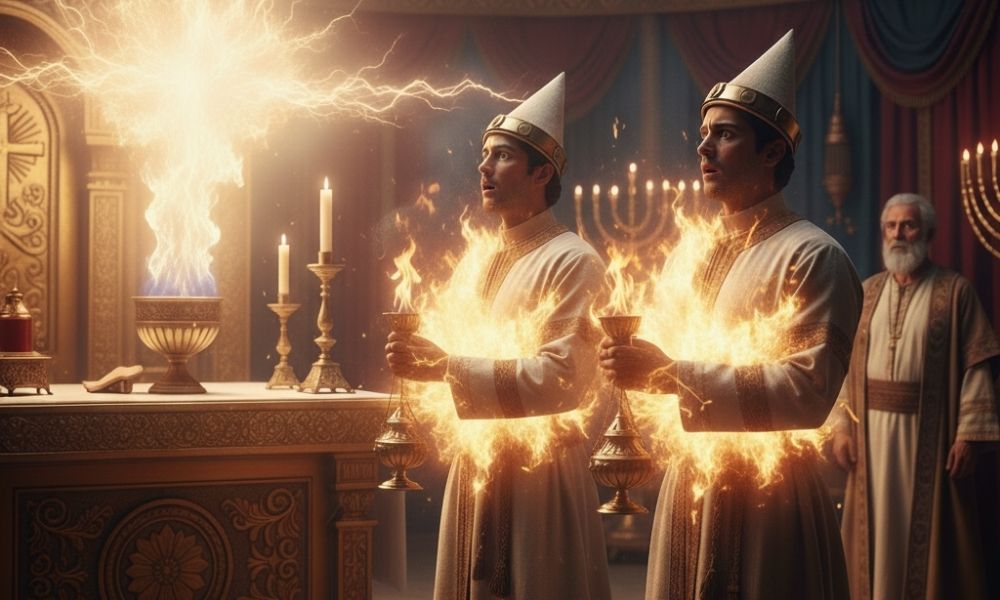
Nadab and Abihu were the eldest sons of Aaron, the first High Priest of Israel, and nephews of Moses. Chosen by God to serve as priests, they shared in the sacred privilege of entering His presence and witnessing His glory. Yet their story became one of tragic disobedience — when they offered unauthorized fire before the Lord, they were consumed by divine flame. Their fate stands as a powerful reminder that God’s holiness must be approached with obedience, reverence, and purity.
Names: Nadab (meaning “Willing” or “Generous”) and Abihu (meaning “My Father is God”)
Tribe/Nation: Levi (Priestly line of Aaron)
Era: Exodus and Wilderness Period (~15th century BCE)
Father: Aaron (High Priest of Israel)
Mother: Elisheba (daughter of Amminadab, sister of Nahshon of Judah)
Brothers: Eleazar, Ithamar
Uncle: Moses
Home: Israelite camp (in the wilderness)
Books: Exodus, Leviticus, Numbers
Key Virtues: Privilege, zeal, sacred calling
Key Flaws: Presumption, irreverence
Legacy: Priests who died for offering unauthorized fire before the Lord
Symbol: Fire — representing both divine glory and judgment
Name Meanings
- Nadab means “Willing” or “Generous,” reflecting zeal and readiness to serve.
- Abihu means “My Father is God,” signifying holy heritage and priestly calling.
Together, their names symbolize devotion — yet their actions revealed zeal without obedience.
Lineage / Family Background
As sons of Aaron, the first High Priest, and nephews of Moses, Nadab and Abihu were born into Israel’s most honored family — the first appointed to mediate between God and His people.
- Father: Aaron, the High Priest
- Mother: Elisheba, of the tribe of Judah
- Brothers: Eleazar and Ithamar, who continued the priestly line
- Uncle: Moses, leader and prophet of Israel
Major Roles / Identity
- Priests consecrated under Aaron to serve in the tabernacle
- Witnesses of God’s glory on Mount Sinai (Exodus 24:1, 9–11)
- Examples of disobedience and judgment in Israel’s early priesthood
Key Character Traits
- Privileged: Chosen to minister in the presence of God.
- Zealous but Careless: Acted with passion but without proper instruction.
- Irreverent: Approached God in a way He had not commanded.
- Tragic: Died as a warning that holiness demands reverence.
Main Life Events
- Priestly Consecration: Alongside their brothers, Nadab and Abihu were consecrated as priests under Aaron by Moses (Exodus 28:1; Leviticus 8).
- Witness of God’s Presence: They ascended Mount Sinai with Moses, Aaron, and seventy elders and saw a vision of God’s glory (Exodus 24:9–11).
- Sin of Unauthorized Fire: Shortly after the tabernacle’s dedication, “Nadab and Abihu took their censers, put fire in them and added incense; and they offered unauthorized fire before the LORD, contrary to His command” (Leviticus 10:1).
- Judgment: “Fire came out from the presence of the LORD and consumed them, and they died before the LORD” (Leviticus 10:2).
- Aftermath: Moses told Aaron, “By those who come near Me, I must be regarded as holy.” Aaron was silent, overcome by awe and grief (Leviticus 10:3).
- Burial: Their cousins carried them outside the camp (Leviticus 10:4–5).
Major Relationships
- Aaron: Their father, who bore the sorrow of their judgment.
- Moses: Their uncle, who declared God’s justice and holiness.
- Eleazar and Ithamar: Younger brothers who succeeded them as priests.
- God: The One they served but dishonored through disobedience.
Notable Passages
- Exodus 24:9–11: “Moses, Aaron, Nadab, and Abihu… saw the God of Israel.”
- Leviticus 10:1–3: “Fire came out from the presence of the LORD and consumed them.”
- Leviticus 10:9–10: God later warned Aaron that priests must not drink wine when entering His presence — possibly alluding to their sin.
Legacy & Impact
Nadab and Abihu’s deaths marked a solemn beginning for the priesthood of Israel. Their disobedience demonstrated that proximity to God brings great privilege but also great responsibility.
- Warning to all spiritual leaders to serve in holiness and obedience
- Affirmed God’s command that worship must follow His word, not human invention
- Their death sanctified the priestly ministry, reinforcing reverence and order
- Their brothers Eleazar and Ithamar continued the sacred line in humility and obedience
Symbolism / Typology
- Unauthorized Fire: Symbol of human pride and self-made worship.
- Consuming Fire: Represents God’s holy presence that purifies or destroys.
- Contrast to Christ: Jesus, the true High Priest, offered acceptable sacrifice through perfect obedience — fulfilling what Nadab and Abihu failed to do.
Extra-Biblical References
- Jewish tradition teaches that Nadab and Abihu entered the Holy Place intoxicated or without proper garments, symbolizing pride.
- Rabbinic writings note that they presumed to offer incense without consulting Moses or Aaron.
- Christian commentators regard them as examples of false worship — zeal without submission to God’s revealed will.







Leave a Reply