
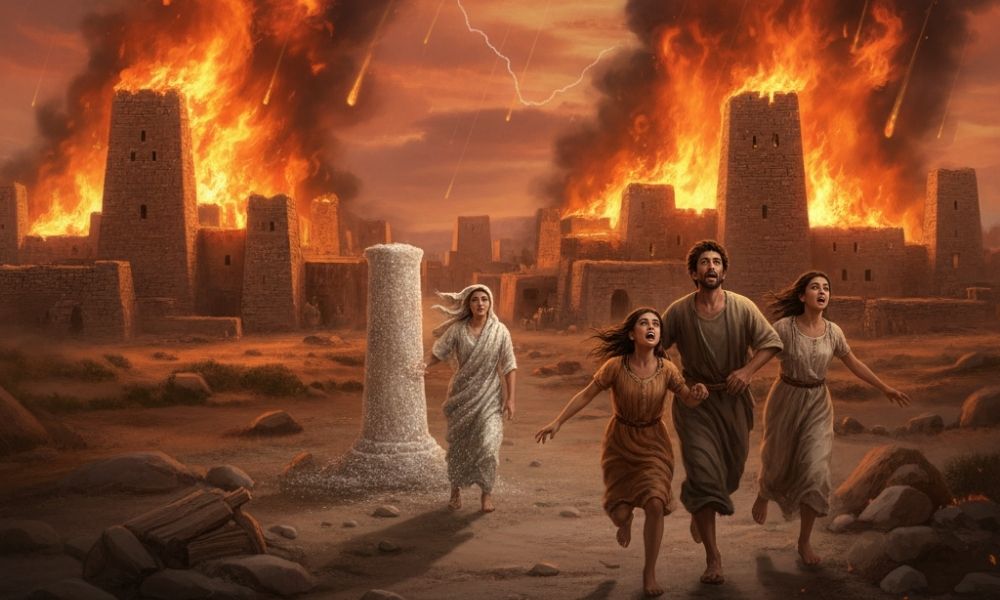
The Destruction of Sodom and Gomorrah stands as one of Scripture’s most striking accounts of divine judgment. These cities of the plain became symbols of moral corruption and rebellion against God. When their sin reached its fullness, God brought swift destruction by fire and brimstone — sparing only the righteous Lot and his family.
Quick Facts
Event: Destruction of Sodom and Gomorrah
Location: Plains near the Dead Sea
Scripture: Genesis 18–19
Key Figures: Abraham, Lot, the two angels
Cause: Extreme wickedness, violence, and immorality
Judgment: Fire and brimstone from heaven
Survivors: Lot and his two daughters
Symbol: Divine justice and moral warning
Background and Context
Sodom and Gomorrah were prosperous cities located in the fertile Jordan Valley. However, their wealth was matched by great wickedness and moral decay. When the outcry of sin reached heaven, God revealed His plan to Abraham, who interceded for the cities, pleading that they be spared if even ten righteous people could be found (Genesis 18:22–32).
The Judgment
Two angels visited Sodom and stayed with Lot, Abraham’s nephew. The men of the city surrounded Lot’s house, demanding to violate his guests — a shocking display of depravity. The angels struck the men with blindness and warned Lot to flee with his family.
As dawn broke, “the LORD rained down burning sulfur on Sodom and Gomorrah” (Genesis 19:24). Fire consumed the cities, their inhabitants, and the surrounding plain. Lot’s wife, looking back in disobedience, was turned into a pillar of salt — a symbol of longing for a condemned world.
Key Themes and Lessons
- Divine Justice: God’s holiness demands judgment against unrepentant sin.
- Mercy in Judgment: God spared Lot, showing His compassion for the righteous.
- Intercession: Abraham’s prayer reveals God’s willingness to hear and show mercy.
- Warning for All Generations: The destruction stands as a timeless reminder of sin’s consequences (2 Peter 2:6; Jude 1:7).
Legacy and Symbolism
Sodom and Gomorrah became enduring symbols of moral corruption and divine wrath. Their fate is frequently cited throughout Scripture as a warning to nations and individuals who reject God’s ways. Yet, amidst judgment, God’s mercy shines — He rescues the righteous and preserves His covenant through them.
Notable Passages
- Genesis 18:32: Abraham pleads, “May the Lord not be angry, but let me speak just once more…”
- Genesis 19:24–25: “The LORD rained down burning sulfur on Sodom and Gomorrah.”
- Luke 17:29: Jesus warns, “On the day Lot left Sodom, fire and sulfur rained down from heaven and destroyed them all.”







Leave a Reply