
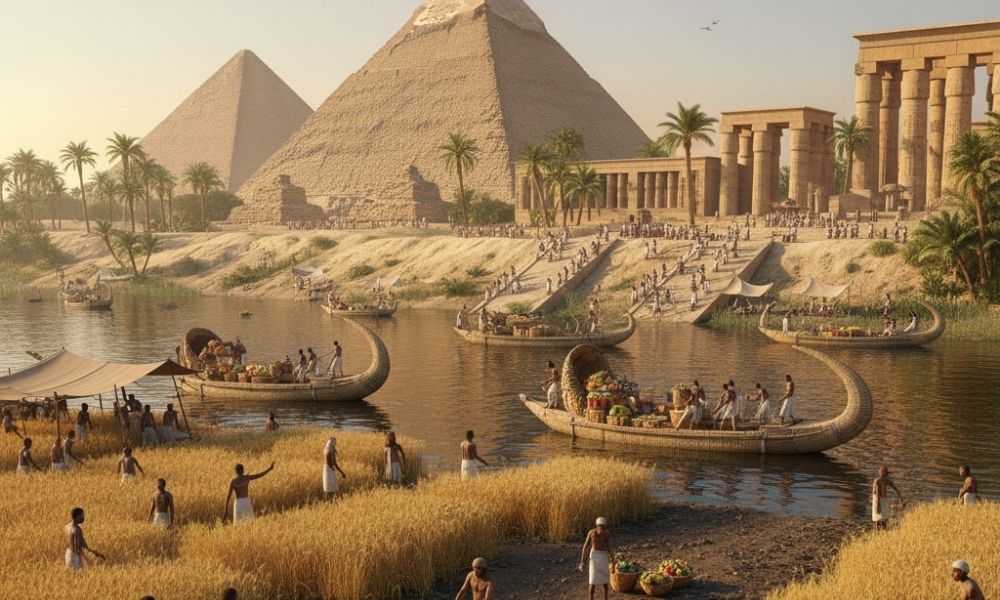
The Egyptians were one of the most powerful and influential civilizations of the ancient world. Centered along the fertile Nile River, their empire was known for its advanced culture, monumental architecture, and lasting contributions to art, science, and religion. In the Bible, Egypt often represents both a place of refuge and oppression — providing shelter during famine yet later enslaving the Israelites before their divine deliverance.
Quick Facts
Name Meaning: “Egypt” (Hebrew: Mitzrayim) means “land of the double straits” or “two lands” (referring to Upper and Lower Egypt)
Location: Northeastern Africa, along the Nile River
Founding Civilization: Ancient Kingdom (c. 3100 BCE)
Major Rulers: Pharaohs (e.g., Ramses II, Thutmose III)
Religion: Polytheistic — worship of gods like Ra, Osiris, and Isis
Biblical Role: Place of refuge, bondage, and divine judgment
Capital Cities: Memphis, Thebes (Luxor)
Language: Ancient Egyptian (Hieroglyphic and later Demotic scripts)
Symbol: The ankh — symbol of life
Origins and Civilization
Ancient Egypt arose around 3100 BCE when Upper and Lower Egypt were united under the first pharaoh, Narmer (Menes). The Nile’s predictable flooding made the land fertile, supporting agriculture and a stable society. Egypt’s civilization flourished for millennia, marked by pyramids, temples, and a strong belief in the afterlife.
Egypt in the Bible
Egypt plays a key role throughout Scripture:
- Abraham and Joseph: Egypt provided refuge during famine (Genesis 12; 41).
- Israel’s Bondage: The Israelites lived in Egypt for centuries until they were enslaved by Pharaoh (Exodus 1).
- The Exodus: Under Moses, God delivered the Israelites through miraculous plagues and the parting of the Red Sea (Exodus 7–14).
- Later Prophets: Egypt is often depicted as a symbol of worldly power and false security (Isaiah 31:1).
Pharaohs and Power
The Pharaohs were both kings and divine figures, believed to be the earthly embodiment of gods. Their wealth and authority were unmatched in the ancient world. The Pharaoh of the Exodus hardened his heart against God, leading to Egypt’s downfall through the Ten Plagues, which demonstrated God’s supremacy over Egypt’s gods.
Religion and Beliefs
Egyptian religion centered on polytheism and the afterlife. They believed the soul lived on after death, leading to elaborate burial practices — including mummification and monumental tombs like the pyramids of Giza. Their gods represented natural forces and cosmic order (Ma’at).
Egypt’s Symbolism in Scripture
Throughout the Bible, Egypt symbolizes:
- Oppression: The house of bondage (Deuteronomy 5:6)
- Refuge: A temporary haven (Matthew 2:13 — when Joseph and Mary fled there with baby Jesus)
- Worldly power and pride: Often contrasted with trust in God
Legacy
Egypt’s influence persists in architecture, mathematics, medicine, and writing. Biblically, it reminds believers that worldly power fades, but God’s deliverance endures forever.
Symbol
Pyramids and the Ankh — representing human strength, eternal life, and the contrast between human pride and divine sovereignty.







Leave a Reply