
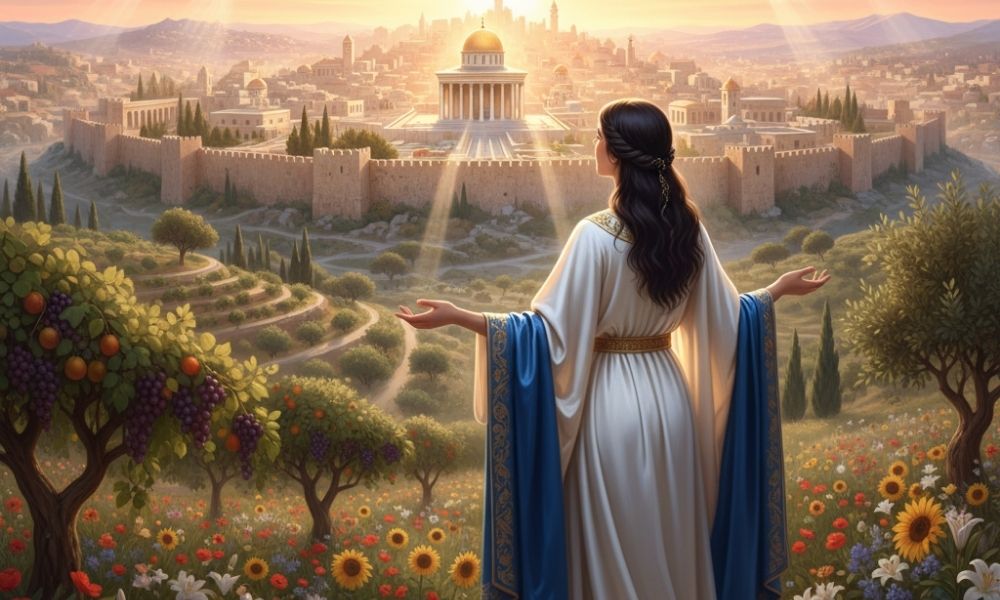
Ephisiba, also known as Hephzibah, is a biblical woman whose name carries a profound meaning — “My delight is in her.” Found in both historical and prophetic passages of Scripture, Hephzibah represents God’s joy, favor, and restoration over His people. She was both a queen of Judah and a symbol of divine affection, embodying the transformation from desolation to delight.
Name: Ephisiba (Hephzibah)
Meaning: “My delight is in her”
Language of Origin: Hebrew (חֶפְצִי־בָהּ / Chephtsî-bâh)
Gender: Female
Tribe/Nation: Kingdom of Judah
Era: Reign of King Hezekiah (~8th century BCE)
Spouse: King Hezekiah of Judah
Son: King Manasseh
Key Virtues: Favor, restoration, belovedness, grace
Symbol: A renewed land — the delight of God
Name Meaning
The name Ephisiba (Hephzibah) directly translates to “My delight is in her.” It conveys the heart of divine affection — God’s personal joy in His people. In Isaiah’s prophecy, the name becomes symbolic of Jerusalem restored, after being forsaken and desolate.
Just as a husband delights in his bride, God delights in His covenant people — a message of hope, forgiveness, and renewal.
Lineage & Background
- Husband: King Hezekiah — one of Judah’s most righteous kings, who restored true worship of God.
- Son: King Manasseh — who succeeded Hezekiah, though his reign began in rebellion.
- Dynasty: House of David — the royal line from which the Messiah would later come.
Ephisiba’s position as queen placed her within the sacred Davidic lineage, linking her name to God’s promises of restoration and redemption for Israel.
Biblical Context
2 Kings 21:1 introduces Hephzibah as the mother of Manasseh, subtly highlighting her royal status.
However, her name reappears with deep prophetic weight in Isaiah 62:4, long after her lifetime, as a symbol of divine renewal:
“You shall no longer be termed Forsaken, nor shall your land any more be termed Desolate;
But you shall be called Hephzibah, and your land Beulah;
For the LORD delights in you, and your land shall be married.”
Here, Hephzibah becomes more than a queen — she becomes a representation of God’s covenant joy, the moment when what was lost is restored in love.
Symbolism & Themes
- Divine Delight: God’s joy and pleasure in His restored people.
- Restoration: From desolation to fruitfulness — spiritual renewal.
- Covenant Love: God’s steadfast commitment symbolized through a marriage image.
- Identity Transformation: A shift from “Forsaken” to “Delighted In.”
Hephzibah’s name assures believers that God’s love can transform shame into beauty and rejection into acceptance.
Virtues & Legacy
- Grace: Her name is a testimony to God’s unearned favor.
- Hope: Symbol of new beginnings after judgment or exile.
- Belovedness: Reflects the intimacy between God and His people.
- Faithfulness: Her association with Hezekiah’s reign ties her to faith-driven reform.
Notable Scriptures
- 2 Kings 21:1 – “Manasseh was twelve years old when he began to reign, and reigned fifty and five years in Jerusalem. And his mother’s name was Hephzibah.”
- Isaiah 62:4 – “Thou shalt no more be termed Forsaken… but thou shalt be called Hephzibah, for the LORD delighteth in thee.”
Spiritual Legacy
Ephisiba stands as a reminder that God takes delight in His redeemed people. Her name is often invoked in Christian symbolism to represent the Church — the Bride of Christ — restored and beloved by her Lord.
She is thus both a historical queen and a prophetic symbol of divine delight, demonstrating that even after seasons of sorrow or exile, God restores with joy.







Leave a Reply