
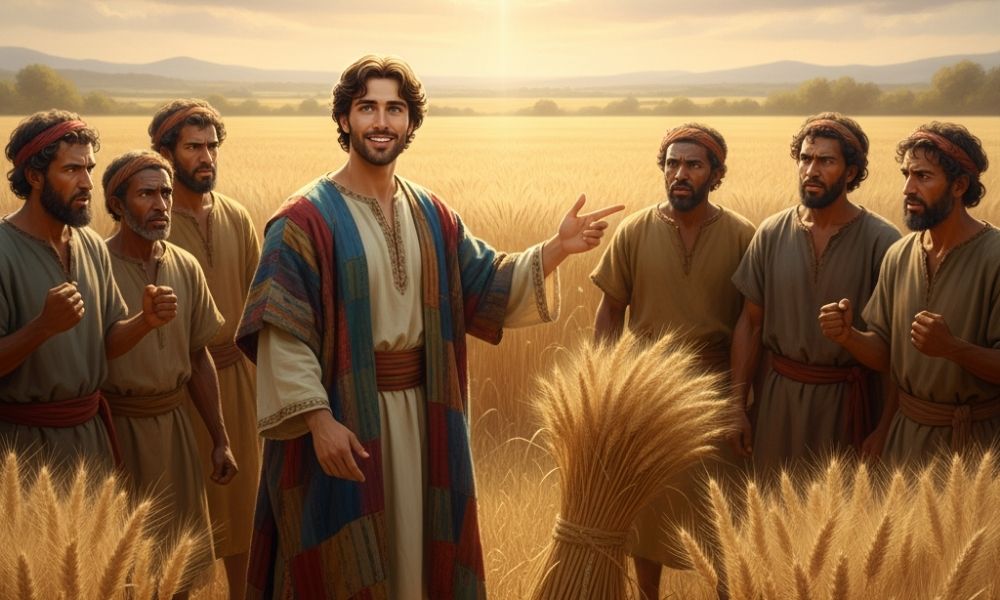
Joseph’s dreams are among the most memorable and prophetic visions in the book of Genesis. As a young man, Joseph received two symbolic dreams that foretold his future rise to power and the fulfillment of God’s plan for his family. These dreams, however, also sparked jealousy and conflict among his brothers, setting in motion the events that would lead him to Egypt and ultimately to the preservation of Israel during famine.
Quick Facts
Event: Joseph receives prophetic dreams revealing his future exaltation
Key Figures: Joseph, Jacob (Israel), Joseph’s brothers
Primary Source: Genesis 37:1–11
Era: Patriarchal Age
Location: Canaan, in the household of Jacob
Symbol: Sheaves of grain and heavenly bodies bowing down
Consequence: His brothers’ jealousy leads to his betrayal and sale into slavery
Context of the Event
Joseph was the eleventh son of Jacob and the firstborn of Rachel, Jacob’s beloved wife. Favored above his brothers, Joseph received a richly ornamented robe—often called the “coat of many colors.” This favoritism stirred resentment among his older brothers. Amid that tension, God gave Joseph two dreams that revealed his divine destiny, though their meaning deepened his brothers’ hatred.
The First Dream: The Sheaves of Grain
Joseph told his brothers his first dream:
“We were binding sheaves of grain out in the field when suddenly my sheaf rose and stood upright, while your sheaves gathered around mine and bowed down to it.” (Genesis 37:7, NIV)
The symbolism was unmistakable. The sheaves represented Joseph and his brothers; his sheaf standing upright and theirs bowing symbolized Joseph’s future authority over them. His brothers, already jealous, responded sharply, “Do you intend to reign over us?” and their hatred intensified.
The Second Dream: The Sun, Moon, and Stars
Soon after, Joseph shared a second dream:
“I had another dream, and this time the sun and moon and eleven stars were bowing down to me.” (Genesis 37:9, NIV)
This dream extended beyond his brothers—it suggested that even his father and mother (symbolized by the sun and moon) would honor him. Jacob rebuked Joseph, saying, “Will your mother and I and your brothers actually come and bow down to the ground before you?” Yet, though he scolded him, Jacob kept the matter in mind, sensing that the dreams carried divine significance.
Reactions and Consequences
- Brothers’ Jealousy: Joseph’s dreams became the tipping point for his brothers’ hatred. Their envy led them to plot against him.
- Jacob’s Reflection: Though perplexed, Jacob recognized that the dreams might be from God.
- Divine Purpose: The dreams set the stage for Joseph’s journey—from betrayal and slavery to leadership and reconciliation.
Later, when famine struck and Joseph became ruler in Egypt, these dreams were fulfilled. His brothers bowed before him, not realizing that the powerful governor was the same brother they had sold. Through these events, God preserved His people and demonstrated His sovereign plan.
Key Characters
- Joseph: The dreamer and future leader, chosen by God for a redemptive purpose.
- Jacob (Israel): The father who loved Joseph deeply yet struggled to understand God’s mysterious plan.
- Joseph’s Brothers: The envious siblings whose anger led to Joseph’s suffering—but also to God’s greater plan of salvation for their family.
Major Themes
- Divine Providence: God reveals His plan through dreams, showing that He directs human events toward His purpose.
- Jealousy and Favoritism: The tension between Joseph and his brothers illustrates how favoritism can breed division and sin.
- Faith and Destiny: Joseph’s faith in God’s revelation sustains him through betrayal and hardship.
- Reversal of Fortune: The one despised becomes the deliverer, showing how God exalts the humble and fulfills His word.
- Prophecy and Fulfillment: The dreams foreshadow Joseph’s eventual exaltation in Egypt and his brothers’ submission, proving God’s promises true.
Key Passages
- Genesis 37:5 (NIV):
“Joseph had a dream, and when he told it to his brothers, they hated him all the more.” - Genesis 37:7 (NIV):
“My sheaf rose and stood upright, while your sheaves gathered around mine and bowed down to it.” - Genesis 37:9 (NIV):
“The sun and moon and eleven stars were bowing down to me.” - Genesis 37:11 (NIV):
“His brothers were jealous of him, but his father kept the matter in mind.”
Theological Significance
Joseph’s dreams illustrate that God’s purposes are revealed in His timing, even when misunderstood or opposed. Though Joseph’s brothers tried to destroy him, their actions fulfilled God’s plan to save their family. These dreams highlight divine sovereignty—God turning human jealousy into the path of redemption. In the broader biblical story, Joseph’s life points to Christ: the beloved son rejected by his own, who suffers unjustly yet becomes the savior of his people.







Leave a Reply