
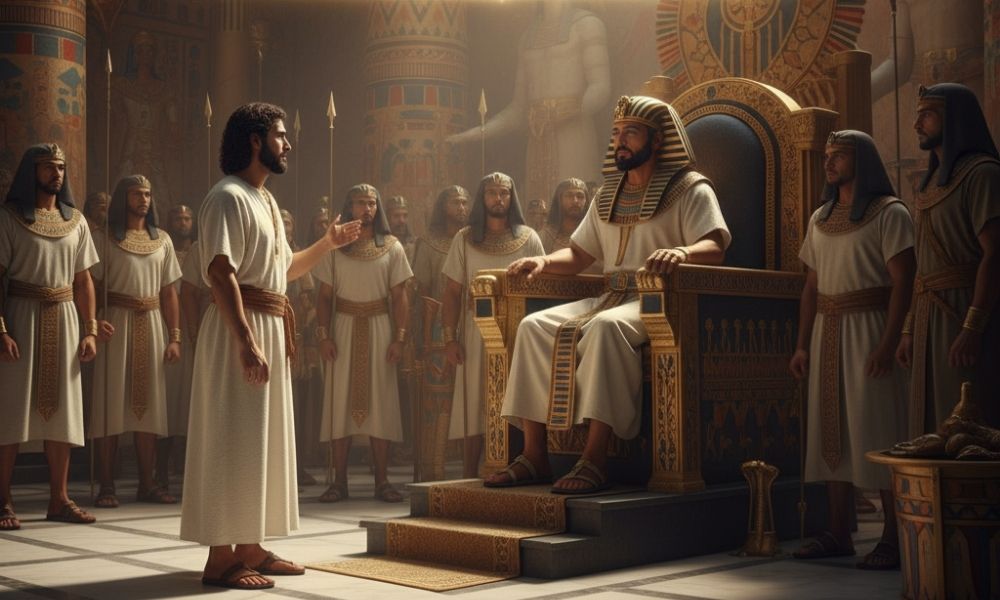
Joseph’s interpretation of Pharaoh’s dreams marks the turning point from suffering to destiny in his life. After years of unjust imprisonment, Joseph is summoned before Pharaoh to explain troubling dreams that none of Egypt’s wise men could interpret. Through divine wisdom, Joseph reveals their meaning—seven years of abundance followed by seven years of famine—and rises from prisoner to ruler, second only to Pharaoh. This moment showcases God’s sovereignty, turning adversity into elevation and using Joseph to save nations from starvation.
Quick Facts
Event: Joseph interprets Pharaoh’s prophetic dreams
Key Figures: Joseph, Pharaoh, Pharaoh’s cupbearer
Primary Source: Genesis 41:1–57
Era: Patriarchal Age
Location: Egypt, Pharaoh’s court
Symbol: Seven fat and lean cows; seven full and thin ears of grain
Consequence: Joseph becomes governor of Egypt, overseeing food storage and distribution
Context of the Event
Joseph had spent two years in prison after being falsely accused by Potiphar’s wife. While imprisoned, he interpreted the dreams of Pharaoh’s cupbearer and baker, predicting the cupbearer’s restoration and the baker’s execution. As Joseph had foretold, both outcomes came true. However, the cupbearer forgot Joseph—until Pharaoh had dreams that baffled all his magicians and advisors.
“Pharaoh had a dream: He was standing by the Nile, when out of the river there came up seven cows, sleek and fat, and they grazed among the reeds. After them, seven other cows, ugly and gaunt, came up… and ate up the seven sleek, fat cows.” (Genesis 41:1–4, NIV)
Pharaoh then dreamed a second time of seven healthy heads of grain swallowed by seven thin, scorched ones. None could explain the dreams—until the cupbearer remembered Joseph.
Joseph Before Pharaoh
Joseph was quickly brought from the prison, shaved, and given clean clothes to appear before Pharaoh. When Pharaoh said he heard Joseph could interpret dreams, Joseph replied humbly:
“I cannot do it, but God will give Pharaoh the answer he desires.” (Genesis 41:16, NIV)
Through this statement, Joseph shifted glory from himself to God, declaring that interpretation belongs to the Lord alone.
The Interpretation
Joseph explained that both dreams carried one message:
- The seven fat cows and seven healthy heads of grain represented seven years of abundance throughout Egypt.
- The seven thin cows and seven withered heads of grain symbolized seven years of famine that would follow.
- The repetition of the dream meant that the matter was firmly decided by God and would soon take place.
Joseph then offered wise counsel:
“Let Pharaoh look for a discerning and wise man and put him in charge of the land of Egypt… to collect a fifth of the harvest during the seven years of abundance.” (Genesis 41:33–34, NIV)
This plan would ensure survival during the coming famine.
Joseph’s Promotion
Pharaoh and his officials were impressed. Recognizing the Spirit of God in Joseph, Pharaoh declared,
“Since God has made all this known to you, there is no one so discerning and wise as you.” (Genesis 41:39, NIV)
Pharaoh appointed Joseph as governor over all Egypt, gave him his signet ring, fine garments, and a gold chain, and placed him in a chariot as second-in-command. Joseph was thirty years old when he began serving Pharaoh.
During the seven years of plenty, Joseph gathered and stored vast amounts of grain in Egyptian cities. When the famine came, it struck not only Egypt but all surrounding lands. Yet Egypt had food, and people from all nations came to buy grain from Joseph, fulfilling God’s purpose to preserve life.
Key Characters
- Joseph: The Hebrew prisoner exalted to power through divine wisdom and faithfulness.
- Pharaoh: The ruler of Egypt who recognizes God’s hand upon Joseph.
- Cupbearer: The former prisoner who remembers Joseph at the right time.
Major Themes
- Divine Providence: God orchestrates events—from prison to palace—for His redemptive plan.
- Wisdom from God: True understanding and leadership flow from divine revelation, not human intellect.
- Humility and Faith: Joseph gives glory to God, showing that spiritual authority begins with dependence on Him.
- Preparation and Stewardship: Joseph’s foresight and management demonstrate how faith works hand in hand with practical wisdom.
- Redemption and Fulfillment: What began as suffering now becomes salvation—not only for Joseph’s family but for entire nations.
Key Passages
- Genesis 41:16 (NIV):
“I cannot do it,” Joseph replied to Pharaoh, “but God will give Pharaoh the answer he desires.” - Genesis 41:25 (NIV):
“The dreams of Pharaoh are one and the same. God has revealed to Pharaoh what He is about to do.” - Genesis 41:39–40 (NIV):
“Since God has made all this known to you, there is no one so discerning and wise as you. You shall be in charge of my palace.”
Theological Significance
Joseph’s rise to power through interpreting Pharaoh’s dreams reveals God’s sovereignty over history and nations. What seemed like years of delay and suffering were part of divine preparation for leadership. Joseph’s humility before Pharaoh models true godliness: he acknowledges that all wisdom comes from God. His story prefigures Christ—the righteous one who, through suffering, brings salvation to many.







Leave a Reply