
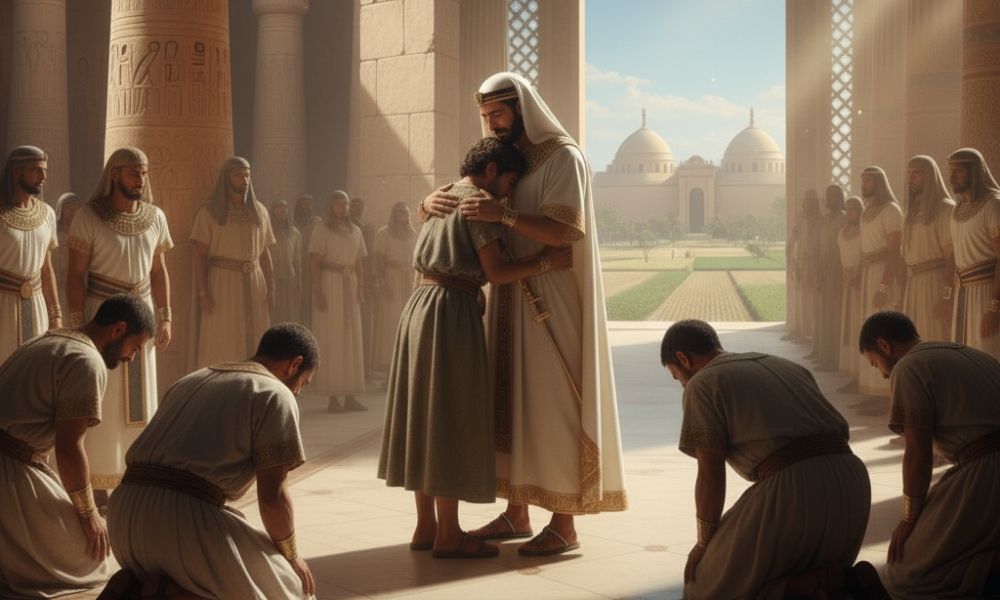
Joseph’s forgiveness of his brothers is one of the most moving and redemptive moments in all of Scripture. After years of separation, betrayal, and testing, the brothers who once sold Joseph into slavery now stand before him in humility and fear. Instead of revenge, Joseph chooses mercy—seeing God’s hand in their past actions and extending grace that brings healing, reconciliation, and restoration to his entire family.
Quick Facts
Event: Joseph reveals his identity and forgives his brothers
Key Figures: Joseph, Judah, Benjamin, Jacob (Israel), Joseph’s brothers
Primary Source: Genesis 45:1–15; 50:15–21
Era: Patriarchal Age
Location: Egypt, in Pharaoh’s palace
Consequence: Joseph reconciles with his brothers, provides for his family, and reunites with his father
Context of the Event
After years of famine, Joseph’s brothers had made two journeys to Egypt for grain. On the second visit, Benjamin, the youngest son, accompanied them as Joseph demanded. Through a series of wise tests—including the silver cup planted in Benjamin’s sack—Joseph saw that his brothers had changed. Judah’s heartfelt plea to take Benjamin’s place as a slave showed genuine repentance and love (Genesis 44:33–34).
Moved to tears, Joseph could no longer restrain himself.
Joseph Reveals Himself
Joseph ordered all his attendants to leave the room, then wept so loudly that everyone in Pharaoh’s household heard. Turning to his brothers, he said,
“I am Joseph! Is my father still living?” (Genesis 45:3, NIV)
His brothers were stunned and terrified, unable to speak. But Joseph comforted them, saying,
“Do not be distressed or angry with yourselves for selling me here, because it was to save lives that God sent me ahead of you.” (Genesis 45:5, NIV)
Joseph recognized that what they intended for harm, God intended for good—to preserve their family and fulfill His covenant promises.
The Forgiveness and Reconciliation
- Grace Instead of Vengeance: Joseph embraced his brothers and wept over each of them, beginning with Benjamin.
- Provision for His Family: He urged them to return quickly and bring their father, Jacob, promising to care for them during the remaining years of famine.
- Pharaoh’s Support: When Pharaoh heard of the reunion, he provided wagons and supplies for Joseph’s family to settle in Egypt’s fertile land of Goshen.
This act of forgiveness reunited the entire family after decades of grief and guilt, restoring peace and joy to the house of Israel.
The Final Assurance (Genesis 50:15–21)
After Jacob’s death years later, Joseph’s brothers again feared that he might seek revenge. But Joseph reaffirmed his forgiveness and trust in God’s sovereignty:
“You intended to harm me, but God intended it for good to accomplish what is now being done, the saving of many lives.” (Genesis 50:20, NIV)
He comforted them and promised to continue providing for them and their children—a final act of grace that closed the story with reconciliation and hope.
Key Characters
- Joseph: The forgiving leader whose compassion reflects God’s mercy and purpose.
- Judah: The once-rebellious brother transformed into a selfless protector.
- Benjamin: The youngest brother, symbol of innocence and reconciliation.
- Jacob (Israel): The aged father, later reunited with the son he thought was dead.
Major Themes
- Forgiveness and Grace: Joseph’s mercy mirrors God’s forgiveness—undeserved yet freely given.
- Providence Over Pain: God uses human wrongdoing to accomplish divine good.
- Transformation: The brothers who once betrayed Joseph are now repentant and united.
- Reconciliation: True peace comes through confession, compassion, and divine perspective.
- Redemption and Hope: What began in betrayal ends in blessing—God’s covenant family is preserved.
Key Passages
- Genesis 45:4–5 (NIV):
“I am your brother Joseph, the one you sold into Egypt! And now, do not be distressed or angry with yourselves for selling me here, because it was to save lives that God sent me ahead of you.” - Genesis 45:14–15 (NIV):
“Then he threw his arms around his brother Benjamin and wept, and Benjamin embraced him, weeping. And he kissed all his brothers and wept over them.” - Genesis 50:20 (NIV):
“You intended to harm me, but God intended it for good to accomplish what is now being done, the saving of many lives.”
Theological Significance
Joseph’s forgiveness of his brothers is a picture of God’s redemptive mercy. His ability to see beyond personal pain to God’s higher purpose reveals mature faith. This act of grace foreshadows Christ’s forgiveness of humanity—turning betrayal into salvation. The story teaches that forgiveness is not weakness but power: the ability to trust God’s justice while extending His love.







Leave a Reply