
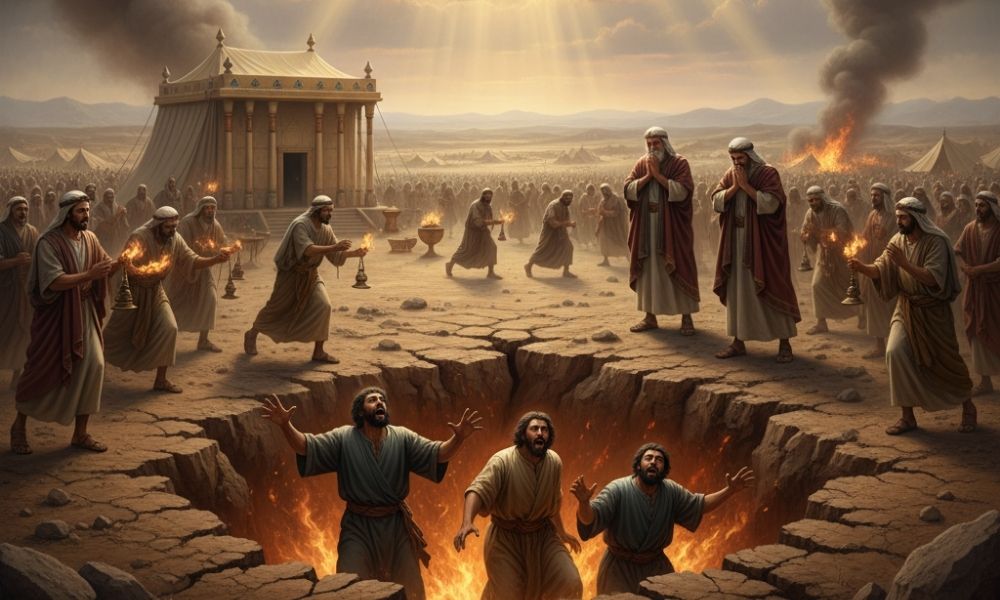
The rebellion of Korah is one of the most sobering events in the wilderness journey of Israel. It reveals the danger of pride, jealousy, and defiance against God’s appointed leadership. Led by Korah, a Levite, along with Dathan, Abiram, and 250 community leaders, the rebels challenged the authority of Moses and Aaron, claiming that all Israelites were equally holy and thus no one should lead above another. God responded with swift and dramatic judgment, reaffirming His chosen servants and warning His people against rebellion.
Quick Facts
Event: The rebellion of Korah against Moses and Aaron
Key Figures: Korah (a Levite), Dathan and Abiram (Reubenites), Moses, Aaron, 250 leaders of Israel
Primary Source: Numbers 16:1–50
Era: The Wilderness Period (after the Exodus, before entering Canaan)
Location: The wilderness near the camp of Israel
Consequence: The earth swallowed the rebels; fire consumed the 250 men; Aaron’s priesthood was divinely confirmed
Context of the Event
As the Israelites journeyed through the wilderness toward Canaan, frustration and discontent grew. Many had already complained about food, leadership, and God’s timing. In this climate of unrest, Korah, from the tribe of Levi, led a rebellion against Moses and Aaron.
Korah and his allies—Dathan and Abiram from the tribe of Reuben—gathered 250 prominent leaders, accusing Moses and Aaron of exalting themselves over the congregation:
“You have gone too far! The whole community is holy, every one of them, and the Lord is with them. Why then do you set yourselves above the Lord’s assembly?” (Numbers 16:3, NIV)
Their complaint appeared spiritual but was rooted in envy and ambition. Korah, a Levite, already had special service in the tabernacle but wanted the priesthood itself, which God had given exclusively to Aaron’s line.
Moses’ Response
When Moses heard their accusations, he fell facedown before God in humility and grief. He proposed a test to let God decide who was truly chosen for priestly service:
“In the morning the Lord will show who belongs to Him and who is holy.” (Numbers 16:5, NIV)
Each man was to bring a censer filled with incense before the Lord. Moses warned Korah and his followers that their rebellion was not against him or Aaron but against the Lord Himself.
God’s Judgment
The next day, Korah and the 250 leaders stood with their censers before the tent of meeting. Meanwhile, Dathan and Abiram refused to come, accusing Moses of failing to bring them into a “land flowing with milk and honey.” Their words mocked God’s promise and denied their own rebellion.
Then Moses declared a sign:
“If these men die a natural death, then the Lord has not sent me. But if the Lord brings about something totally new, and the earth opens its mouth and swallows them… then you will know that these men have treated the Lord with contempt.” (Numbers 16:29–30, NIV)
At that very moment, the ground split open beneath them, and the earth swallowed Korah, Dathan, Abiram, their families, and their possessions. The people fled in terror as fire came out from the Lord and consumed the 250 men offering incense.
Aftermath and God’s Mercy
The next day, the entire Israelite community grumbled again, blaming Moses and Aaron for the deaths. God’s anger broke out in a plague that killed 14,700 people before Aaron, acting as high priest, ran into the midst of the assembly with his censer and made atonement for the people. His intercession stopped the plague—proving again that God had appointed Aaron as mediator.
Confirmation of Aaron’s Priesthood (Numbers 17)
To settle the issue once and for all, God commanded each tribe to present a staff before Him. Aaron’s staff miraculously budded, blossomed, and produced almonds, symbolizing life, authority, and divine choice. It was kept in the tabernacle as a sign against rebellion.
Key Characters
- Korah: A Levite who coveted the priesthood and led others into rebellion.
- Dathan and Abiram: Reubenite leaders who challenged Moses’ authority and were swallowed by the earth.
- Moses: The humble leader who interceded for Israel and trusted God to vindicate him.
- Aaron: The appointed high priest whose authority was confirmed by God through miracles.
Major Themes
- Rebellion Against God’s Order: Resisting God’s chosen leadership is equivalent to resisting God Himself.
- Pride and Envy: Korah’s desire for power led to destruction, warning against selfish ambition in spiritual service.
- Divine Justice and Mercy: God’s swift judgment preserved the holiness of His people, while His mercy through Aaron’s intercession showed compassion.
- Authority and Holiness: True spiritual authority comes from God’s calling, not human ambition.
- Reminder to the Community: The budding of Aaron’s staff symbolized that life and leadership flow only from God’s choice.
Key Passages
- Numbers 16:3 (NIV):
“You have gone too far! The whole community is holy… Why then do you set yourselves above the Lord’s assembly?” - Numbers 16:32 (NIV):
“The earth opened its mouth and swallowed them and their households, and all those associated with Korah.” - Numbers 16:35 (NIV):
“And fire came out from the Lord and consumed the 250 men who were offering the incense.” - Numbers 17:8 (NIV):
“Aaron’s staff… had not only sprouted but had budded, blossomed and produced almonds.”
Theological Significance
The rebellion of Korah illustrates that God defends His order and His chosen servants. Spiritual privilege never grants the right to self-exaltation. Holiness and leadership come by divine appointment, not personal ambition. The event also foreshadows Christ, the ultimate High Priest, whose authority and mediation alone secure peace with God.
This story stands as a warning and a reminder: those who challenge God’s will fall, but those who serve humbly under His direction are preserved.







Leave a Reply