
Sihon

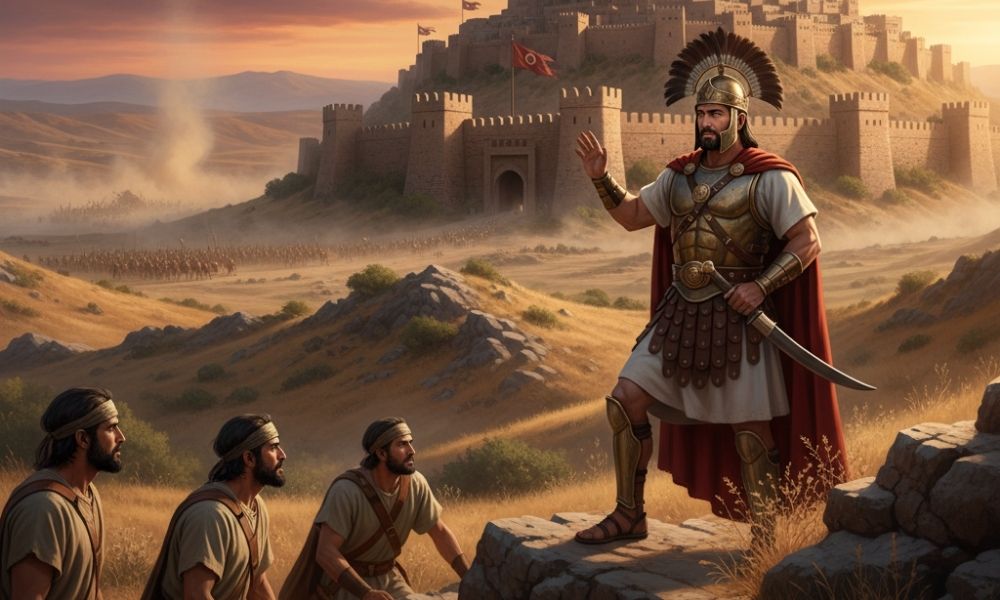
Sihon was the Amorite king who attacked Israel and lost his entire kingdom, becoming a lasting example of God’s power to clear the way for His people.


Sihon appears in the Old Testament as a powerful Amorite ruler whose defeat became a major turning point for Israel on their journey to the Promised Land. His refusal to allow Israel passage through his territory led to a decisive battle that showcased God’s protection over Israel and opened the way for their settlement east of the Jordan.


Quick Facts

Name: Sihon
Title: King of the Amorites
Region: Heshbon (modern-day Jordan)
Era: Time of Moses (~13th century BCE)
Known For: Refusing Israel passage; defeated by Moses
Key Texts: Numbers 21, Deuteronomy 2, Joshua 12
Legacy: His conquered land became home to the tribes of Reuben and Gad


Name & Identity

Sihon was the Amorite king who ruled from Heshbon. The Amorites were a powerful Canaanite people known for fortified cities and strong armies. Sihon’s kingdom controlled important trade routes, making him a strategic and influential ruler.


Territory & Kingdom

Sihon governed a wide stretch of land east of the Jordan River. His domain included Heshbon and land previously taken from the Moabites. This made him a key force in the region, and his military strength was well known.


Major Biblical Event

Israel peacefully requested passage through his land during their journey from Egypt. Sihon refused and instead chose to attack. This led to a complete Israelite victory. Israel captured his territory, cities, and settlements.

This battle became a symbol of God’s power to overcome strong nations on behalf of Israel.


Aftermath & Legacy

The land Israel captured from Sihon was later allotted to the tribes of Reuben and Gad, forming an important settlement east of the Jordan. His defeat is recalled repeatedly in Scripture as evidence of God’s mighty acts.


Notable Passages

  • Numbers 21:21–31: Israel’s request and Sihon’s attack
  • Deuteronomy 2:24–37: Moses retells the victory
  • Joshua 12:2–5: Sihon listed among the defeated kings

Leave a Reply

Your email address will not be published. Required fields are marked *

Bible Characters

  • Mark (John Mark)
  • Mark (John Mark)

    John Mark was a young disciple who overcame early failure to become a trusted companion of Paul and Peter, ultimately authoring the dynamic Gospel that bears his name.


  • Matthew

    Matthew was a despised tax collector transformed by grace into a devoted apostle, whose Gospel bridges the Old and New Testaments by proclaiming Jesus as the promised Messiah and King.


  • Nabal

    Nabal was a wealthy but foolish landowner whose arrogance and refusal to show hospitality to David led to divine judgment and his sudden death.


Biblical Events

  • David lies to Ahimelech
  • Mark (John Mark)

    John Mark was a young disciple who overcame early failure to become a trusted companion of Paul and Peter, ultimately authoring the dynamic Gospel that bears his name.


  • Matthew

    Matthew was a despised tax collector transformed by grace into a devoted apostle, whose Gospel bridges the Old and New Testaments by proclaiming Jesus as the promised Messiah and King.


  • Nabal

    Nabal was a wealthy but foolish landowner whose arrogance and refusal to show hospitality to David led to divine judgment and his sudden death.


Bible Locations

  • Jezreel
  • Jezreel

    Jezreel was the fertile royal seat of King Ahab and Queen Jezebel, famous for the murder of Naboth and the site where divine judgment eventually wiped out their entire dynasty.


  • Aphek

    Aphek was a strategic military stronghold and staging ground on the Sharon Plain where the Philistines gathered to capture the Ark and where David was providentially released from the Philistine army.


  • Lachish

    Lachish was the second most powerful city in ancient Judah, a mighty fortress whose dramatic fall to Assyria and Babylon serves as a pivotal moment in biblical history and archaeology.


You May Also Like:

  • The Twelve Tribes of Israel were the tribal divisions descended from the sons of Jacob that formed the foundation of the Israelite nation and the prophetic lineage of the Messiah.

  • After burying Jacob in Canaan with great honor, Joseph reassures his fearful brothers that their past evil was overruled by God for good, and he dies in Egypt with a prophetic command that his bones be carried to the Promised Land.

  • On his deathbed, Jacob gathers his twelve sons to prophesy their destinies, disqualifying the firstborns for their sins and appointing Judah as the royal line and Joseph as the fruitful recipient of the double portion.

  • On his deathbed, Jacob adopts Joseph’s two sons as his own, deliberately crossing his hands to give the greater blessing to the younger Ephraim, declaring God as his Shepherd and Redeemer.

Bibliva

FREE
VIEW





