
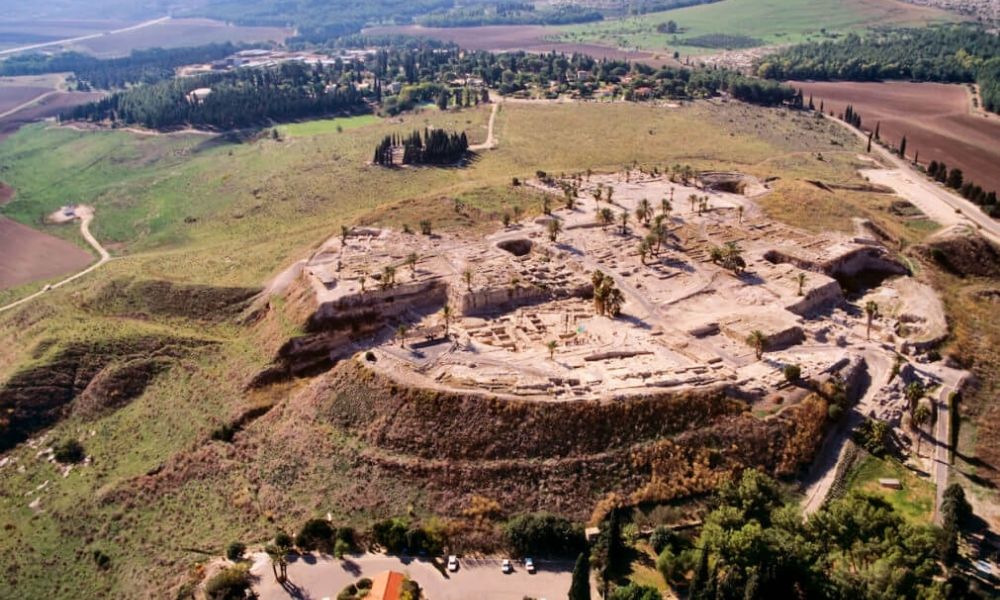
Megiddo is one of the most strategic and symbolically charged sites in the Bible — a place where ancient armies clashed, kingdoms fought for control, and prophetic imagination pointed to a final showdown. Sitting at a natural crossroads in northern Israel, Megiddo shaped regional history for millennia and later inspired the term “Armageddon.”
Quick Facts
Name: Megiddo (Hebrew: Megiddō — “Place of Troops,” “Stronghold”)
Region: Northern Israel, overlooking the Jezreel Valley
Era: Bronze Age to Roman Period
Known for: Strategic fortress city, major battles, prophetic symbolism
Biblical Theme: Conflict, judgment, turning points in history
Symbol: High mound (tell) — layers of kingdoms rising and falling
Location & Meaning
Megiddo sits on a tell — a mound built from many layers of past civilizations. Its name reflects its purpose: a fortified seat of power where rulers defended trade routes linking Africa and Asia.
Historical & Biblical Context
Megiddo controlled the Via Maris, the main international highway. Because of this position, the city saw repeated invasions, sieges, and political struggles.
- Conquered by Thutmose III of Egypt (famous battle recorded on temple walls)
- Fortified under Solomon with gates, stables, and administrative centers
- Battleground where King Josiah died confronting Pharaoh Necho (2 Kings 23:29)
The site comes to represent decisive conflict — moments when nations rise or fall.
Major Roles / Identity
- Military fortress: Home to defensive walls, gates, and command structures
- Trade hub: Controlled movement between civilizations
- Symbolic battleground: Linked with dramatic turning points in history
Key Biblical References
- 1 Kings 9:15: Solomon builds and fortifies Megiddo
- 2 Kings 23:29: King Josiah falls in battle at Megiddo
- Revelation 16:16: “Armageddon” — understood as Har-Megiddo, the “mountain of Megiddo”
Prophetic Significance
Revelation uses Megiddo symbolically as a setting for the ultimate confrontation between good and evil. The image of armies gathering at this historic chokepoint communicates the idea of cosmic conflict with decisive outcomes.
Archaeological Features
Excavations reveal:
- City gates from Solomon’s era
- Massive water system tunnels
- Palatial structures
- Stables and storehouses
- Layers of burned destruction marking repeated conquests
These layers tell a story of recurring struggle and renewal.
Legacy & Impact
Megiddo stands as:
- A reminder of the shifting powers of human history
- A symbol of final justice and decisive change
- A key to understanding biblical geography and prophecy
Its influence stretches far beyond Israel, shaping theology, archaeology, and global imagination through the idea of “Armageddon.”







Leave a Reply