
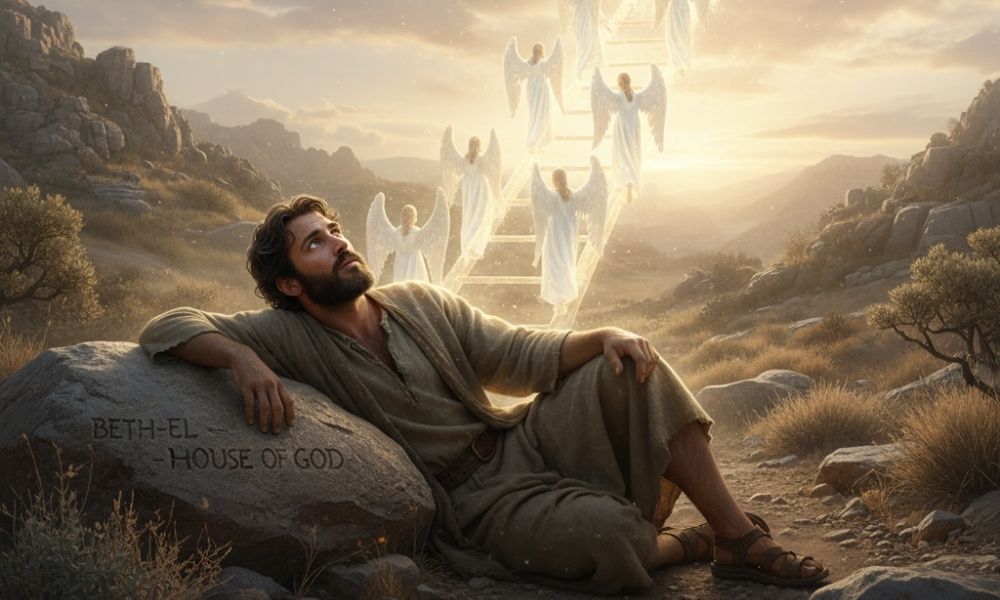
Bethel is a significant biblical location remembered as a place of encounter, covenant, and worship. Its name appears throughout the Old Testament, marking it as a spiritual landmark where God revealed Himself, guided His people, and affirmed His promises. Bethel became a symbol of divine presence and a reminder that God walks with His people even in seasons of transition.
Name: Bethel (Hebrew: Beit El, “House of God”)
Region: Central highlands of ancient Israel
First Mention: Genesis 12
Key Figures: Abraham, Jacob, Joshua, Samuel
Themes: Encounter, covenant, worship, identity, renewal
Origins and Name
Meaning: Bethel means “House of God,” reflecting its role as a sacred location where God’s presence was experienced.
Biblical Context
Early Patriarchal Site:
Abraham built an altar here during his journey through Canaan (Genesis 12:8).
Jacob’s Vision:
Bethel is most famous as the site where Jacob, fleeing to Haran, dreamed of a ladder reaching heaven. He awoke saying, “Surely the Lord is in this place,” naming it Bethel (Genesis 28:10–19).
Major Roles / Identity
Place of Divine Encounter:
A spiritual gateway where heaven and earth seemed to meet.
Covenant Landmark:
A memorial of God’s promise to Jacob about land, protection, and lineage.
Community Worship Site:
Later became a location of worship and national gatherings under judges and prophets.
Key Events
Jacob’s Return:
When Jacob returned years later, God reaffirmed His covenant at Bethel (Genesis 35:1–15).
Joshua’s Campaigns:
Bethel appears in Israel’s conquest narratives.
Era of Judges:
Israel sought God’s guidance from Bethel (Judges 20:18).
Legacy & Significance
Bethel stands as a reminder of God’s nearness, especially in moments of fear or uncertainty. It represents spiritual awakening, renewed commitment, and divine assurance.
Symbolism
House of God: The meeting point between humanity and the divine.
Stairway to Heaven: Represents connection, revelation, and God’s ongoing presence.







Leave a Reply