
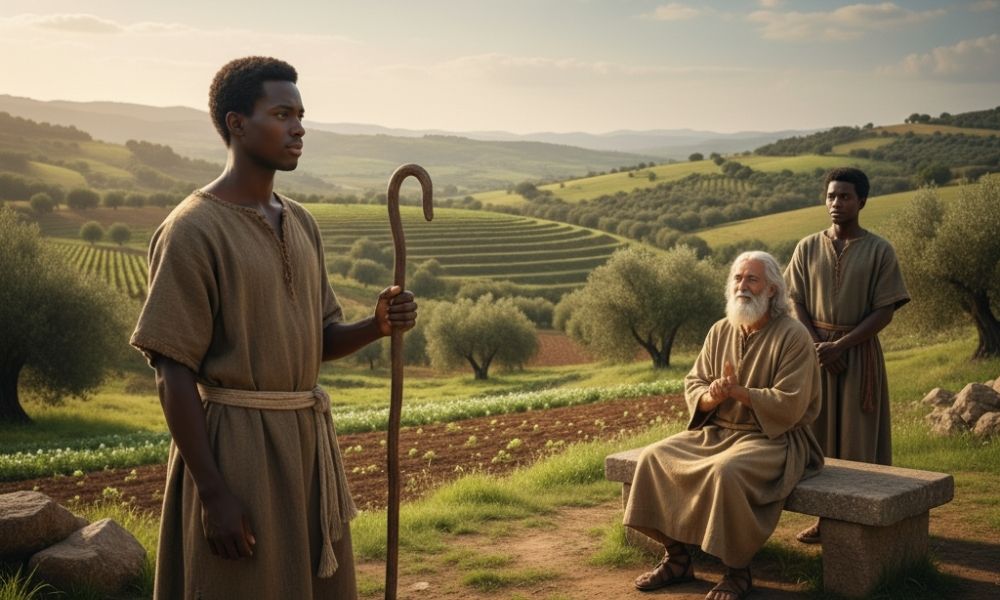
Manasseh is remembered as Joseph’s firstborn son — a figure whose name carries the weight of healing, memory, and restoration. His tribe grew into one of Israel’s largest and most geographically spread-out communities, shaping both sides of the Jordan and playing major roles throughout Israel’s history.
Name: Manasseh
Meaning: “Causing to forget,” “God has made me forget my trouble”
Father: Joseph
Mother: Asenath
Brother: Ephraim (younger, yet received the greater blessing)
Adopted By: Jacob, elevated to tribal status
Region: Split between western Canaan and the Transjordan east of the Jordan River
Symbol: A grazing ox or sheaf of grain
Known For: Large territory, warrior clans, and shared identity across two regions
Lineage and Family Background
Manasseh was born in Egypt during Joseph’s season of influence under Pharaoh. His name reflects Joseph’s emotional healing from years of betrayal and separation. When Jacob arrived in Egypt, he adopted both Manasseh and Ephraim as his own sons, giving Joseph a double inheritance.
Although Manasseh was the firstborn, he received the lesser blessing when Jacob intentionally placed his right hand on Ephraim. This reversal set the stage for Ephraim’s rise — yet Manasseh still became a major tribe with deep significance.
Biblical Era and Context
During the conquest of Canaan, the tribe of Manasseh gained territory on both sides of the Jordan River — a unique dual inheritance. The eastern half settled in fertile grazing lands ideal for livestock, while the western half occupied rugged highlands and valleys.
Manasseh produced influential leaders, including Makir’s warrior clans and Zelophehad’s daughters, who boldly appealed for land rights and shaped inheritance laws in Israel.
In the monarchy era, parts of Manasseh drifted spiritually, but the tribe also played key roles in Hezekiah’s reforms and later restoration movements.
Major Roles and Identity
- Firstborn of Joseph: Represents memory, healing, and restoration.
- Dual Territory Tribe: Spread across both sides of the Jordan.
- Warrior Community: Known for strong fighters and bold leadership clans.
- Land Reform Influence: Zelophehad’s daughters became a landmark case.
- Bridge Tribe: Geographically and symbolically connecting east and west.
Key Traits (as a figure and a tribe)
- Resilience: Maintained identity across widely separated regions.
- Courage: Produced fierce warriors, including Gileadite clans.
- Stability: Represented Joseph’s firstborn inheritance.
- Adaptability: Thrived in varied landscapes — mountains, valleys, and plains.
Main Life and Tribal Events
- Jacob adopts Manasseh and Ephraim, granting them tribal status.
- Blessing scene where Ephraim is placed above Manasseh.
- Half-tribe settles east of the Jordan with Reuben and Gad.
- Western half settles in central highlands near Ephraim.
- Zelophehad’s daughters secure inheritance rights (Numbers 27).
- Tribe participates in conquest battles under Joshua.
- Tribal regions become central in prophetic messages about restoration.
Major Relationships
- Joseph: A father whose healing shaped Manasseh’s name.
- Jacob: Grandfather who blessed him but elevated Ephraim.
- Ephraim: Brother and counterpart tribe.
- Makir: Forefather of strong warrior clans east of the Jordan.
- Moses & Joshua: Leaders during land assignments and tribal settlement.
Notable Passages
- Genesis 41:51 — Meaning of Manasseh’s name.
- Genesis 48 — Adoption and blessing scene.
- Numbers 27 & 36 — Inheritance of Zelophehad’s daughters.
- Joshua 17 — Western Manasseh’s land and challenges.
- Judges 6 — Gideon, from Manasseh, called to deliver Israel.
Legacy and Impact
Manasseh’s story blends healing, inheritance, and strength. As a tribe, they influenced Israel’s geography, warfare, and legal traditions. Their dual territory foreshadows unity across diversity — a theme familiar to many African communities that hold identity across borders, clans, and regions.
Manasseh shows that even without the spotlight of the firstborn blessing, one can still carry immense impact, strength, and legacy.
Symbolism / Typology
- Manasseh: Memory healed, restoration after hardship.
- Dual territory: Bridge-building and shared identity across spaces.
- Makir clans: Strength and resilience.
- Zelophehad’s daughters: Justice, inheritance, women’s rights in ancient law.







Leave a Reply