
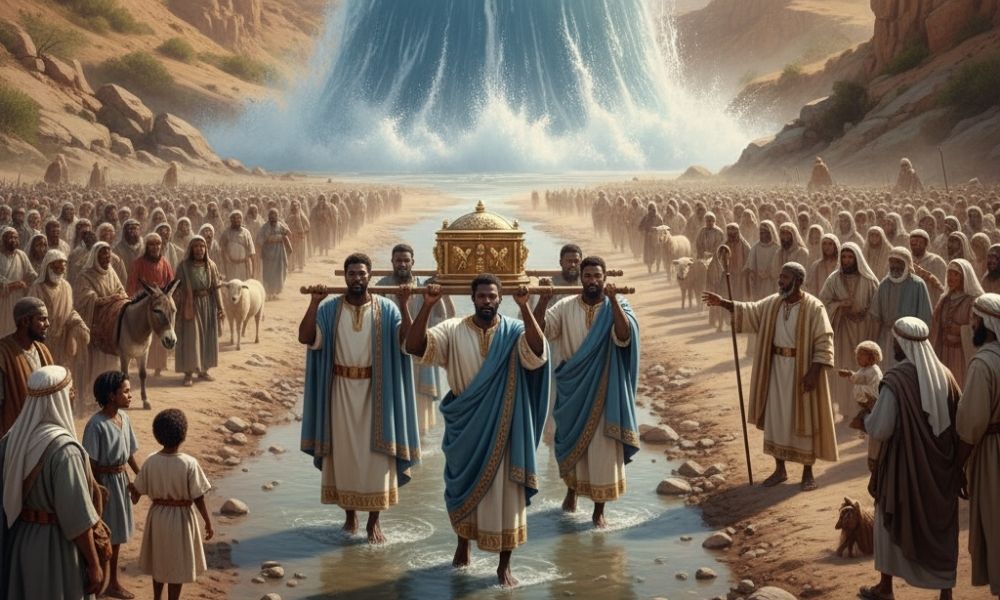
The Book of Joshua is the story of a people finally stepping into their long-awaited promise. After generations of slavery and forty years of wandering, Israel crosses into Canaan under a new leader — Joshua — and begins the challenging work of conquering, settling, and ordering a new nation. It is a book filled with courage, judgment, mercy, covenant renewal, and the faithfulness of God from start to finish.
Book: Joshua
Category: Historical Books
Era: After Moses’ death, early settlement of Canaan
Author: Traditionally Joshua (with later priestly editing)
Themes: Fulfillment, obedience, leadership, covenant loyalty
Key Places: Jordan River, Jericho, Ai, Shiloh, Shechem
Key Figures: Joshua, Rahab, Caleb, Eleazar the priest
Symbol: The Jordan crossing and the land inheritance
Background and Setting
Israel stands at the edge of the Promised Land, camped east of the Jordan. Moses has died, and leadership passes to Joshua — a man known for faith, courage, and obedience. The land of Canaan is politically fragmented, filled with fortified cities, established kings, and strong armies. The book captures Israel’s shift from a nomadic community to a settled nation guided by God’s commands.
Purpose and Major Roles
- Show God fulfilling His promises: Every good word spoken to Abraham, Isaac, and Jacob takes form.
- Establish Israel in the land: Boundaries, tribes, cities, and justice systems are defined.
- Teach obedience: Victory flows from listening to God.
- Highlight true leadership: Joshua becomes a model for bold and faithful leadership.
- Renew covenant identity: Israel recommits itself to living under God’s authority.
Key Themes
- Courage and Strength: Repeatedly commanded by God as the basis of Joshua’s leadership.
- God’s Presence: Symbolized by the Ark of the Covenant leading every major movement.
- Holy War: Battles reflect divine judgment against corruption and violence in Canaan.
- Unity of Tribes: Despite different territories, Israel must remain one nation.
- Rest in the Land: The book ends with peace, stability, and fulfillment.
Major Events
- Commissioning of Joshua: God promises His presence as He was with Moses.
- Rahab and the Spies: A Canaanite woman shows remarkable faith and becomes part of Israel’s story.
- Crossing the Jordan: The waters part as priests carry the Ark, mirroring the Red Sea.
- Fall of Jericho: A victory won not by weapons but by obedience.
- Defeat and Redemption at Ai: Achan’s sin brings failure; repentance brings restoration.
- Southern and Northern Campaigns: Israel defeats coalitions of kings and takes control of the land.
- Division of the Land: Detailed allotments for each tribe; challenges in incomplete conquest.
- Cities of Refuge: A justice system that protects the innocent.
- Covenant Renewal at Shechem: A national call to loyalty — “Choose this day whom you will serve.”
Key Characters
- Joshua: Moses’ successor, a courageous commander guided by God.
- Rahab: Her faith saves her household and establishes her in Israel’s lineage.
- Caleb: A warrior who receives Hebron at age 85, symbolizing unwavering faith.
- Achan: His hidden sin teaches the danger of disobedience.
- Eleazar the Priest: Oversees the sacred process of land distribution.
Notable Passages
- Joshua 1: “Be strong and courageous.”
- Joshua 2: Rahab’s confession of faith.
- Joshua 6: Collapse of Jericho’s walls.
- Joshua 7–8: Achan’s sin and Israel’s restoration.
- Joshua 10–11: Defeat of regional kings.
- Joshua 24: “As for me and my house, we will serve the Lord.”
Legacy and Impact
The Book of Joshua is foundational for understanding land, identity, justice, and leadership in ancient Israel. It shows that God’s promises unfold through courage, unity, and obedience. For African contexts — where nation-building, land stewardship, and moral leadership are central — Joshua’s story speaks powerfully about faithfulness, community, and the long journey toward a promised future.







Leave a Reply