
We live in a world that runs on proof. Before we buy, we check the reviews. Before we invest, we read the reports. Before we commit, we demand a guarantee. We are taught to trust what we can see, what we can measure, and what we can control. The unknown is a liability. Uncertainty is a weakness. We build our lives on the foundation of our own understanding, and when that foundation cracks—when the diagnosis comes, when the job is lost, when the relationship fails—we are terrified. We are a people who trust in our sight.
But the Kingdom of God operates on a different currency. It’s not called “proof”; it’s called “faith.” God does not ask us to trust Him because we see the solution. He asks us to trust Him before we see the solution. He asks us to trust Him in the chaos, in the confusion, and in the heart of the storm. The fundamental question of the Christian life is not “Do I understand what God is doing?” but “Do I trust Who God is?”
Main Scripture: Proverbs 3:5-6 (NIV)
“Trust in the LORD with all your heart and lean not on your own understanding; in all your ways submit to him, and he will make your paths straight.”
Quick Insights
- Trust is not a feeling; it is a conscious decision.
- Leaning on our own understanding is the root of all our anxiety.
- God is not asking you to understand Him; He is asking you to trust Him.
- A “straight path” does not mean an “easy path”; it means a “divinely directed” one.
- Trust is the currency of God’s Kingdom; you cannot transact with Him without it.
- Partial trust is, in reality, total distrust.
- God’s command to trust is always followed by His promise to act.
Illustration
Imagine a trapeze artist. She is swinging high above the crowd, holding onto her bar. Across the expanse, her partner is swinging, ready to catch her. The moment comes. For her to complete the act, she must do the one thing that feels insane: she must let go. She must release her grip on the bar she is holding, with no guarantee but the word of her partner. For a terrifying split second, she is suspended in mid-air, holding onto nothing, flying by momentum alone. She is not in control. She is completely dependent. That terrifying, split-second release… that is trust. We are clinging to the bar of our “own understanding,” our plans, our fears, and our control. And God is swinging toward us, his arms outstretched, saying, “Let go. I will catch you.”
Let’s explore what it means to truly let go and trust the Lord.
1. The Fear of Letting Go
The first part of trust is honesty. We must admit that it is terrifying. “Trust in the LORD with all your heart…” That “all” is the hardest part. It means giving Him the parts we’re afraid He’ll drop. It means admitting we are not in control. Look at Peter. He saw Jesus walking on the water in the middle of a storm. Jesus said, “Come.” And Peter, in a moment of radical trust, let go of the boat. He stepped out and did the impossible—he walked on water. But the Bible says when he saw the wind and the waves, he became afraid. He took his eyes off the Master and put them on his circumstances. He started leaning on his own understanding—and his understanding said, “Men don’t walk on water; storms are dangerous.” And he began to sink.
📖 Matthew 14:29-30 (NIV)
“Then Peter got down out of the boat, walked on the water and came toward Jesus. But when he saw the wind, he was afraid and, beginning to sink, cried out, ‘Lord, save me!’”
Our circumstances will always scream louder than God’s promise. Trust is the choice to listen to His whisper above the roar of the wind.
2. The Fallacy of ‘My Own Understanding’
The verse commands us to “lean not on your own understanding.” This is the core of the battle. We think we know best. We think our logic is a safer bet than God’s promise. Look at Job. His understanding told him that good people get rewarded and bad people get punished. But then, he lost everything. His “understanding” was shattered. His friends came and tried to apply their faulty understanding: “You must have sinned, Job.” For 37 chapters, Job begs God for an explanation. He wants to understand. When God finally speaks, He never answers Job’s “Why?” question. Instead, God reveals Who He is. He asks, “Where were you when I laid the foundations of the earth?”
📖 Job 42:2-3 (NIV)
“I know that you can do all things; no purpose of yours can be thwarted. You asked, ‘Who is this that obscures my plans without knowledge?’ Surely I spoke of things I did not understand, things too wonderful for me to know.”
Job’s healing didn’t come when he understood his pain; it came when he trusted his God. Your understanding is finite; His is infinite. Trusting Him means surrendering your need to know “why.”
3. The Forge of Faith
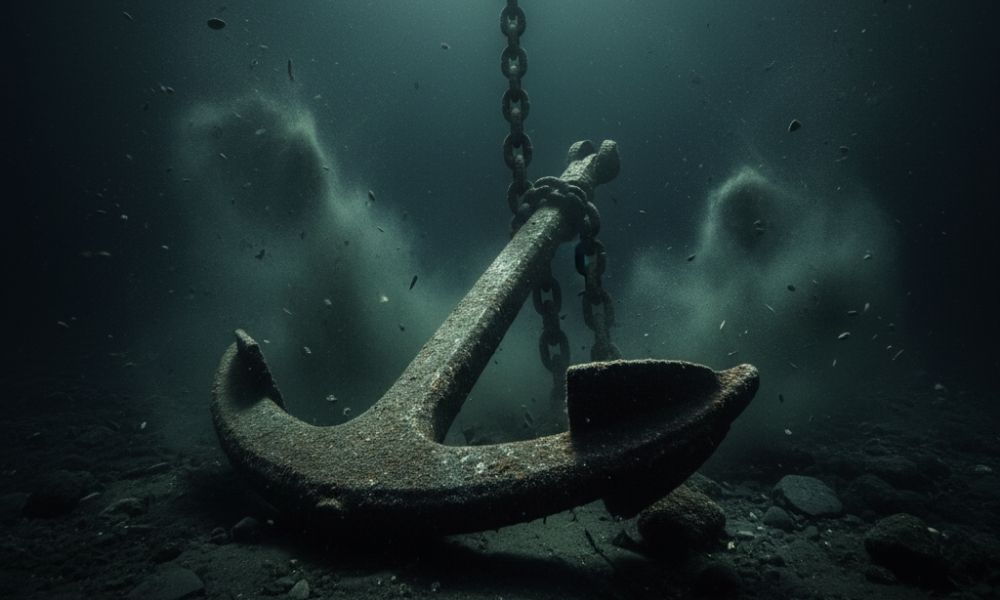
This kind of radical trust isn’t born in comfort. It’s forged in fire. God doesn’t test your faith to find out how strong it is—He already knows. He tests your faith so that you will find out how strong it is. He allows the storms to prove the anchor. He allows the fire to refine the gold. He is more interested in proving your faith than in pleasing your feelings.
📖 1 Peter 1:6-7 (NIV)
“In all this you greatly rejoice, though now for a little while you may have had to suffer grief in all kinds of trials. These have come so that the proven genuineness of your faith—of greater worth than gold, which perishes even though refined by fire—may result in praise, glory and honor when Jesus Christ is revealed.”
A faith that cannot be tested cannot be trusted. God is using the trial you are in right now to burn away your self-reliance, leaving only a pure, genuine trust in Him alone.
4. The Action of ‘All Your Ways’
Trust is not a passive virtue. It’s an active verb. The verse says, “in all your ways submit to him.” This is how we practice trust. It’s a moment-by-moment, conscious choice. You submit your finances to Him. You submit your family to Him. You submit your career, your future, and your fears to Him. This is the faith of Shadrach, Meshach, and Abednego. They were told to bow to an idol or be thrown into a blazing furnace. Their response was the ultimate definition of trust.
📖 Daniel 3:17-18 (NIV)
“If we are thrown into the blazing furnace, the God we serve is able to deliver us from it… But even if he does not, we want you to know, Your Majesty, that we will not serve your gods…”
This is mature trust. It is not “I will trust God if He delivers me.” It is “I will trust God even if He does not.” It is a trust that is not conditional on the outcome, because it is anchored in the character of God Himself.
5. The Promise of a ‘Straight Path’
This brings us to the glorious conclusion of the verse. If we do our part—trust, not lean, submit—He promises to do His part: “…and he will make your paths straight.” This doesn’t mean your life will be easy, or flat, or free of obstacles. It means your path will have a divine destination. It means He will guide you. He will clear the brush you can’t see through. He will move the mountains you can’t climb. He will lead you around the pitfalls you don’t even know are there. Your job is not to see the entire path. Your job is to trust the Guide for the very next step.
📖 Psalm 37:23-24 (NIV)
“The LORD makes firm the steps of the one who delights in him; though he may stumble, he will not fall, for the LORD upholds him with his hand.”
He has you by the hand. He will not let you fall.
Conclusion: The Anchor Holds
Quote: “Trust is not knowing what the future holds. It is knowing Who holds the future.”
Theological Point: True biblical trust is the complete surrender of our finite understanding to God’s infinite wisdom, believing His character is good and His plan is perfect, even when His process is painful and His path is unclear.
Prayer Guide: Take a moment and identify the “bar” you are clinging to. Is it your need for control? Your bank account? Your logic? Your fear? Ask God for the supernatural courage to let go. Confess your “own understanding” and ask Him to replace it with His peace. Pray for the strength to say “even if He does not,” and for the faith to submit “all your ways” to Him.







Leave a Reply