
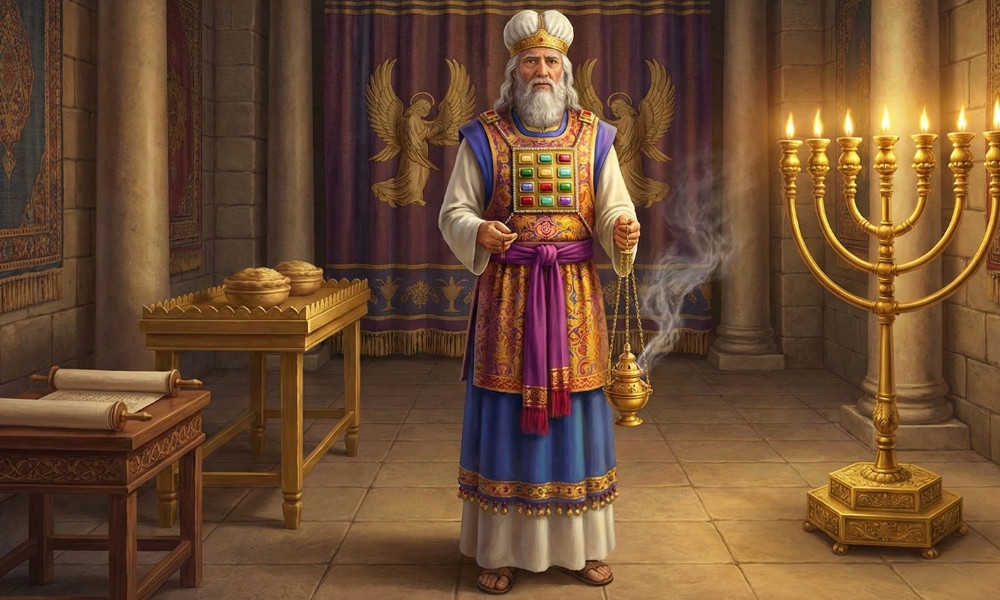
The Priests (Hebrew: Kohanim) were the set-apart mediators between God and the people of Israel, specifically chosen from the lineage of Aaron within the tribe of Levi. Tasked with the sacred duty of maintaining the holiness of God’s dwelling place, they offered sacrifices, taught the Law, and interceded for the nation. While the entire tribe of Levi assisted in the sanctuary, only the priests could perform the altar rituals and enter the Holy Place. Their office serves as a profound foreshadowing of the ultimate mediation and atonement provided by Jesus Christ, the Great High Priest.
Quick Facts
- Hebrew Title: Kohen (Plural: Kohanim)
- Tribe: Levi
- Family Line: Descendants of Aaron (brother of Moses)
- Era: From the Exodus (c. 1446 BCE) through the destruction of the Second Temple (70 CE)
- First High Priest: Aaron
- Key Location: The Tabernacle, later the Temple in Jerusalem
- Key Duties: Offering sacrifices, burning incense, teaching Torah, blessing the people
- Symbol: The Breastplate of Judgment (Hoshen) and the Altar
- New Testament Counterpart: Jesus Christ (High Priest); The Church (Royal Priesthood)
Definition & Title Meaning
Meaning: The Hebrew word Kohen likely stems from a root meaning “to stand” (as in standing before the Lord to serve) or “to do business/mediate.” It designates one who officiates at religious rites.
Distinction: Not all Levites were priests. While all priests were Levites, the priesthood was restricted strictly to the male descendants of Aaron. Other Levites served as assistants, guards, and musicians but could not approach the altar.
Lineage / Family Background
Tribe: Levi, the third son of Jacob.
Clan: Kohathites (responsible for carrying the holy furniture).
Specific Family: The house of Aaron. Aaron and his sons (Nadab, Abihu, Eleazar, and Ithamar) were the first to be consecrated.
Succession: The High Priesthood was generally hereditary, passing from father to the eldest surviving son, intended to be a perpetual covenant of salt (Numbers 18:19).
Biblical Era / Context
Establishment: Instituted by God at Mount Sinai during the Exodus wanderings to manage the Tabernacle.
The Temple Period: Under King Solomon, the priesthood became central to the national identity, operating within the First Temple.
Post-Exile: After the Babylonian captivity, figures like Ezra (a priest and scribe) revitalized the law, and the High Priest became the de facto political leader of Judea in the absence of a king.
Major Roles / Identity
Mediator: They stood between a holy God and a sinful people, offering blood sacrifices to make atonement for sin.
Teacher of the Law: They were responsible for instructing Israel in the statutes and ordinances of God (Leviticus 10:11).
Judge: They adjudicated cases regarding ritual impurity, infectious skin diseases (tsara’at), and sometimes difficult legal disputes.
Blesser: They were commanded to pronounce the priestly blessing (Aaronic Benediction) upon the people (Numbers 6:24–26).
Key Character Traits & Requirements
Holiness: They had to be “set apart.” This involved strict regulations regarding marriage, mourning, and physical contact to avoid ritual impurity.
Physical Wholeness: A priest could have no physical defect or blemish (Leviticus 21), symbolizing the perfection required to approach God.
Sobriety: They were forbidden from drinking wine or fermented drink when entering the Tent of Meeting (Leviticus 10:9).
Obedience: The fatal error of Nadab and Abihu (offering “unauthorized fire”) underscored that God must be worshipped exactly as He commanded, not according to human innovation.
Main Historical Developments
Consecration of Aaron: Moses washes and clothes Aaron and his sons, anointing them with oil and blood to mark them as holy (Leviticus 8).
The Korah Rebellion: A challenge to the exclusive priesthood of Aaron’s line, settled by God causing Aaron’s staff to bud, blossom, and produce almonds (Numbers 16–17).
The Shiloh Era: The priesthood became corrupt under Eli’s sons, leading to the loss of the Ark of the Covenant, though the line continued through faithful Samuel (who functioned in priestly roles).
Davidic Organization: King David organized the priests into 24 divisions (courses) to ensure orderly service, a system that remained in place through the time of Jesus (1 Chronicles 24).
The Ultimate Sacrifice: The tearing of the Temple curtain at the death of Jesus signified the end of the exclusive Levitical access to God.
Major Relationships
God (Yahweh): The priests were God’s direct servants; He was their “inheritance”—they received no land portion like the other tribes.
The Levites: Their kinsmen who served as their assistants, managing the logistics of the Temple so the priests could focus on the altar.
The High Priest: The head of the order, the only one permitted to enter the Holy of Holies once a year on the Day of Atonement (Yom Kippur).
Notable Passages
Exodus 28: Detailed description of the priestly garments, including the Ephod and the Breastplate with 12 stones representing the tribes.
Leviticus 16: The instructions for the Day of Atonement, the pinnacle of priestly duty.
Numbers 6:24–26: The Priestly Blessing: “The LORD bless you and keep you…”
Hebrews 4:14–16: The New Testament explains Jesus as the great High Priest who sympathizes with our weaknesses.
1 Peter 2:9: The description of New Testament believers as a “royal priesthood.”
Legacy & Impact
Theological Foundation: The Levitical priesthood established the concepts of substitutionary atonement, holiness, and mediation that are central to Judeo-Christian theology.
Preservation of Scripture: Priests and scribes (often from priestly lines like Ezra) were instrumental in preserving, copying, and teaching the Hebrew Scriptures.
Christian Priesthood: The concept shifts in the New Testament; Christ fulfills the role of the High Priest, and all believers are now considered priests who can approach God directly (The Priesthood of All Believers).
Symbolism / Typology
The High Priest: A type of Christ. Just as the High Priest bore the names of the tribes on his shoulders and heart, Christ bears the burden and love for His people.
The Sacrificial System: Foreshadowed the once-for-all sacrifice of Jesus on the cross.
White Linen Garments: Symbolized the righteousness and purity required to stand in God’s presence.
No Land Inheritance: Symbolized that God Himself is the believer’s portion and exceeding great reward.
Explore
Extra-Biblical References
Josephus: The Jewish historian (himself a priest) provides detailed records of priestly lineages and the political power of the High Priests in the First Century.
Dead Sea Scrolls: The Qumran community (Essenes) was largely led by disenfranchised priests who rejected the corruption of the Jerusalem priesthood during the Hasmonean period.
Mishnah: Contains tractates (like Yoma) detailing the minute procedures priests followed during Temple service.







Leave a Reply