
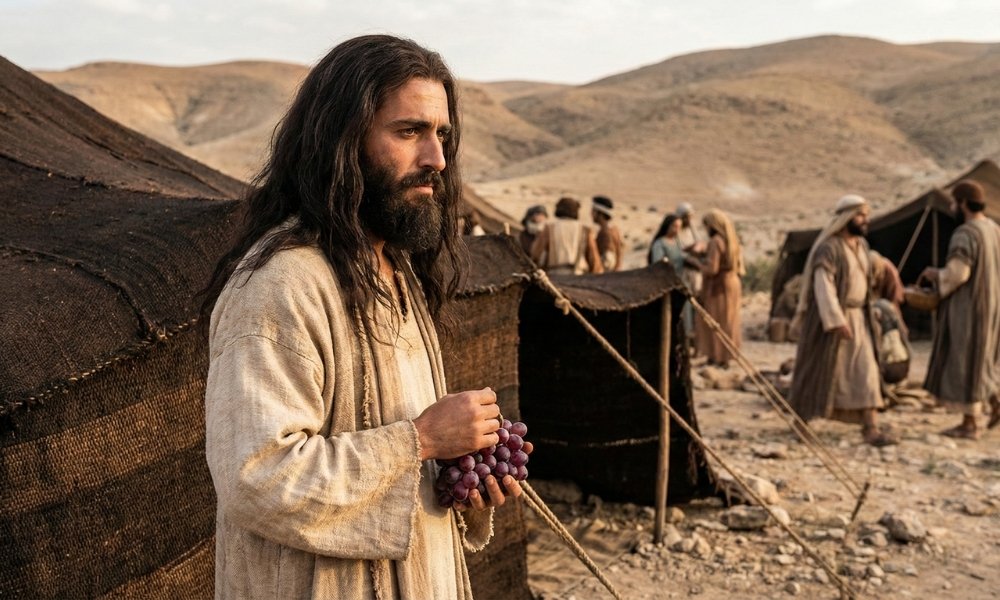
The Nazarites were individuals who voluntarily took a special vow of dedication and separation to God, as outlined in the Law of Moses. This vow could be temporary or lifelong and was open to both men and women. The Nazarite vow represented a higher level of consecration, setting the individual apart for a specific holy purpose or period of deep devotion. While the Levitical priesthood was hereditary, the Nazarite vow allowed any Israelite to enter into a state of distinct holiness, marked by specific physical and dietary restrictions that served as a public sign of their commitment to Yahweh.
- Scriptural Basis: Numbers 6
- Name Meaning: “Separated one,” “Consecrated one,” or “Set apart”
- Duration: Usually temporary, occasionally lifelong
- Key Restrictions: No fruit of the vine, no cutting of hair, no contact with dead bodies
- Key Figures: Samson, Samuel, John the Baptist
- Context: A voluntary act of devotion available to non-Levites
- Symbol: Long, uncut hair
Name Meaning
The word “Nazarite” comes from the Hebrew word Nazir, derived from a root meaning “to separate,” “to consecrate,” or “to abstain.” It signifies one who is separated from the common practices of life and separated to God. It is distinct from “Nazarene,” which refers to a person from the town of Nazareth.
Origin of the Order / Scriptural Basis
Source: The specific laws governing the Nazarite vow are established in the Book of Numbers.
Scope: Unlike the priesthood, which was reserved for the tribe of Levi, the Nazarite vow was an egalitarian institution accessible to all Israelites regardless of gender or lineage.
Purpose: To allow a layperson to attain a status of holiness similar to that of the High Priest, dedicating themselves entirely to the Lord for a season or a lifetime.
The Three Prohibitions (The Vow)
1. Dietary Restriction (The Vine): They were forbidden to consume anything that came from the grapevine—wine, grape juice, grapes, raisins, or even the seeds and skins. This represented a denial of earthly pleasures and social indulgences often associated with wine.
2. Appearance Restriction (The Razor): No razor was to touch the Nazarite’s head. They let their hair grow long as a visible, public sign of their subjection to God. The hair was considered the “crown” of their God upon them.
3. Purity Restriction (The Corpse): They were strictly forbidden from going near a dead body, even that of a close relative. This level of purity paralleled the requirements for the High Priest, emphasizing that the God of Life takes precedence over earthly family ties.
Biblical Era / Context
Era: The vow was practiced from the time of Moses through the period of the Judges, the Monarchy, and into the New Testament era.
Cultural Context: In a culture where wine was a staple and contacting the dead was a necessary part of family mourning, the Nazarite stood out sharply. Their long hair would have been immediately recognizable, marking them as holy figures in the community.
Key Figures (Famous Nazarites)
Samson: The most famous lifelong Nazarite. His vow was commanded by an angel before his birth. His supernatural strength was linked to his uncut hair.
Samuel: His mother Hannah vowed to give him to the Lord for all the days of his life, ensuring no razor would ever be used on his head.
John the Baptist: Announced by an angel to be “great in the sight of the Lord” and was never to take wine or fermented drink, marking him as a Nazarite from birth.
The Apostle Paul: Acts describes Paul taking a vow and purifying himself with other men who had taken a vow, demonstrating that the practice continued among early Jewish Christians.
The Lifecycle of a Vow
Initiation: The individual voluntarily made the vow to the Lord.
The Period of Separation: The Nazarite lived under the strict requirements of the vow. If the vow was broken accidentally (e.g., sudden death occurred near them), they had to undergo purification, shave their head, offer a sacrifice, and restart the count of days from zero.
Completion: At the end of the specified time, the Nazarite came to the Tabernacle or Temple. They offered extensive sacrifices, shaved their head at the entrance, and burned the hair in the fire of the sacrifice. After this, they were released from the restrictions.
Key Character Traits
Self-Denial: Willingness to give up legitimate comforts for spiritual focus.
Public Witness: Willingness to bear a physical mark (long hair) that identified them as God’s property.
Radical Holiness: Maintaining a standard of purity higher than the average citizen.
Discipline: Required constant vigilance to avoid ritual impurity or breaking dietary rules.
Notable Passages
Numbers 6:1-8: The foundational law defining the Nazarite restrictions.
Judges 13:5: The angel’s instruction regarding Samson: “The boy is to be a Nazirite, dedicated to God from the womb.”
Amos 2:11-12: God rebukes Israel for corrupting the Nazarites: “I also raised up prophets from among your children and Nazirites from among your youths… But you made the Nazirites drink wine.”
Lamentations 4:7: A description of the Nazarites’ former glory: “Her princes [Nazarites] were brighter than snow and whiter than milk.”
Legacy & Impact
Spiritual Equality: It provided a way for non-priests to experience deep, priestly holiness.
Model of Devotion: The Nazarite vow serves as a biblical model for fasting and setting oneself apart for a season of prayer.
Concept of Holiness: It reinforced the idea that holiness involves separation from the world and separation unto God.
Symbolism / Typology
The Uncut Hair: Symbolized the vitality of life dedicated wholly to God; a crown of glory.
Abstinence from the Vine: Symbolized a rejection of earthly joy in favor of the joy found in God’s presence.
Typology of Christ: While Jesus was not a “Nazarite” (he drank wine), he fulfilled the spiritual essence of the vow: he was the ultimate “Holy One,” completely separated from sin and dedicated to the Father’s will.







Leave a Reply