
The Hittites are one of the most significant yet historically enigmatic groups in the Old Testament. For centuries, critics doubted their existence as a major power until 19th-century archaeology uncovered their massive empire centered in Hattusa (modern-day Turkey). In the Bible, they appear in two distinct forms: first, as a local clan living in the hill country of Canaan (the “sons of Heth”) during the time of the Patriarchs, and second, as a mighty military kingdom to the north that interacted with the Israelite monarchy. They are credited with introducing iron technology and the chariot to the region. While often listed among the enemies of Israel, they also provided some of David’s most loyal soldiers, most notably Uriah.
- Ancestry: Descendants of Heth (son of Canaan, son of Ham)
- Region: Anatolia (Turkey) & pockets within Canaan (Hebron)
- Capital: Hattusa (in modern Turkey)
- Biblical Role: Landowners, military mercenaries, northern superpower
- Key Figures: Ephron (sold land to Abraham), Uriah (David’s mighty man), Ahimelech
- Context: The “Great Empire” collapsed around 1200 BCE, leaving smaller “Neo-Hittite” states
- Symbol: The Chariot
Name Meaning
The term “Hittite” (Hebrew: Chitti) means “descendant of Heth.” Heth was the second son of Canaan. The name is synonymous with terror in war (due to their chariots) but also implies a structured, legalistic society.
Origin / Family Background
Genealogy: Genesis 10:15 lists Heth as the son of Canaan. This places the biblical “sons of Heth” within the Canaanite family tree, technically making them Hamitic.
The Two “Hittites”:
- The Local Clan: Small enclaves living in the hills of Judah (Hebron area) during Abraham’s time. These were likely an early migration or a distinct Canaanite subgroup.
- The Great Empire: The massive civilization based in Anatolia (Turkey) that rivaled Egypt. When the Bible speaks of the “Kings of the Hittites” in the time of Solomon (1 Kings 10:29), it refers to the Neo-Hittite city-states that remained after the empire’s collapse.
Biblical Era / Context
Patriarchal Age: They were settled landowners in Hebron. Abraham negotiated with them as a resident alien. The Conquest: They were one of the seven nations Joshua was commanded to destroy. The Monarchy: By David and Solomon’s time, they were no longer just enemies but allies, trading partners, and integrated soldiers in the Israelite army.
Key Interactions / Events
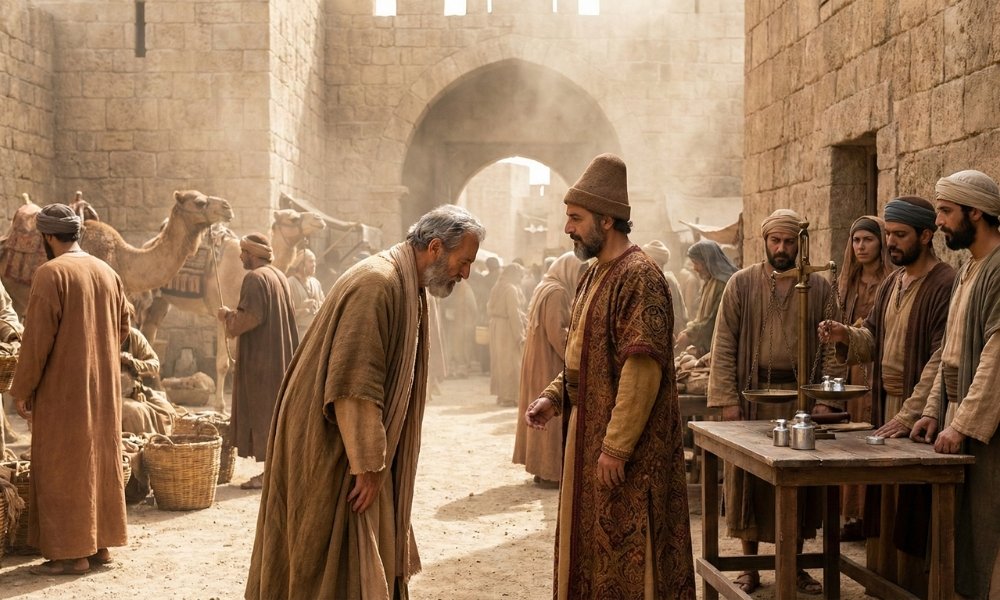
Abraham’s Purchase (The Cave of Machpelah): When Sarah died, Abraham needed a burial place. He approached the “sons of Heth” at the city gate. Ephron the Hittite offered the cave for 400 shekels of silver. This transaction (Genesis 23) is the first legal purchase of land in the Promised Land by a Hebrew.
Esau’s Rebellion: Esau married two Hittite women, Judith and Basemath. Genesis 26:35 states these women “were a source of grief to Isaac and Rebekah,” likely due to their pagan practices, prompting Jacob to seek a wife from his own kin.
The Betrayal of Uriah: The most famous Hittite in the Bible is Uriah, one of King David’s “Mighty Men.” While Uriah was fighting for Israel, David committed adultery with his wife, Bathsheba. Uriah’s refusal to sleep with his wife while his comrades were in battle highlights a level of integrity that shamed the King of Israel.
Solomon’s Trade: Solomon acted as an arms dealer between Egypt and the Hittite kings, importing chariots and horses (1 Kings 10:29). He also married Hittite women (1 Kings 11:1), which contributed to his spiritual decline.
Major Roles / Identity
The Legalists: The biblical account of Abraham’s purchase shows the Hittites as a people of strict protocol, contracts, and commerce.
The Warriors: Hittites were synonymous with military prowess. The panicked Syrian army in 2 Kings 7 fled because they thought the “Kings of the Hittites” had been hired to attack them.
The Faithful Foreigner: Through Uriah, the Hittites provide a counter-example to the Israelites: a foreigner who is more loyal to Yahweh’s standard of righteousness than the King of Israel himself.
Notable Passages
Genesis 23:10-16: The negotiation between Abraham and Ephron the Hittite.
Joshua 1:4: God defines the Promised Land’s borders extending to “all the country of the Hittites.”
2 Samuel 11:3: The identification of Bathsheba—not by her father, but as “the wife of Uriah the Hittite.”
Ezekiel 16:3: A metaphor for Jerusalem’s unclean origins—”Your father was an Amorite and your mother a Hittite.”
Legacy & Impact
Archaeological Verification: For years, the Hittites were used by skeptics to mock the Bible’s historical accuracy, as no evidence of them existed outside Scripture. The discovery of their massive capital, Hattusa, and their library of clay tablets in 1906 was a stunning vindication of biblical history.
The Suzerainty Treaty: Scholars have discovered that the structure of the Book of Deuteronomy perfectly matches the structure of ancient Hittite treaties (Suzerain-Vassal treaties). This suggests the Covenant at Sinai was written in a legal format the Israelites would recognize.
Symbolism / Typology
Iron and Chariots: They symbolize advanced human technology and military might that cannot save (Psalm 20:7).
Uriah: A “type” of the suffering servant—innocent, loyal, and betrayed by those he served.
Jerusalem’s Heritage: Jerusalem was originally a Jebusite/Hittite city before David conquered it, symbolizing how God takes what is pagan and sanctifies it for His glory.







Leave a Reply