
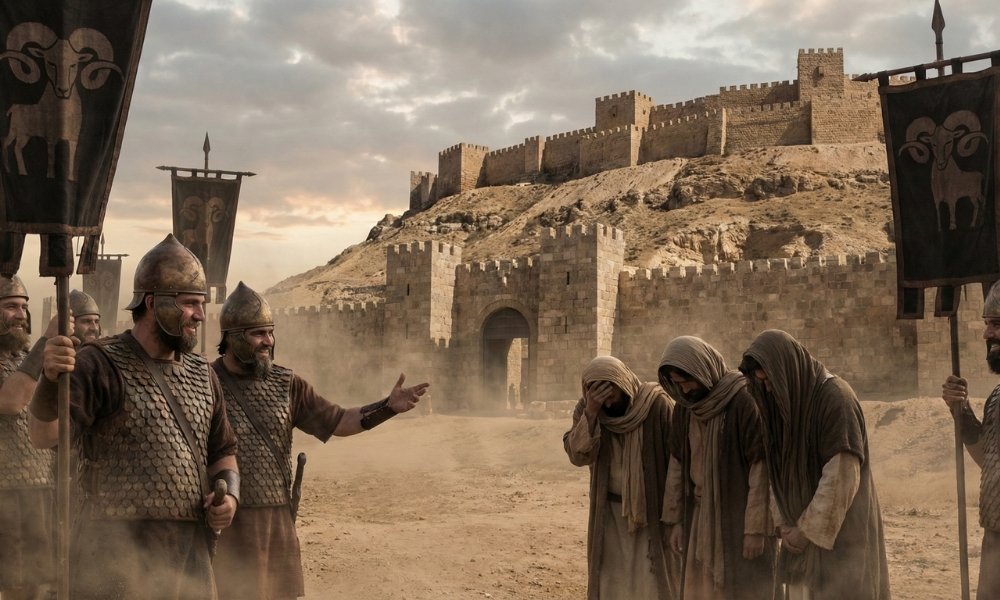
The Ammonites were a Semitic people who inhabited the region east of the Jordan River, north of Moab and bordering the Arabian Desert. Like the Moabites, they were descendants of Lot, making them distant relatives of the Israelites. Despite this kinship, the Ammonites were bitter and persistent enemies of Israel throughout the biblical narrative. They were infamous for their cruelty in warfare—such as threatening to gouge out the eyes of their enemies—and for their detestable religious practices, particularly the worship of Milcom (or Molech), which often involved child sacrifice. Their capital city, Rabbah, stood where the modern city of Amman, Jordan, is located today.
- Ancestry: Descendants of Ben-Ammi (Son of Lot)
- Region: East of the Jordan (Modern Amman, Jordan)
- Capital: Rabbah (Rabbath-Ammon)
- Key God: Milcom / Molech
- Key Figures: Nahash, Hanun, Baalis, Tobiah
- Biblical Role: Cruel oppressors and idolaters
- Fate: Conquered by Babylon; absorbed into Arab populations
- Symbol: The Ram’s Horn
Name Meaning
The name “Ammon” comes from their ancestor Ben-Ammi, which literally means “Son of my people” or “Son of my kin.” Like “Moab,” this name highlights their origin within the family of Lot, distinguishing them from the indigenous Canaanites while emphasizing their separation from the chosen line of Abraham.
Origin / Family Background
The Cave of Zoar: The origin of the Ammonites mirrors that of the Moabites. After the destruction of Sodom, Lot’s younger daughter, fearing the extinction of humanity, made her father drunk and conceived a son by him. She named him Ben-Ammi, who became the father of the Ammonites.
Territorial Inheritance: God explicitly instructed Moses not to harass the Ammonites or take their land during the approach to Canaan, stating that He had given that territory to the descendants of Lot as an inheritance.
Biblical Era / Context
The Judges: The Ammonites oppressed the Israelites east of the Jordan for eighteen years, crushing the tribes of Gad and Reuben. This oppression led to the rise of Jephthah the Gileadite.
The Monarchy: They were at the height of their power during the reigns of Saul and David. Their kings, particularly Nahash and Hanun, are portrayed as arrogant and barbaric tyrants who sought to humiliate Israel.
The Exile: After the fall of Jerusalem, the Ammonite king Baalis conspired to assassinate Gedaliah, the governor appointed by Babylon, further destabilizing the remnant of Judah.
Key Interactions / Events
Jephthah’s War: When the Ammonites attacked, the elders of Gilead turned to the outcast Jephthah. Jephthah tried diplomacy, reciting history to prove Israel had not stolen Ammonite land. The Ammonite king refused to listen. Jephthah defeated them but made a tragic vow that cost him his only daughter.
The Siege of Jabesh Gilead: King Nahash of Ammon besieged the Israelite town of Jabesh Gilead. When the townspeople asked for a treaty, Nahash offered a gruesome condition: he would only make a treaty if he could gouge out the right eye of every man in the town to bring disgrace on all Israel. This atrocity spurred Saul to rally the tribes and deliver his first great victory as King.
The Shaming of David’s Men: King David sent ambassadors to console the new Ammonite king, Hanun, after his father’s death. Suspecting them of being spies, Hanun seized the ambassadors, shaved off half their beards, cut their garments in the middle at the buttocks, and sent them away in shame. This sparked a massive war that ended with David conquering Rabbah (during which Uriah the Hittite was killed).
Major Roles / Identity
The Cruel Aggressor: The Ammonites are characterized by a specific brand of sadistic cruelty—threatening eye-gouging and ripping open pregnant women—intended to humiliate and terrorize God’s people.
The Idolater: Their worship of Milcom (often identified with Molech) was a primary source of spiritual corruption. Solomon, in his old age, built a high place for “Molech the detestable god of the Ammonites” to please his foreign wives, a sin that contributed to the tearing of his kingdom.
Notable Passages
Genesis 19:38: “The younger daughter also had a son, and she named him Ben-Ammi; he is the father of the Ammonites of today.”
1 Samuel 11:2: “But Nahash the Ammonite replied, ‘I will make a treaty with you only on the condition that I gouge out the right eye of every one of you and so bring disgrace on all Israel.’”
2 Samuel 10:4: “So Hanun seized David’s envoys, shaved off half of each man’s beard, cut off their garments in the middle at the buttocks, and sent them away.”
1 Kings 11:7: “On a hill east of Jerusalem, Solomon built a high place for Chemosh the detestable god of Moab, and for Molech the detestable god of the Ammonites.”
Legacy & Impact
The Name “Amman”: The modern capital of Jordan, Amman, preserves the ancient name of the Ammonites. The citadel in Amman sits on the site of the biblical Rabbah.
Tobiah the Ammonite: In the days of Nehemiah, Tobiah the Ammonite was a leading antagonist who mocked the rebuilding of Jerusalem’s walls, showing that the animosity persisted even after the return from Exile.
Symbolism / Typology
Molech/Milcom: The Ammonite god is the ultimate symbol of the world demanding the sacrifice of the innocent (children) for the sake of prosperity or security.
Humiliation: The actions of Nahash and Hanun symbolize the Enemy’s desire not just to defeat the believer, but to shame, disfigure, and mock the image of God in them.







Leave a Reply