
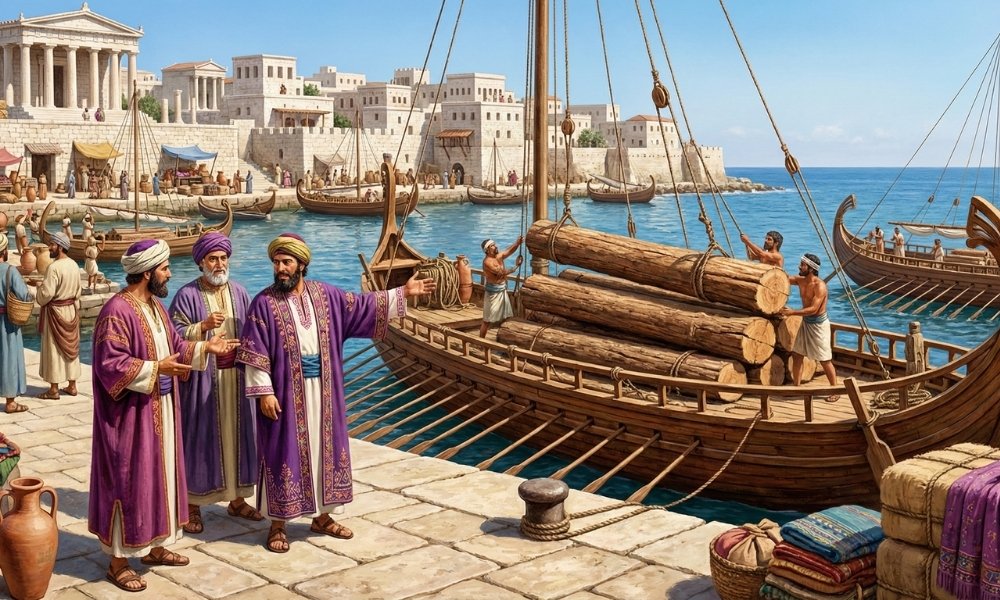
The Sidonians were the inhabitants of the ancient city of Sidon, one of the oldest and most prominent city-states of Phoenicia. Located on the Mediterranean coast (in modern-day Lebanon), they were renowned master builders, expert loggers, and fearless mariners who dominated sea trade in the ancient world. In the Bible, they are often synonymous with the Phoenicians. While they were valuable commercial partners to Israel—providing the cedar and craftsmanship for Solomon’s Temple—they were also a primary source of spiritual corruption. It was the Sidonian princess Jezebel who aggressively introduced the worship of Baal and Asherah into Israel, leading to a dark era of religious persecution.
- Ancestry: Descendants of Sidon (Firstborn of Canaan)
- Region: Coastal Phoenicia (Modern Lebanon)
- Key City: Sidon (Zidon)
- Key Deities: Baal, Ashtoreth (Astarte)
- Key Figures: Ethbaal (King), Jezebel, the Widow of Zarephath
- Biblical Role: Wealthy merchants, skilled artisans, religious corrupters
- Fate: Prophesied against by Ezekiel; conquered by Alexander the Great
- Symbol: The Purple Murex Snail / Cedar Tree
Name Meaning
The name “Sidon” (Hebrew: Tzidon) is derived from a root meaning “Hunting” or “Fishing.” It likely translates to “Fishery” or “Fishing Town,” reflecting their primary livelihood and orientation toward the sea.
Origin / Family Background
The Firstborn of Canaan: Genesis 10:15 lists Sidon as the firstborn son of Canaan. This grants the city a position of primacy among the Canaanite nations. In earlier biblical texts (like Judges), the term “Sidonians” is often used as a blanket term for all Phoenicians, before the rise of their rival city, Tyre.
The Maritime Empire: Unlike the agrarian Israelites, the Sidonians looked outward. They established colonies across the Mediterranean (including Carthage) and were famous for their monopoly on purple dye, produced from the murex snail found on their shores.
Biblical Era / Context
The Conquest: Although allotted to the tribe of Asher, the Israelites failed to conquer Sidon (Judges 1:31). The Sidonians remained an independent power, often oppressing Israel during the time of the Judges.
The Monarchy: Under David and Solomon, relations turned from hostility to commerce. The Sidonians possessed skills the Israelites lacked, particularly in felling timber and hewing stone.
The Divided Kingdom: The relationship became toxic through marriage. King Ahab of Israel married Jezebel, the daughter of Ethbaal, King of the Sidonians. This political alliance brought economic prosperity but spiritual ruin.
Key Interactions / Events
Building the Temple: When Solomon prepared to build the Temple, he contacted Hiram (King of Tyre, who ruled over Sidonians) acknowledging, “There is no one among us who knows how to cut timber like the Sidonians.” Sidonian artisans provided the cedars of Lebanon and the technical expertise for the construction.
Elijah and the Widow: In a striking irony, while the Sidonian princess Jezebel was killing prophets in Israel, God sent the prophet Elijah to hide in the Sidonian town of Zarephath. There, a poor Sidonian widow fed him with a miraculous jar of flour and jug of oil, and Elijah raised her son from the dead. Jesus later referenced this event to show that God’s grace extends to Gentiles (Luke 4:26).
The Cult of Jezebel: Jezebel remained a proud Sidonian, refusing to assimilate to Israelite culture. She imported 450 prophets of Baal and 400 prophets of Asherah, feeding them at the royal table and effectively converting the capital of Samaria into a Sidonian colony of worship.
Major Roles / Identity
The Artisans: They were the premier craftsmen of the ancient world. Homer’s Iliad praises Sidonian silver work and embroidery. The Bible acknowledges their superior skill in logging and construction.
The Corrupting Influence: The goddess Ashtoreth is specifically called “the abomination of the Sidonians” (2 Kings 23:13). Solomon’s worship of her is cited as a major reason for the division of his kingdom.
Notable Passages
Genesis 10:15: “Canaan was the father of Sidon his firstborn.”
1 Kings 5:6: “Command that cedars from Lebanon be cut for me… for you know that we have no one so skilled in felling timber as the Sidonians.”
1 Kings 16:31: “He [Ahab] not only considered it trivial to commit the sins of Jeroboam… but he also married Jezebel daughter of Ethbaal king of the Sidonians, and began to serve Baal.”
Luke 4:26: “Yet Elijah was not sent to any of them, but to a widow in Zarephath in the region of Sidon.”
Legacy & Impact
Glass and Purple: The Sidonians are credited with the invention or perfection of glassblowing and the production of Tyrian purple dye. This dye was so expensive that it became the color of royalty for centuries.
The Alphabet: As Phoenicians, the Sidonians were instrumental in spreading the phonetic alphabet to Greece and the rest of the world, replacing clumsy cuneiform and hieroglyphs.
Symbolism / Typology
Luxury without God: Sidon represents high culture, wealth, technology, and artistic beauty that is devoid of moral grounding. It symbolizes the allure of the world’s sophistication which, if embraced (like Ahab embraced Jezebel), leads to spiritual death.
The Unexpected Recipient of Grace: Through the widow of Zarephath and the Syrophoenician woman in the Gospels (who was from this region), the Sidonians symbolize the “outsiders” who sometimes show more faith than the children of the covenant.







Leave a Reply