
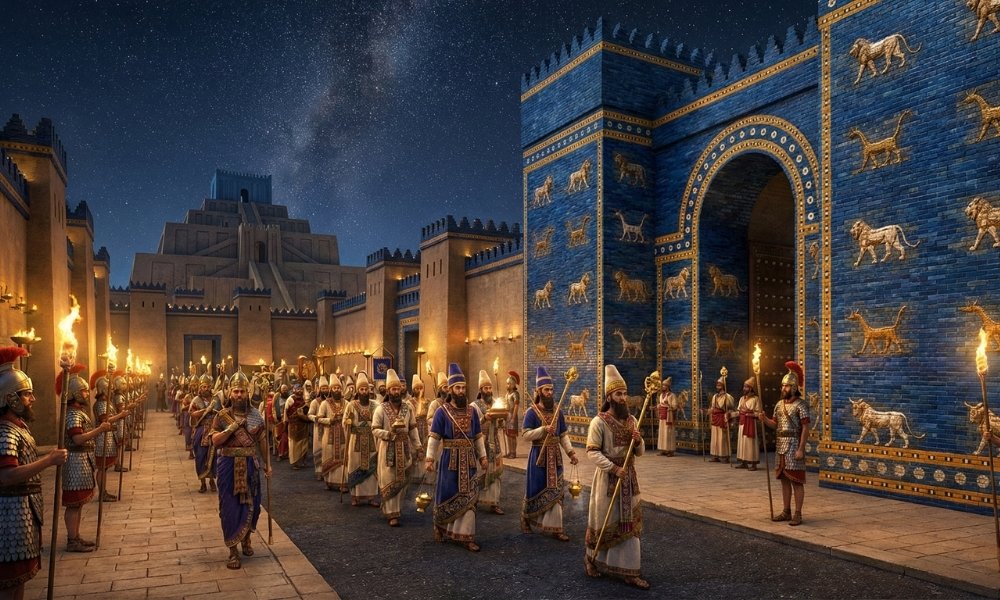
The Chaldeans were a Semitic people who originally inhabited the marshy “Sea Lands” of southern Mesopotamia near the Persian Gulf. In biblical history, they are most famous for two distinct roles: first, as the inhabitants of “Ur of the Chaldeans,” the birthplace of Abraham, and second, as the founders of the mighty Neo-Babylonian Empire. Under leaders like Nebuchadnezzar II, the Chaldeans overthrew the Assyrians and became the dominant world power, serving as the instrument of God’s judgment against Judah. They are responsible for the destruction of Solomon’s Temple and the Babylonian Exile. In the Book of Daniel, the term “Chaldean” also takes on a secondary meaning, referring to a specific caste of elite scholars, astrologers, and magicians.
- Ancestry: Semitic (Descendants of Arpachshad/Chesed)
- Region: Southern Mesopotamia (Babylonia/Iraq)
- Capital: Babylon
- Key God: Marduk (Bel)
- Key Figures: Nebuchadnezzar II, Belshazzar, Merodach-Baladan
- Biblical Role: The destroyers of Jerusalem; the “Golden Head” of empires
- Fate: Conquered by the Persians (Cyrus the Great) in 539 BCE
- Symbol: The Lion with Eagle’s Wings / The Ishtar Gate
Name Meaning
The Hebrew word for Chaldean is Kasdim. The etymology is linked to the patriarch Kesed (a nephew of Abraham), though the name likely refers to the tribes of the Kaldu. In later Greek and biblical usage, the name became synonymous with “Babylonian,” and eventually, it became a job title for “astronomer” or “diviner” because of their fame in the sciences of the stars.
Origin / Family Background
Ur of the Chaldees: The biblical narrative introduces the Chaldeans early in Genesis 11, stating that Abraham’s family originated in “Ur of the Chaldeans.” While the Chaldean empire rose much later, this reference identifies the region of southern Iraq as the cradle from which the Hebrew patriarch was called out.
The Rise to Power: For centuries, the Chaldeans were tribal subjects of the Assyrian Empire. However, a Chaldean general named Nabopolassar rebelled, sacked the Assyrian capital of Nineveh, and established the Neo-Babylonian dynasty, ushering in the “Golden Age” of Babylon.
Biblical Era / Context
The Assyrian Period: The Chaldeans first appear as political agitators. King Merodach-Baladan sent envoys to Hezekiah of Judah to form an alliance against Assyria. Hezekiah foolishly showed them all the gold in his treasury, prompting Isaiah to prophesy that one day, the Chaldeans would return to take it all.
The Exile (The Destroyer): The prophet Habakkuk describes the rise of the Chaldeans with terror, calling them “that ruthless and impetuous people, who sweep across the whole earth to seize dwellings not their own.” They conquered Jerusalem in 586 BCE, burned the Temple, and deported the Jewish aristocracy to Babylon.
The Daniel Narrative: In the court of Babylon, the “Chaldeans” are portrayed as a guild of wise men and magi who served the king. They were the keepers of ancient knowledge, dreams, and omens, often in competition with the Hebrew prophet Daniel.
Key Interactions / Events
The Siege of Jerusalem: Under Nebuchadnezzar, the Chaldean army starved Jerusalem into submission. They breached the walls, blinded King Zedekiah after killing his sons, and carried off the holy vessels of the Temple to the house of their god, Marduk.
The Fiery Furnace: It was the “Chaldeans” who maliciously accused Shadrach, Meshach, and Abednego of not bowing to Nebuchadnezzar’s golden image. The miraculous survival of the three Hebrew men in the furnace served as a divine rebuke to the Chaldean gods.
The Writing on the Wall: The final night of the Chaldean Empire occurred during Belshazzar’s feast. While drinking wine from the stolen Temple cups, a hand appeared and wrote Mene, Mene, Tekel, Parsin. That very night, the Persian army diverted the Euphrates River, entered the city, and killed the Chaldean king.
Major Roles / Identity
The Instrument of Wrath: The prophets Jeremiah and Habakkuk present the Chaldeans not as an independent evil, but as a weapon in God’s hand. God calls Nebuchadnezzar “My servant” because he accomplished the divine discipline of Judah.
The Keepers of Wisdom: They were renowned for their advancements in mathematics and astronomy. They mapped the stars and developed the concept of the zodiac, which is why the Magi (wise men) of the New Testament are culturally linked to this eastern tradition of star-gazing.
Notable Passages
Genesis 11:31: “Terah took his son Abram… they set out from Ur of the Chaldeans to go to Canaan.”
Habakkuk 1:6: “I am raising up the Babylonians [Chaldeans], that ruthless and impetuous people, who sweep across the whole earth.”
2 Kings 25:13: “The Babylonians broke up the bronze pillars, the movable stands and the bronze Sea that were at the temple of the Lord and they carried the bronze to Babylon.”
Daniel 2:2: “So the king summoned the magicians, enchanters, sorcerers and astrologers [Chaldeans] to tell him what he had dreamed.”
Legacy & Impact
The Myth of Babylon: The grandeur of the Chaldean capital—with its Hanging Gardens and massive blue walls—left an indelible mark on history. In the New Testament (Revelation), “Babylon” becomes the eternal symbol of the anti-God world system, luxury, and spiritual harlotry.
Preservation of Judah: Paradoxically, while they destroyed the Temple, the Chaldean policy of resettling exiles in communities (rather than scattering them like Assyria did) allowed the Jews to preserve their identity, compile the Scriptures, and eventually return to rebuild.
Symbolism / Typology
The Head of Gold: In Daniel’s vision of the statue, the Chaldean Empire is the “Head of Gold,” representing the highest concentration of absolute power and glory among human kingdoms.
The Lion: In Daniel’s vision of the four beasts, the Chaldeans are depicted as a lion with eagle’s wings, symbolizing royalty, ferocity, and swift conquest.







Leave a Reply