
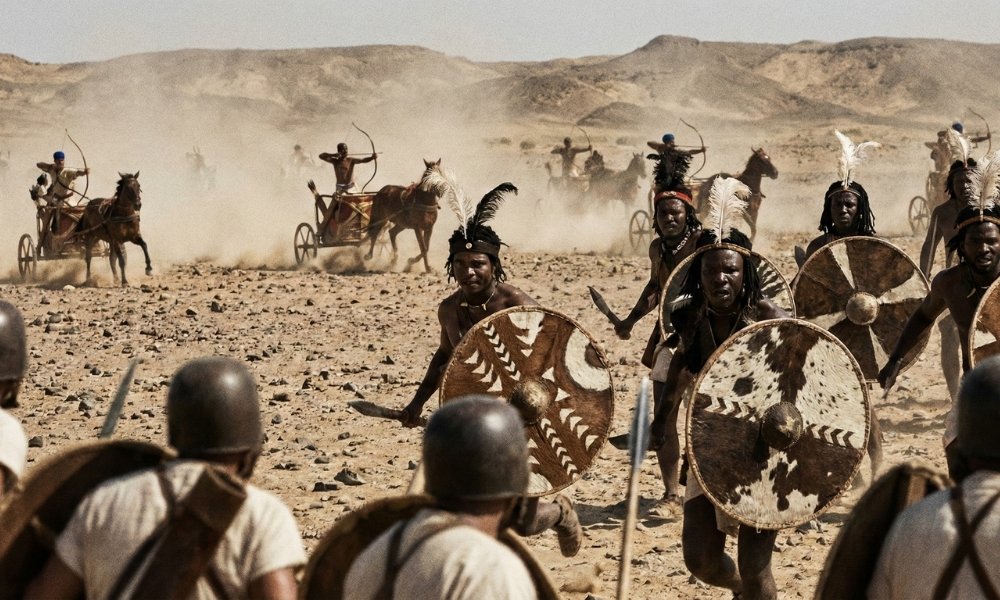
The Libyans, referred to in the Old Testament variously as Put (Phut), Lubim, or Lehabim, were a Hamitic people inhabiting the North African coast west of Egypt. Throughout biblical history, they appear primarily as renowned warriors and mercenaries who bolstered the armies of the Egyptian Pharaohs. Known for their skill with the shield and the bow, they were frequent participants in the major geopolitical conflicts of the region, sometimes invading Judah alongside Egyptian forces and other times facing the judgment of God through the prophets. In the New Testament, the region of Libya (specifically Cyrene) plays a crucial role in the passion of Christ and the early expansion of the church.
- Ancestry: Descendants of Put or Mizraim (Sons of Ham)
- Region: North Africa (West of Egypt, Cyrenaica)
- Key Cities: Cyrene
- Key Figures: Simon of Cyrene, Lucius of Cyrene
- Biblical Role: Mercenary warriors, handlers of the shield, early converts
- Fate: Conquered by successive empires (Rome, Arabs); influential in early Christianity
- Symbol: The Shield / The Feather (in Egyptian art)
Name Meaning
The Hebrew terms Put and Lubim refer to the region of Libya. “Put” is often associated with the bow or a specific tribal region. The term Lubim is linguistically connected to the “Libu” or “Ribou” tribes mentioned in ancient Egyptian records, who frequently attacked or allied with the Nile Delta.
Origin / Family Background
The Hamitic Line: Genesis 10 lists Put as the third son of Ham, making the Libyans brothers to the Egyptians (Mizraim), Cushites (Ethiopians), and Canaanites. Another group, the Lehabim, are listed as descendants of Mizraim (Egypt), suggesting a very close ethnic and geographic bond between the Egyptians and the Libyans.
The Western Neighbors: While Cush lay to the south of Egypt, Put/Libya lay to the west. This geography often placed them in the role of Egypt’s flanks or auxiliary forces.
Biblical Era / Context
The Mercenary Era: In the Old Testament, the Libyans rarely acted as a standalone empire against Israel. Instead, they were the “muscle” for other powers. When Pharaoh Shishak or Pharaoh Necho marched to war, the Libyans were the elite infantry handling the shields.
The Prophetic Era: Prophets like Jeremiah, Ezekiel, and Nahum frequently listed Libya among the nations that would fall under God’s judgment, warning Egypt that her “helpers” (Cush and Put) would not be able to save her from the Babylonians.
The New Testament (Cyrene): By the Roman era, the Libyan city of Cyrene had a large Jewish population. “Libyans” (Cyrenians) were present at Pentecost and were instrumental in the earliest Gentile missions.
Key Interactions / Events
Shishak’s Invasion: When Pharaoh Shishak invaded Judah during the reign of Rehoboam (Solomon’s son), his massive army included “1,200 chariots and 60,000 horsemen and the innumerable troops of Libyans, Sukkites and Cushites that came with him from Egypt” (2 Chronicles 12:3). They plundered the treasures of the Temple.
The Battle of Carchemish: Jeremiah 46 depicts the Egyptian army marching to battle against Babylon. The prophet calls out the specific units: “Charge, you horses! March on, you chariots! Let the warriors come forth: Cush and Put who carry the shield.” Despite their bravery, the Libyans were defeated alongside Egypt.
Simon of Cyrene: The most famous individual from this region is Simon, a Jew from Cyrene (Libya). As he was visiting Jerusalem for the Passover, Roman soldiers forced him to carry the cross of Jesus when Christ could no longer bear it. His sons, Alexander and Rufus, later became known figures in the early church.
Major Roles / Identity
The Shield Bearers: While the Cushites were famous for the bow, the Libyans (Put) were renowned for their handling of the shield. They represented the defensive strength of the African armies.
The Early Missionaries: Men from Libya (Cyrene) were among the first to preach the Gospel to non-Jews. Acts 11:20 records that “men from Cyprus and Cyrene” went to Antioch and began speaking to Greeks also, telling them the good news about the Lord Jesus, sparking the first great Gentile revival.
Notable Passages
Genesis 10:6: “The sons of Ham: Cush, Egypt, Put and Canaan.”
Jeremiah 46:9: “Let the warriors come forth: Cush and Put who carry the shield, and the Lydians who draw the bow.”
Nahum 3:9: “Cush and Egypt were her boundless strength; Put and Libya were among her allies.”
Matthew 27:32: “As they were going out, they met a man from Cyrene, named Simon, and they forced him to carry the cross.”
Legacy & Impact
The Synagogue of the Freedmen: Jews from Cyrene and Alexandria (Egypt) had their own synagogue in Jerusalem. They were initially among those who disputed with Stephen, but many eventually converted.
Lucius of Cyrene: In Acts 13:1, Lucius of Cyrene is listed as one of the prophets and teachers in the church at Antioch, showing that Libyans were in the leadership circle that sent out Paul and Barnabas on their missionary journeys.
Symbolism / Typology
Human Strength: In the Old Testament, “Put and Lubim” represent the reliance on human military alliances. God warns His people not to trust in the “shield” of Libya but in the arm of the Lord.
Participation in Suffering: Simon of Cyrene carrying the cross symbolizes the believer’s call to share in the sufferings of Christ. A man from the ends of the earth (Libya) physically assisted the Savior in the act of redemption.







Leave a Reply