
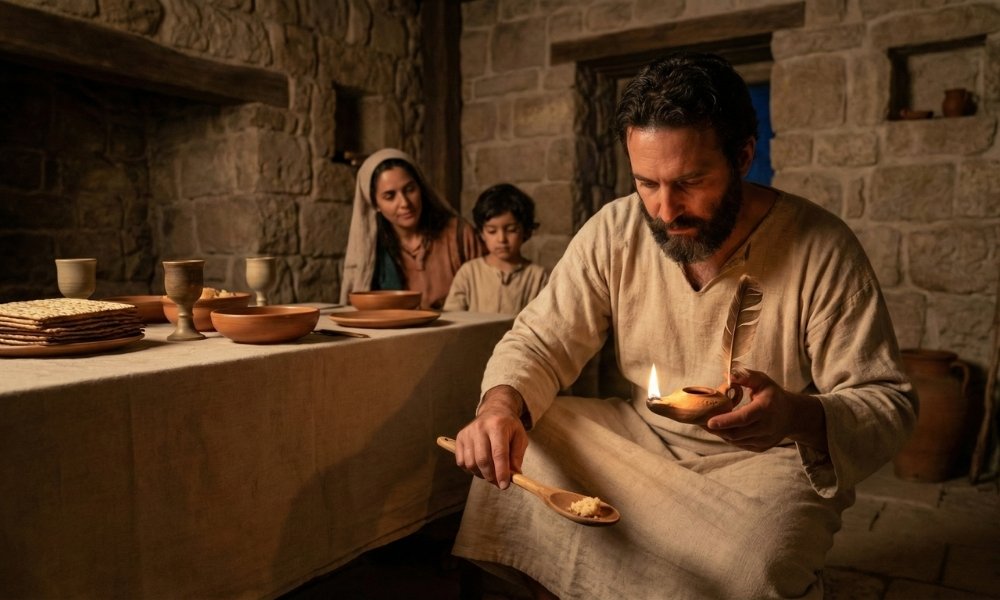
The Feast of Unleavened Bread (Chag HaMatzot) is a seven-day biblical festival that immediately follows Passover. While Passover (Nisan 14) focuses on the event of redemption through the blood of the lamb, the Feast of Unleavened Bread (Nisan 15–21) focuses on the lifestyle of the redeemed: walking in holiness and purity. During this week, the Israelites were commanded to remove all leaven (yeast) from their homes and eat only unleavened bread. It serves as a profound spiritual picture that after one is saved (Passover), they are called to a life purged of the “old leaven” of malice and wickedness (Unleavened Bread).
Quick Facts
- Name: Feast of Unleavened Bread (Hebrew: Chag HaMatzot)
- Dates: Nisan 15–21 (Spring, usually March/April)
- Duration: 7 Days
- Key Command: Eat unleavened bread; remove all leaven from the territory; hold sacred assemblies on Day 1 and Day 7.
- Agricultural Tie: Marked the beginning of the Barley Harvest.
- Related Feasts: Passover (precedes it immediately); Firstfruits (occurs during it).
- New Testament Meaning: The sanctified life of the believer; the burial of Jesus.
Name Meaning
“Chag HaMatzot” literally means “Festival of the Unleavened Breads.” In the Bible, the terms “Passover” and “Unleavened Bread” are often used interchangeably to refer to the entire eight-day spring holiday season (Luke 22:1), but technically they are two distinct appointed times.
Biblical Era / Context
Time: Established by God in Exodus 12, prior to the departure from Egypt. It was one of the three “Pilgrimage Festivals” (Shalosh Regalim) where all Jewish males were required to appear before the Lord in Jerusalem.
Setting: Originally observed in homes in Egypt; later, a massive national gathering at the Temple in Jerusalem.
Cultural Context: In ancient agrarian society, this feast aligned with the barley harvest. By eating bread made without old sourdough starter (leaven) from the previous year’s harvest, the people were symbolically making a fresh start, cutting ties with the past.
Key Rituals & Requirements
The Removal of Leaven: Before the feast began, families had to inspect their homes and remove every trace of yeast (seor) and leavened bread (chametz). The penalty for eating leaven during this week was being “cut off from Israel” (Exodus 12:15).
The Eating of Matzah: It was a positive command to eat unleavened bread every day for seven days, not just to avoid yeast.
The Holy Convocations: The first day (Nisan 15) and the seventh day (Nisan 21) were Sabbaths—days of rest and sacred assembly, regardless of what day of the week they fell on.
The Offering of Firstfruits: On the “day after the Sabbath” during this week, the High Priest would wave the first sheaf of the barley harvest before the Lord (Leviticus 23:11). This is distinct but occurred within the feast week.
Main Life Events (Historical Observances)
The Exodus (Egypt): The very first observance was practical—the dough had no time to rise as they fled Pharaoh (Exodus 12:39).
Gilgal (Joshua 5): Just after crossing the Jordan River, the manna stopped, and the Israelites ate the produce of the Promised Land (unleavened bread and roasted grain) for the first time.
Hezekiah’s Great Revival (2 Chronicles 30): After years of neglect, King Hezekiah invited all Israel (including the northern remnants) to Jerusalem. The joy was so great that when the seven days were over, the whole assembly decided to celebrate for another seven days.
Josiah’s Passover (2 Kings 23): King Josiah cleansed the land of idols and celebrated a Feast of Unleavened Bread unequaled since the days of the Judges.
Ezra’s Dedication (Ezra 6): The returned exiles celebrated the feast with joy because God had “changed the heart of the king of Assyria” to assist them in rebuilding the Temple.
Major Relationships
Passover: The two are inseparable. Passover is the Justification (saved from death); Unleavened Bread is the Sanctification (living for God).
- His Life: He lived a sinless “unleavened” life.
- His Burial: Many scholars view the feast as typifying Christ’s burial. Just as the seed is buried in the earth, the “Bread of Life” was buried on the first day of the feast.
- His Resurrection: Occurred on the Feast of Firstfruits, which falls during the week of Unleavened Bread.
Notable Passages
Leviticus 23:6: “On the fifteenth day of that month the LORD’s Festival of Unleavened Bread begins; for seven days you must eat bread made without yeast.”
Exodus 12:15: “For seven days you are to eat bread made without yeast. On the first day remove the yeast from your houses…”
1 Corinthians 5:8: “Therefore let us keep the Festival, not with the old bread leavened with malice and wickedness, but with the unleavened bread of sincerity and truth.”
Legacy & Impact
Bedikat Chametz: To this day, Jewish families perform a ceremonial search by candlelight the night before the feast to find 10 hidden pieces of leaven, which are then burned the next morning. This teaches the importance of diligently searching one’s heart for hidden sin.
Christian Sanctification: Paul explicitly commands Christians to “keep the feast” (spiritually) in 1 Corinthians 5. This means the Christian life is a perpetual state of being “unleavened”—continually repenting and removing sin.
The Calendar of Redemption: The sequence is perfect:
- Passover: Death of the Lamb (Cross).
- Unleavened Bread: Burial/Holy Walk (Tomb/Sanctification).
- Firstfruits: Resurrection (Empty Tomb).
Symbolism / Typology
Leaven (Sin): In Scripture, leaven almost always represents sin, false doctrine, or hypocrisy (e.g., “Leaven of the Pharisees”). It puffs up (pride), it sours (corruption), and it spreads (influence).
Seven Days (Completeness): Celebrating for a full seven-day cycle represents a complete life cycle. We are not just to be holy for a moment, but for the entirety of our lives.
New Lump: Paul says believers are a “new batch” of dough. The removal of old leaven signifies breaking the cycle of ancestral sin and worldly habits to live a new life in the Spirit.







Leave a Reply