
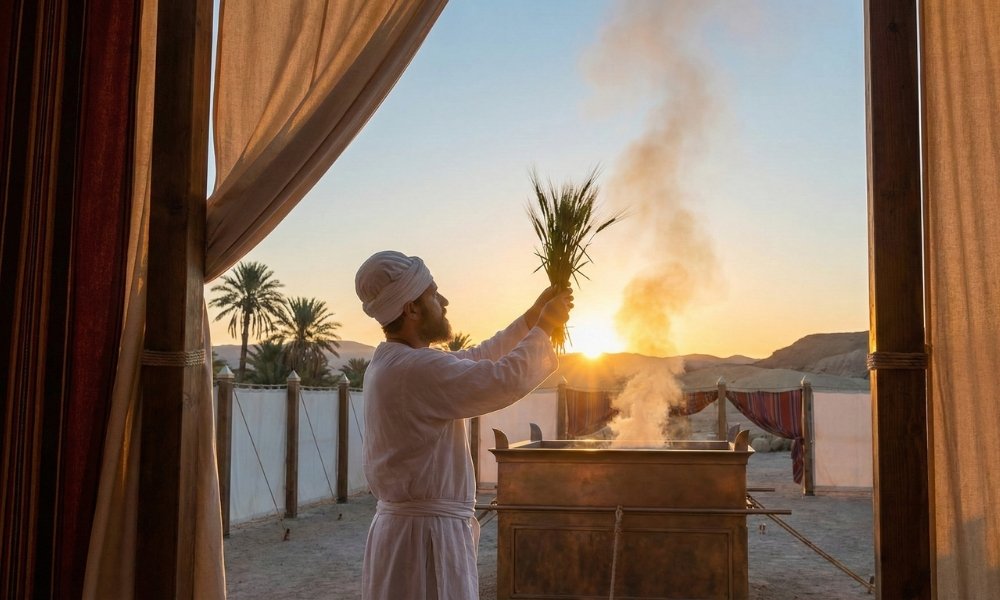
The Feast of Firstfruits (Yom HaBikkurim or Reishit Katzir) is the third major spring festival on the biblical calendar, marking the beginning of the barley harvest. Celebrated on the “day after the Sabbath” during the week of Unleavened Bread, it required the Israelites to bring the very first sheaf (Omer) of the harvest to the priest to be waved before the Lord. This act was a declaration of faith—giving God the first and best before gathering the rest for oneself. In the New Testament, this feast finds its ultimate fulfillment in the Resurrection of Jesus Christ, who rose from the dead on the Feast of Firstfruits as the “firstfruits of those who have fallen asleep,” guaranteeing the future resurrection of all believers.
Quick Facts
- Name: Firstfruits (Hebrew: Yom HaBikkurim or Reshit Katzir)
- Meaning: “Day of the Firstfruits” or “Beginning of the Harvest”
- Date: The day after the Sabbath during the Feast of Unleavened Bread (Nisan 16 or the Sunday following Passover)
- Key Ritual: Waving a sheaf (Omer) of green barley before the Lord
- Agricultural Tie: The start of the Barley Harvest
- Prophetic Fulfillment: The Resurrection of Jesus (1 Corinthians 15:20)
- Related Feasts: Starts the “Counting of the Omer” leading to Pentecost (Shavuot)
Name Meaning
“Bikkurim” comes from the Hebrew root bakar, meaning “to spring forth” or “to be first.” It refers to the very first ripened produce of the season. “Reshit Katzir” means “The Beginning of the Harvest.” The concept is that the first portion governs the whole. If the firstfruit is holy and dedicated to God, the entire harvest is sanctified (Romans 11:16).
Biblical Era / Context
Time: Early Spring (March/April). In the agricultural cycle of Israel, barley is the first grain to ripen.
Setting: Originally an agricultural offering in the Tabernacle; later, a grand ceremony in the Temple in Jerusalem.
Cultural Context: For an ancient farmer, harvesting the first grain was a moment of anxiety and hope. Giving the first sheaf to God was a radical act of trust, believing that He would protect the rest of the crop from weather, pests, and drought. You could not eat any of the new harvest until this offering was made (Leviticus 23:14).
Key Rituals & Requirements
The Waving of the Sheaf: A representative sheaf of barley was cut and brought to the priest. The priest would “wave” it up and down and side to side before the altar, symbolically presenting it to the Sovereign Lord of the four corners of the earth.
The Burnt and Grain Offering: Along with the sheaf, a male lamb without defect was sacrificed as a burnt offering, accompanied by a grain offering mixed with oil and a drink offering of wine—symbolizing total dedication and joy.
The Counting of the Omer: This day triggered a countdown. The Israelites were commanded to count 50 days (seven full weeks) from the day of Firstfruits to arrive at the next major feast: Pentecost (Shavuot), the wheat harvest (Leviticus 23:15-16).
Main Life Events (History & Fulfillment)
Entering the Land: The manna ceased and the Israelites ate the produce of Canaan only after they had celebrated Passover and presumably offered the firstfruits (Joshua 5:11-12).
The Resurrection of Jesus: This is the definitive historical event of this feast. Jesus was crucified on Passover (Nisan 14), buried during Unleavened Bread, and rose from the grave on Firstfruits (the “day after the Sabbath”). He broke the ground of death, emerging as the first “sheaf” of the new humanity.
The Saints in Jerusalem: Matthew 27:52-53 records that after Jesus’ resurrection, “many bodies of the saints who had fallen asleep were raised.” These saints served as a literal “firstfruits offering” accompanying Christ, the High Priest, presenting the evidence of His victory to the Father.
Major Relationships
Pentecost (Shavuot): Firstfruits is the starting line; Pentecost is the finish line. The 50-day “Counting of the Omer” connects the barley harvest (Resurrection) to the wheat harvest (Outpouring of the Spirit).
The High Priest: Only the priest could wave the sheaf to make it acceptable. Similarly, only Jesus (our High Priest) could present His own resurrected life to the Father to make us acceptable.
Notable Passages
Leviticus 23:10-11: “When you enter the land I am going to give you and you reap its harvest, bring to the priest a sheaf of the first grain you harvest. He is to wave the sheaf before the LORD so it will be accepted on your behalf; the priest is to wave it on the day after the Sabbath.”
1 Corinthians 15:20: “But Christ has indeed been raised from the dead, the firstfruits of those who have fallen asleep.”
Romans 11:16: “If the part of the dough offered as firstfruits is holy, then the whole batch is holy; if the root is holy, so are the branches.”
Legacy & Impact
Sunday Worship: The early church shifted their primary day of worship from the Sabbath (Saturday) to the “Lord’s Day” (Sunday) specifically because Jesus rose on the “day after the Sabbath”—the Feast of Firstfruits.
The Promise of Resurrection: In agriculture, the firstfruits are identical in nature to the rest of the harvest. Because Christ (the Firstfruits) was raised with a glorified, physical body, we have the guarantee that the rest of the harvest (believers) will be raised with glorified, physical bodies.
Generosity: The principle of “firstfruits” continues today in the practice of tithing or giving—giving to God first from one’s income, rather than giving what is left over.
Symbolism / Typology
The Single Sheaf: The priest waved one single sheaf to represent the entire nation’s harvest. Jesus, the single “grain of wheat” that fell into the ground and died (John 12:24), represents the entire harvest of the Church.
Green Barley: Barley is the crop of the poor and the beast. That Christ chose the “barley harvest” to rise suggests His humility and identification with the lowly, before the “wheat harvest” (Pentecost) which represents the rich fullness of the Spirit.







Leave a Reply