
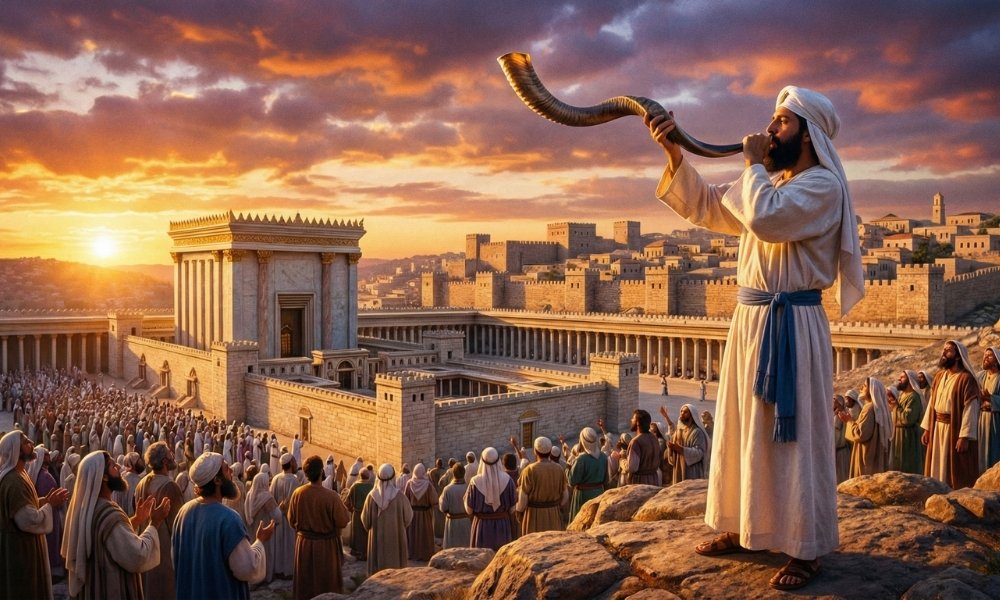
The Feast of Trumpets, known in Hebrew as Yom Teruah (Day of Shouting/Blasting) and in modern Judaism as Rosh Hashanah (Head of the Year), is the first of the High Holy Days in the biblical calendar. Observed on the first day of the seventh month (Tishrei), it is distinct among the festivals for its central command: the blowing of trumpets (shofars). While the Bible gives little explicit detail on its meaning compared to Passover or Atonement, it is historically understood as a day of sounding an alarm, a call to repentance, a coronation of God as King, and a prophetic pointer to the end of the age and the return of the Messiah.
Quick Facts
- Name: Feast of Trumpets (Yom Teruah); later Rosh Hashanah
- Meaning: “Day of Shouting/Blasting” (Yom Teruah); “Head of the Year” (Rosh Hashanah)
- Instituted By: God (Yahweh)
- Scripture Reference: Leviticus 23:23–25; Numbers 29:1–6
- Date: 1st day of Tishrei (7th Hebrew month; usually Sept/Oct)
- Key Ritual: Blowing the Shofar (Ram’s Horn)
- Theme: Awakening, Repentance, Kingship, Judgment
- Prophetic Fulfillment: The Rapture/Resurrection, the Gathering of God’s people, Second Coming
- Modern Observance: Eating apples and honey, casting sins into water (Tashlich)
Name Meaning
Yom Teruah: Literally “Day of Shouting” or “Day of Blasting.” The word Teruah implies a loud noise—either from a trumpet or a crowd—often associated with alarm, war, or joy.
Rosh Hashanah: “Head of the Year.” While the biblical religious calendar begins in Nisan (Passover), Tishrei marks the beginning of the civil/agricultural year. In Jewish tradition, it commemorates the creation of Adam and Eve.
Origin / Historical Background
Levitical Command: Instituted at Sinai as one of the “Appointed Times” (Moedim). It marks the beginning of the “Ten Days of Awe,” leading up to the Day of Atonement (Yom Kippur).
Ezra’s Revival: In Nehemiah 8, Ezra reads the Law to the people on the first day of the seventh month (Feast of Trumpets), sparking a great revival and understanding of Scripture after the exile.
Biblical Era / Context
Time: Fall Feasts (Autumn).
Agricultural Setting: Marks the end of the summer harvest and the transition to the rainy season; the beginning of the civil year’s agricultural cycle.
Cultural Context: Trumpets were used in the ancient world for signaling—calling troops to war, gathering the assembly, or announcing the arrival of a king.
Major Roles / Purpose
A Call to Awakening: The sound of the shofar acts as a spiritual alarm clock, waking the soul from lethargy to prepare for judgment.
Solemn Rest: Like the Sabbath, it is a day of no regular work (Shabbaton).
Coronation: Historically associated with the enthronement of kings; the shofar blast proclaims God as the Sovereign King of the universe.
Preparation: It initiates the countdown to Yom Kippur, the holiest day of the year, urging reconciliation with God and man.
Key Characteristics
The Shofar Blast: The defining feature. The ram’s horn produces a piercing, raw sound, unlike metal trumpets.
Holy Convocation: A mandatory gathering of the people.
Offerings: Specific burnt offerings were presented in addition to the daily and monthly sacrifices (Numbers 29).
Mystery: Unlike other feasts that commemorate a past historical event (like the Exodus or Wilderness wandering), the Feast of Trumpets is largely forward-looking and prophetic.
Main Events Associated with the Date
The Giving of the Law (Tradition): Some traditions link the “loud trumpet sound” at Sinai (Exodus 19:16) to the themes of this feast.
The Reading of the Law: Nehemiah 8:1–12 records Ezra standing on a wooden platform reading the Torah from daybreak until noon on this specific feast day, leading to weeping and then joy among the people.
Jericho (Typology): The conquest of Jericho involved blowing trumpets for seven days, with a “great shout” (Teruah) bringing the walls down—foreshadowing God’s kingdom replacing earthly powers.
Major Relationships
God the King: The feast emphasizes God’s sovereignty and right to judge the nations.
The Messiah: Christians view this feast as pointing to the return of Jesus, heralded by the “last trumpet.”
Israel: A time for the nation to examine its spiritual state before the Day of Atonement.
Notable Passages
Leviticus 23:24: “Say to the Israelites: ‘On the first day of the seventh month you are to have a day of sabbath rest, a sacred assembly commemorated with trumpet blasts.’”
Numbers 29:1: “On the first day of the seventh month hold a sacred assembly and do no regular work. It is a day for you to sound the trumpets.”
Psalm 89:15: “Blessed are those who have learned to acclaim you [know the Teruah], who walk in the light of your presence, LORD.”
1 Thessalonians 4:16: “For the Lord himself will come down from heaven… with the trumpet call of God, and the dead in Christ will rise first.”
1 Corinthians 15:52: “In a flash, in the twinkling of an eye, at the last trumpet. For the trumpet will sound, the dead will be raised imperishable, and we will be changed.”
Legacy & Impact
Jewish Liturgy: The prayer service Musaf on this day includes three sections: Malkhuyot (Kingship), Zikhronot (Remembrance), and Shofarot (Shofar blasts).
The Book of Life: Jewish tradition holds that on Rosh Hashanah, God opens the Book of Life and inscribes the fate of the righteous and the wicked, with the intermediate class given ten days until Yom Kippur to repent.
Tashlich: A deeply symbolic custom developed later where Jews go to a body of water and shake out their pockets, reciting Micah 7:19 (“You will cast all our sins into the depths of the sea”).
Symbolism / Typology
The Shofar: Represents the voice of God, a call to war against sin, and the binding of Isaac (the ram caught in the thicket).
The Gathering: Prophetically represents the gathering of the exiles and the elect.
The Wedding: In ancient Jewish wedding customs, the arrival of the bridegroom was announced by a shout and a shofar blast, paralleling the Bridegroom (Christ) returning for His Bride (the Church).
Apples and Honey: A later tradition symbolizing the prayer for a “sweet” new year.
Extra-Biblical References
Mishnah (Rosh Hashanah): Describes the four “new years” in the Jewish calendar and details the laws concerning the shofar.
Dead Sea Scrolls: Contain references to the festivals and the liturgical importance of the seventh month.







Leave a Reply