
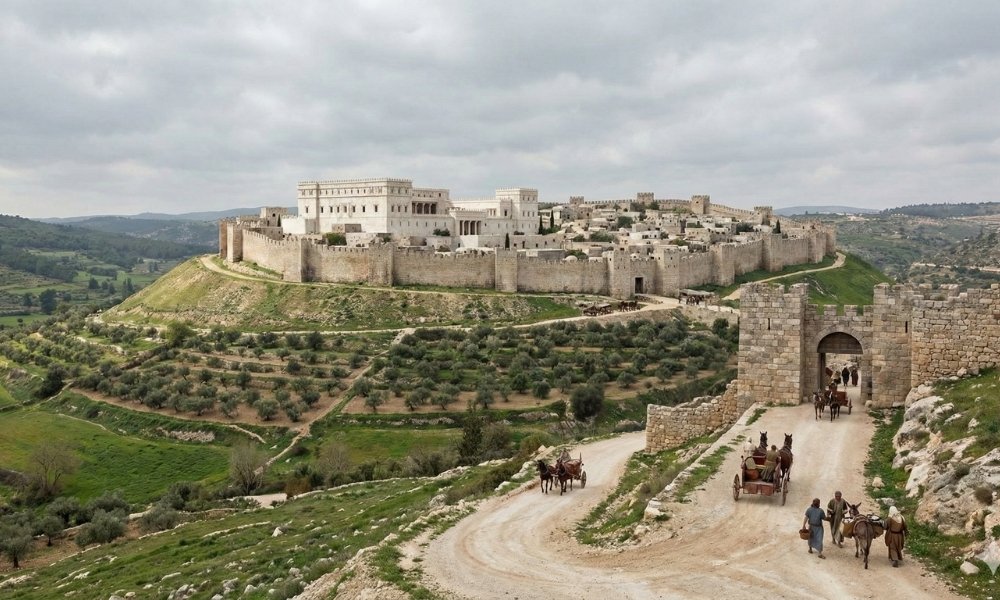
Samaria was the strategic and splendid capital of the Northern Kingdom of Israel, founded by King Omri in the 9th century BCE. Standing as a political and religious rival to Jerusalem, it became synonymous with the Northern Kingdom’s wealth, power, and deep spiritual apostasy. Famous for its “Ivory House” and the dramatic confrontations between the prophets Elijah and Elisha against the royal house of Ahab, Samaria eventually fell to the Assyrians in 722 BCE. This fall led to the exile of the ten tribes and the emergence of the Samaritan people, setting the stage for significant interactions in the New Testament.
Quick Facts
- Name: Samaria (Hebrew: Shomron)
- Meaning: “Watch Mountain,” “Guard,” or “Lookout”
- Founder: King Omri (c. 880 BCE)
- Location: Central mountain range of Israel, approx. 30 miles north of Jerusalem
- Status: Capital of the Northern Kingdom (Israel)
- Fall: 722 BCE by the Assyrian Empire (Sargon II / Shalmaneser V)
- New Testament Status: A region between Judea and Galilee; home of the Samaritans
- Key Figures: Omri, Ahab, Jezebel, Jehu, Elijah, Jesus, Philip
Name Meaning
Shomron: Derived from the Hebrew root sh-m-r, meaning “to watch” or “to guard.” The name comes from Shemer, the man from whom King Omri purchased the hill (1 Kings 16:24). It aptly describes the city’s function as a defensive lookout point.
Geography / Setting
Location: Situated on a steep, isolated hill (approx. 430 meters high) in the center of the land. Its position offered a panoramic view of the surrounding valleys and the Mediterranean Sea.
Defensibility: Unlike Jerusalem, which is surrounded by higher mountains, Samaria sat on a single hill rising from a valley, making it difficult to storm but vulnerable to long sieges (starvation tactics).
Biblical Era / Context
Time: From the divided monarchy (Iron Age II) to the Roman period.
Political Context: It was the seat of the Omride dynasty, one of the most powerful and internationally connected royal houses in Israel’s history.
Religious Context: While Jerusalem housed the Temple of Yahweh, Samaria became a center for Baal worship under Ahab and Jezebel, though it also maintained a syncretistic form of Yahweh worship.
Major Roles / Importance
The Rival Capital: It was the “anti-Jerusalem.” While Jerusalem represented the House of David and the Temple, Samaria represented the break-away tribes and alternative worship sites.
Center of Opulence: The prophets often condemned Samaria for its excessive luxury. King Ahab built a “house of ivory” there, a detail confirmed by archaeological finds of ivory inlays at the site.
The “Lost Tribes”: The fall of Samaria marked the end of the distinct political identity of the ten northern tribes.
Main Events
The Purchase: Omri bought the hill from Shemer for two talents of silver, establishing a new, centrally located capital (1 Kings 16:24).
The Great Famine: During the days of Elisha, Ben-Hadad of Aram besieged Samaria. The famine was so severe that mothers resorted to cannibalism. The siege was broken miraculously when the Arameans fled after hearing the sound of a phantom army (2 Kings 6–7).
Jehu’s Purge: After assassinating the kings of Israel and Judah, Jehu gathered the prophets of Baal into their temple in Samaria and slaughtered them, turning the site into a latrine (2 Kings 10).
The Assyrian Conquest: After a three-year siege, the city fell in 722 BCE. The Assyrians deported the wealthy and influential Israelites and imported foreigners from Babylon and other regions. These groups intermarried with the remaining poor Israelites, creating the Samaritan ethnicity (2 Kings 17).
Jesus and the Woman: In the New Testament, Jesus stopped at Jacob’s Well (in the region of Samaria) and revealed His identity as Messiah to a Samaritan woman, breaking centuries of ethnic hostility (John 4).
Philip’s Ministry: After the martyrdom of Stephen, Philip the Evangelist went to the city of Samaria and preached Christ. The response was so positive that Peter and John came down to pray for them to receive the Holy Spirit (Acts 8).
Key Character Traits (Of the City)
Pride: The prophet Amos described the leaders of Samaria as those who “lie on beds adorned with ivory” and are “complacent in Zion,” ignoring the coming judgment.
Syncretism: The city became a melting pot of religious ideas—mixing the worship of Yahweh with Baal, Asherah, and later the gods of the Assyrian settlers.
Notable Passages
1 Kings 16:24: “He [Omri] bought the hill of Samaria from Shemer… and built a city on the hill, calling it Samaria.”
Amos 3:15: “I will tear down the winter house along with the summer house; the houses adorned with ivory will be destroyed.”
2 Kings 17:6: “In the ninth year of Hoshea, the king of Assyria captured Samaria and deported the Israelites to Assyria.”
Acts 1:8: “You will be my witnesses in Jerusalem, and in all Judea and Samaria, and to the ends of the earth.”
Legacy & Impact
The Samaritans: The fall of the city created a people group that preserved the Pentateuch (Torah) but rejected the Prophets and the Jerusalem Temple. The tension between Jews and Samaritans (“Jews have no dealings with Samaritans”) is a major backdrop for the Gospels.
Archaeology: Excavations have revealed the massive casemate walls of the acropolis and the “Samaria Ivories,” ancient decorative plaques that confirm the biblical descriptions of the city’s wealth.
Symbolism / Typology
Apostasy: In the Old Testament, Samaria (often called “Ephraim” in prophecy) symbolizes spiritual adultery and the consequences of abandoning God’s covenant.
Inclusion: In the New Testament, Samaria represents the first frontier of the Gospel’s expansion—proof that God’s grace extends beyond the “pure” religious establishment to the marginalized and the mixed.





Leave a Reply