
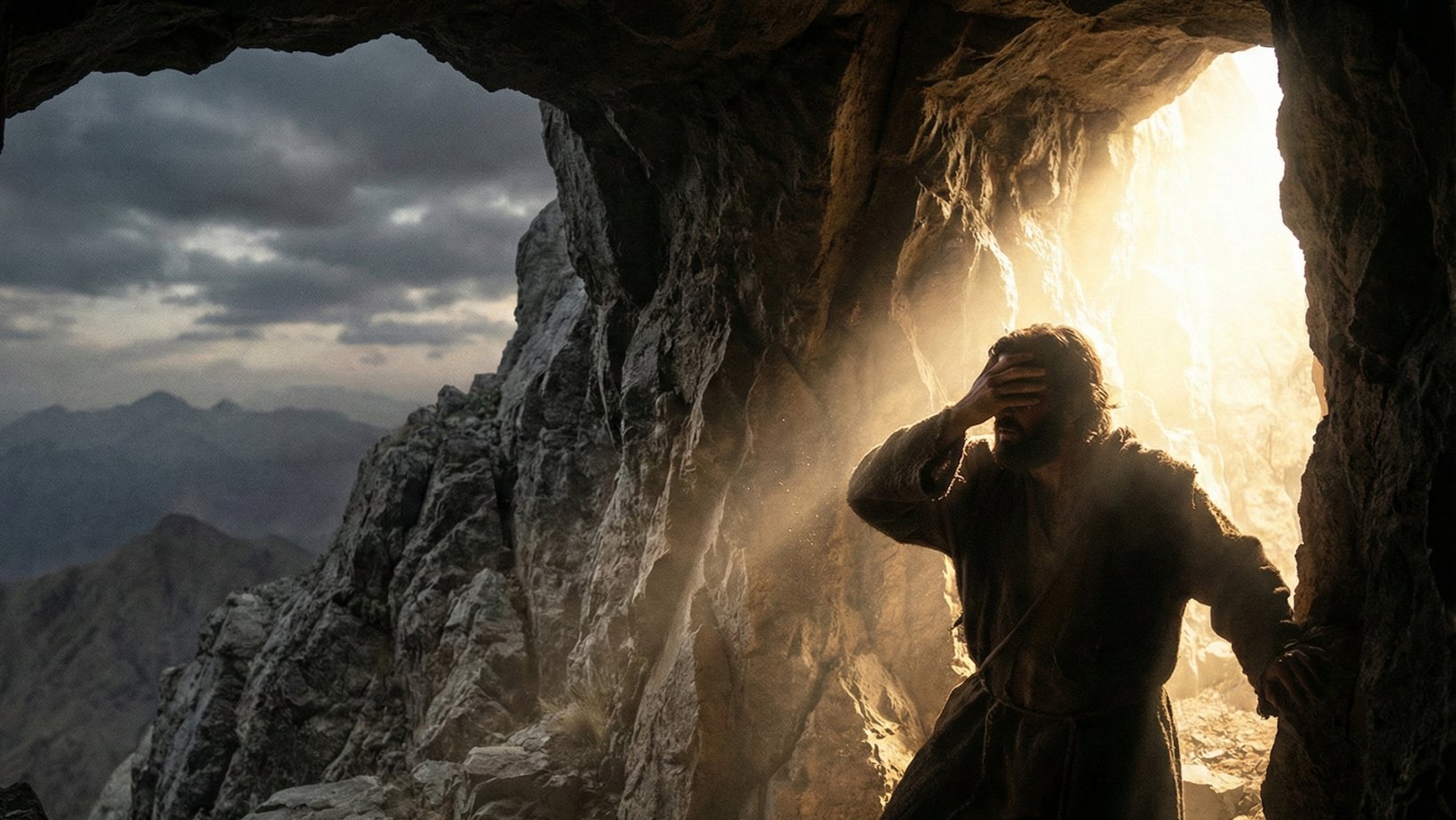
Exodus 33:20 captures a pivotal moment of boundary between the Creator and the creature. Following the incident of the Golden Calf, Moses intercedes for Israel and pleads for God’s presence to go with them. Emboldened by his intimacy with God, Moses asks to see God’s “glory.” In verse 20, God grants the request in part but sets a necessary limit: His full essence (“face”) is too overwhelming for mortal humanity to behold and survive. This verse establishes the profound distinction between God’s absolute holiness and human frailty, while simultaneously revealing God’s mercy in protecting Moses from a sight that would consume him.
1. The Divine Prohibition (Exodus 33:20a)
But,” he said, “you cannot see my face…
Commentary:
- Context of the Request: This statement is God’s direct response to Moses’ bold prayer in verse 18: “Please show me your glory.” Moses desired a visual verification of God’s essence that went beyond the pillar of cloud and fire.
- The Meaning of “Face” (Hebrew: Panim): In this context, God’s “face” represents His unmitigated fullness, His essential being, and the entirety of His transcendent majesty. It is the center of His personality and holiness.
- The Distinction from Verse 11: Earlier in Exodus 33:11, it is written that God spoke to Moses “face to face.” This apparent contradiction is resolved by understanding Hebrew idioms.
- In verse 11, “face to face” is a figure of speech denoting direct, intimate communication without riddles or visions (mediated intimacy).
- In verse 20, “face” refers to the literal, unveiling of the unapproachable light of God’s being (ontological reality).
- The Limit of the Creature: God is not refusing Moses out of stinginess, but out of necessity. There is a categorical difference between the Creator and the creature. The finite cannot encompass the infinite.
Insight: God’s refusal is actually an act of mercy. He denies Moses what he wants (the sight of His face) to give Moses what he needs (preservation of his life). God knows our limits better than we do.
2. The Lethality of Holiness (Exodus 33:20b)
…for man shall not see me and live.”
Commentary:
- The Incompatibility of Sin and Glory: Since the Fall (Genesis 3), humanity has been corrupted by sin. God is perfectly holy—a consuming fire (Deuteronomy 4:24). Just as dry tinder cannot exist inside a furnace, sinful humanity cannot exist in the immediate, unveiled presence of absolute Holiness.
- The Fragility of Mortality: The phrase “man shall not see me” uses the Hebrew word adam, emphasizing humanity’s earthly, dust-born nature. The sheer weight of God’s glory (Hebrew: kabod) is too heavy for a mortal frame to bear.
- Protection, Not Rejection: The “cannot” implies inability, not just prohibition. It is physically and spiritually impossible for a mortal in a fallen state to process the raw reality of God without being undone (see Isaiah 6:5).
- A Universal Law: This establishes a theological precedent throughout the Old Testament: the vision of God is generally associated with death (Judges 13:22). To see God and survive is a miracle of grace.
Insight: This verse defines the “otherness” of God. He is not merely a bigger version of a human; He is a Being of such intensity that exposure to His full nature is fatal to anything not equally holy.
Theological Significance of Exodus 33:20
- Divine Transcecendence: God is distinct from His creation. He dwells in “unapproachable light” (1 Timothy 6:16). While He is immanent (close to us), He remains transcendent (high above us).
- The Necessity of Mediation: Because man cannot see God’s face and live, we need a Mediator. This points forward to the Incarnation.
- The Incarnation of Christ: The New Testament answers the problem of Exodus 33:20. John 1:18 states, “No one has ever seen God; the only God, who is at the Father’s side, he has made him known.”
- In Jesus Christ, the “glory of God” is veiled in human flesh so that we can see Him and live (John 1:14; 2 Corinthians 4:6). Jesus is the accessible face of the invisible God (Colossians 1:15).
- The Beatific Vision: The Bible ends with a reversal of this prohibition. In the New Jerusalem, the redeemed “will see his face” (Revelation 22:4). What was lethal to fallen man becomes the eternal joy of redeemed man.
Practical Applications
- Approach God with Reverence: We must never treat God as common or trivial. While He is our Father, He is also the Consuming Fire. Our worship should reflect awe and holy fear.
- Accept God’s Limits: Sometimes God says “no” to our requests because the answer would destroy us. We should trust His boundaries as much as His blessings.
- Value the Mediator: We have access to the Father only through the Son. We should be deeply grateful for Jesus, through whom we can behold God’s glory without being consumed.
- Long for Eternity: Let the limitation of this life fuel a desire for the next. We should live with the hope of the day when our transformation will be complete, and we will finally be able to see Him as He is.
Final Insight
Exodus 33:20 serves as a stark reminder that God is not safe, but He is good. He protects Moses in the cleft of the rock (v. 22) because He desires relationship with His people. The verse drives us to the cross, where the God who cannot be seen became the Man who could be touched, allowing us to eventually stand before the Face that once would have killed us.







Leave a Reply