
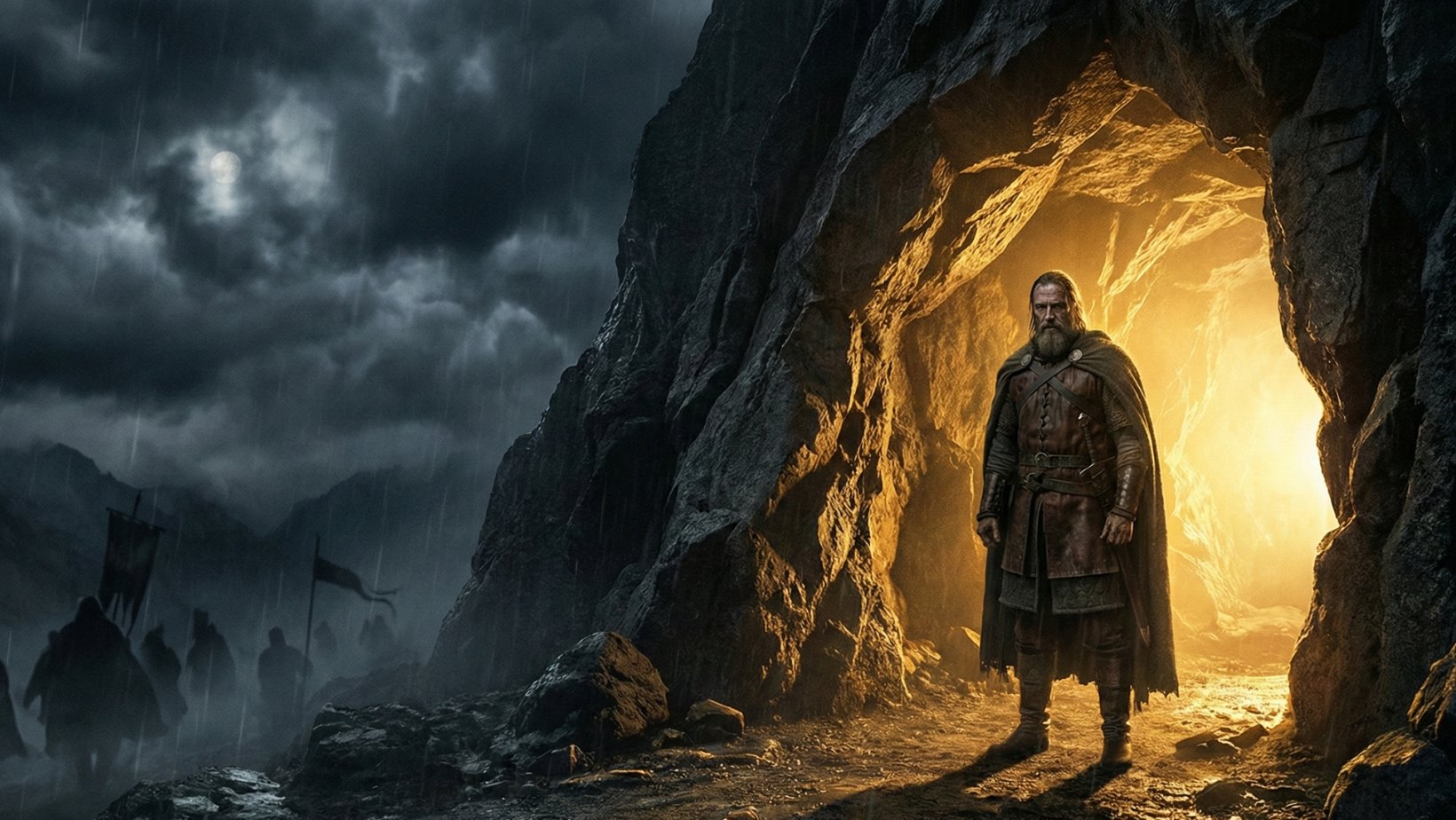
Psalm 27:1 is one of the most triumphant declarations of confidence in the entire Psalter. David opens the psalm not with a petition for help, but with a proclamation of who God is to him personally. By identifying Yahweh as his light, salvation, and stronghold, David constructs a theological fortress that renders fear illogical. The verse moves from a positive assertion of God’s character to a rhetorical challenge against any potential threat, establishing a tone of fearless trust.
1. The Triad of Divine Protection (Psalm 27:1a ESV)
The Lord is my light and my salvation; whom shall I fear?
Commentary:
David uses three metaphors to describe God’s relationship to him. Note the intense personal nature of the verse; the word “my” is central. David is not speaking of God in the abstract, but in covenantal intimacy.
“The Lord is my light” (Ori):
- Dispelling Darkness: In the ancient world, darkness symbolized danger, chaos, ignorance, and evil. Enemies attacked at night; wild beasts prowled in the dark. To call God “Light” is to say He is the antidote to all unknown terrors.
- Guidance: Light reveals the path. In the confusion of conflict, God provides the clarity needed to make the right decisions.
- Joy and Life: Light is often synonymous with life and blessing in Hebrew poetry (Psalm 36:9). David asserts that God is the source of his vitality and happiness, even in grim circumstances.
“And my salvation” (Yishi):
- Active Deliverance: While “Light” might be abstract, “Salvation” is concrete. It refers to rescue, liberation, and victory in battle.
- The Source of Victory: David was a mighty warrior, but he does not say, “My sword is my salvation” or “My army is my salvation.” He acknowledges that ultimate deliverance comes from Yahweh alone.
- Holistic Safety: This salvation covers both physical rescue from enemies and spiritual deliverance from despair or sin.
“Whom shall I fear?”:
- Rhetorical Defiance: This question requires no answer. It is a challenge thrown into the face of fear. If the Creator of the universe is your Light and Savior, no created being poses a credible threat.
- Logic of Faith: Faith here is not a blind leap but a logical conclusion. Because God is X and Y, therefore fear is unnecessary.
Insight: Fear thrives in the dark and in helplessness. By defining God as Light (visibility/truth) and Salvation (rescue/power), David eliminates the environment in which fear grows.
2. The Stronghold of Life (Psalm 27:1b ESV)
The Lord is the stronghold of my life; of whom shall I be afraid?
Commentary:
The second half of the verse parallels the first, deepening the imagery of security.
“The Lord is the stronghold” (Ma’oz):
- Military Imagery: The Hebrew word Ma’oz refers to a fortress, a citadel, or a place of refuge on a high mountain. It is a defensive structure that is inaccessible to the enemy.
- God as the Location: David does not just say God provides a stronghold; he says God is the stronghold. The believer is safe not because of where they are geographically, but because they are “in” God.
- Immovable Strength: While “Light” and “Salvation” suggest God acting for David, “Stronghold” suggests God standing around David. It implies stability and endurance against a siege.
“Of my life”:
- Total Coverage: God is not just the fortress of David’s soul or his afterlife, but of his “life” (chai)—his everyday, physical existence. God protects the very breath in his lungs.
- Sustainer: God is the strength that sustains his life force. When David feels weak, he draws from the inexhaustible strength of Yahweh.
“Of whom shall I be afraid?”:
- Dread vs. Terror: The word for “afraid” here suggests a trembling dread or a creeping anxiety. David refuses to live in a state of nervousness.
- The Reality of Enemies: The question “Of whom” implies that there are enemies. David is not denying the existence of danger; he is denying the dominance of danger over his emotions.
Insight: A stronghold is only useful if you enter it. David’s declaration implies that he has actively chosen to retreat into God’s character for his safety, rather than relying on human defenses.
3. Theological Significance of Psalm 27:1
- The Personal Nature of God: The repetition of “my” (Light, Salvation, Life) highlights that biblical faith is relational. God is not a distant force but a personal guardian.
- The antidote to Fear: The theology of the Bible presents the “Fear of the Lord” as the cure for the “fear of man.” When God becomes big in our eyes (Light, Salvation, Stronghold), enemies become small.
- Monotheism as Security: By attributing all these roles—illumination, rescue, and protection—to Yahweh alone, David rejects the need for other gods or political alliances. God is all-sufficient.
- New Testament Parallel: This verse prefigures Romans 8:31: “If God is for us, who can be against us?” It also points to Jesus, who claimed to be the “Light of the world” (John 8:12).
4. Practical Applications
- Reframe Your Fears: When you feel afraid, do not focus on the size of the problem. Instead, define who God is in relation to that problem. If you need answers, He is Light. If you need help, He is Salvation. If you need safety, He is a Stronghold.
- Speak to Yourself: David is essentially preaching to his own soul. When anxiety rises, verbally declare, “The Lord is my light.” Confession strengthens conviction.
- Identify Your “Stronghold”: Where do you go when you are stressed? Food? Entertainment? Isolation? Venting to friends? Psalm 27:1 challenges us to make God’s presence our primary panic room.
- Walk in the Light: Since God is light, we must walk in the light. We cannot claim God as our protection while willfully walking in the darkness of sin (1 John 1:5-7).
- Cultivate Boldness: Christian courage is not the absence of danger but the presence of God. Use this verse to build a “holy confidence” before job interviews, difficult conversations, or medical procedures.
Final Insight
Psalm 27:1 teaches that confidence is a byproduct of vision. If we look only at our enemies, we panic. If we look only at ourselves, we despair. But when we gaze upon the Lord and define Him correctly—as Light, Salvation, and Stronghold—fear loses its grip. The verse does not promise a life without enemies, but a life without fear of them.







Leave a Reply