
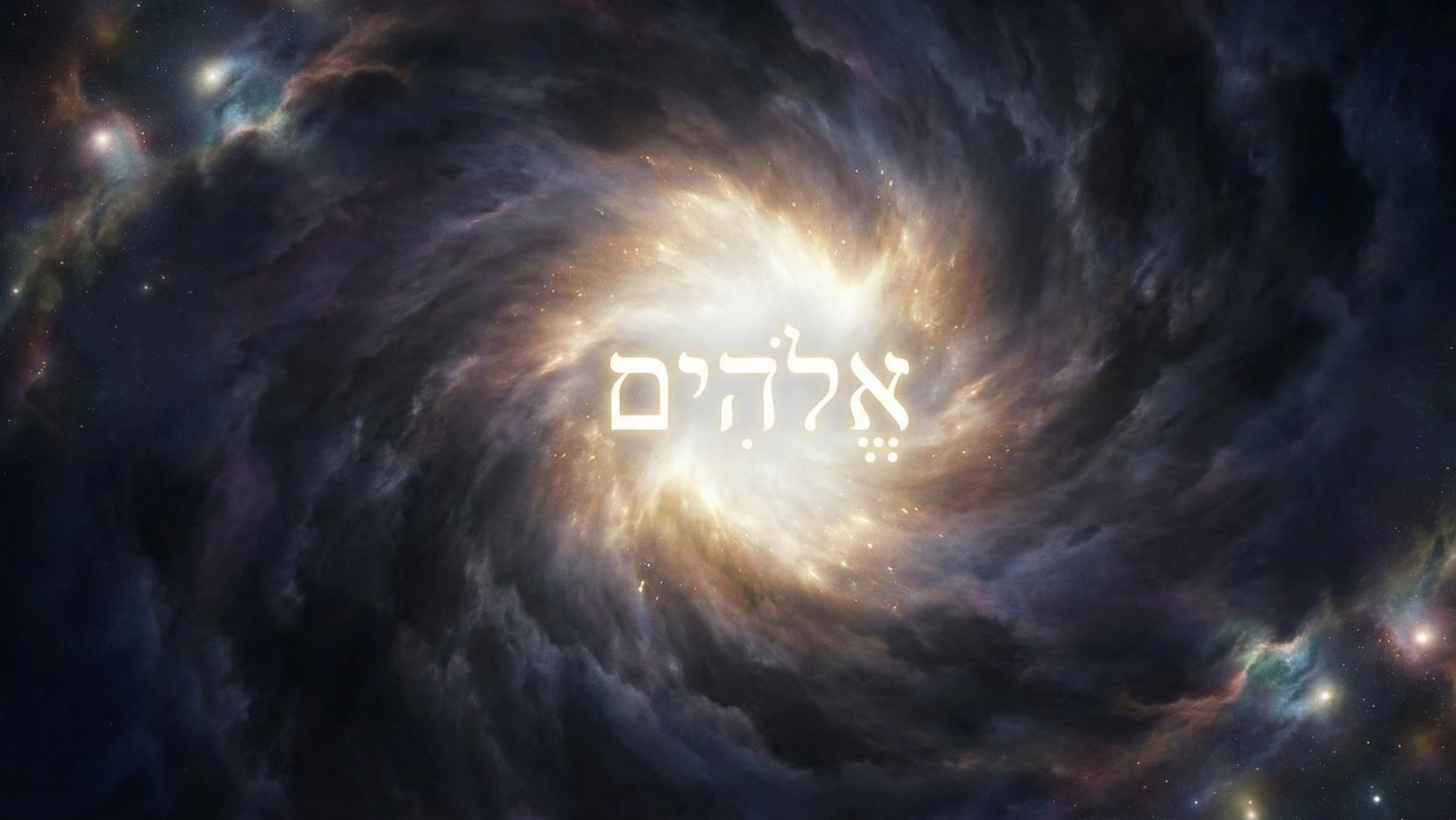
Elohim is the first name of God revealed in the Bible, appearing in the very first verse of Genesis. It is the name associated with His transcendent power, His role as the Creator of the universe, and His sovereignty over nature and nations. Unlike the name Yahweh (LORD), which emphasizes God’s personal covenant and closeness to His people, Elohim emphasizes His might, His distance as the High God, and His absolute authority as the Supreme Judge. Grammatically, it is a plural noun used with singular verbs—a linguistic mystery that points to the infinite majesty and plurality within the Godhead.
Quick Facts
- Name: Elohim (Hebrew: אֱלֹהִים)
- First Mention: Genesis 1:1 (“In the beginning, Elohim created…”)
- Frequency: Used approx. 2,600 times in the Old Testament
- Root Meaning: “Strong One,” “Mighty Leader,” or “Supreme One”
- Grammar: Plural noun (ending in -im), but takes singular verbs
- Key Association: Creation, Sovereignty, Judgment, Power
- Key Attribute: Omnipotence (All-Powerful)
Name Meaning
Etymology: The word is likely derived from the root El, meaning “strength” or “power,” and alah, meaning “to swear” or “to bind with an oath.”
The Mystery of the Plural: The ending -im is the masculine plural suffix in Hebrew (like cherubim or seraphim). However, when referring to the True God, it is almost always paired with a singular verb (e.g., “Elohim created“—singular action).
- Plural of Majesty: Most scholars view this as a “plural of intensity”—signifying that He is the God of all powers, the sum of all might and majesty.
- Trinitarian Hint: Christian theology sees this as an early shadow of the Trinity—one God (singular verb) exists in three persons (plural noun).
Nature / Identity
The Creator: In Genesis 1, Elohim is the name used exclusively for 35 verses. This establishes Him as the Architect of reality—the One who speaks light into darkness and order into chaos.
The Judge: Elohim is often the title used when God is dealing with the nations or executing justice. While Yahweh is the God of Grace to Israel, Elohim is the God of Justice to the world.
The God of All: The name is not restricted to Israel; it is the universal name for the Deity. He is the God of all flesh (Jeremiah 32:27).
Key Characteristics
Transcendent: Elohim is God “up there”—high, lifted up, and separate from His creation. He is not part of nature; He is the author of it.
Omnipotent: The name conveys the ability to do anything. He speaks, and it happens.
Sovereign: He is the “God of gods” (Deuteronomy 10:17). The Bible sometimes uses elohim (lowercase) to refer to human judges or false gods, but The Elohim is the Supreme Ruler over all spiritual and earthly powers.
Main Historical Events in Scripture
The Creation Week: “In the beginning, Elohim created the heavens and the earth.” He brings forth the cosmos through the power of His speech (Genesis 1).
The Creation of Man: “Then Elohim said, ‘Let us make mankind in our image…’” (Genesis 1:26). This is the first explicit use of plural pronouns for God, hinting at the complexity of His nature.
The Flood: It is Elohim who sees the wickedness of man and decides to cleanse the earth, and it is Elohim who “remembered Noah” (Genesis 8:1) to restore order.
Major Relationships
The Trinity: The interplay of the Father, Spirit (“hovering over the waters”), and Word (“And God said”) in Genesis 1 reflects the richness of the name Elohim.
Humanity: Elohim is the God of all mankind, regardless of covenant status. Every human is made in the image of Elohim.
Yahweh: In Genesis 2, the text switches to Yahweh Elohim (LORD God). This combines His power (Elohim) with His personal relationship (Yahweh), showing He is both the distant Creator and the close Friend.
Notable Passages
Genesis 1:1: “In the beginning, Elohim created the heavens and the earth.”
Deuteronomy 10:17: “For the LORD your God is God of gods (Elohei ha-elohim) and Lord of lords, the great God (El), mighty and awesome…”
Psalm 19:1: “The heavens declare the glory of God (El); the skies proclaim the work of his hands.”
Psalm 46:10: “Be still, and know that I am God (Elohim); I will be exalted among the nations.”
Legacy & Impact
Foundation of Monotheism: The Shema (“Hear O Israel, the Lord our God is One”) affirms that Elohim—despite the plural form—is One absolute Unity.
Scientific Mandate: Because Elohim created an ordered universe distinct from Himself (not pantheism), humans are free to study and explore nature, laying the groundwork for modern science.
Symbolism / Typology
Voice/Word: Elohim creates by speaking. This typifies Christ as the “Logos” (Word) of God (John 1:1), the agent through whom all things were made.
Order out of Chaos: Elohim brings structure to the void. This symbolizes His work in the human heart—taking a chaotic, dark life and bringing light and order (2 Corinthians 4:6).







Leave a Reply