
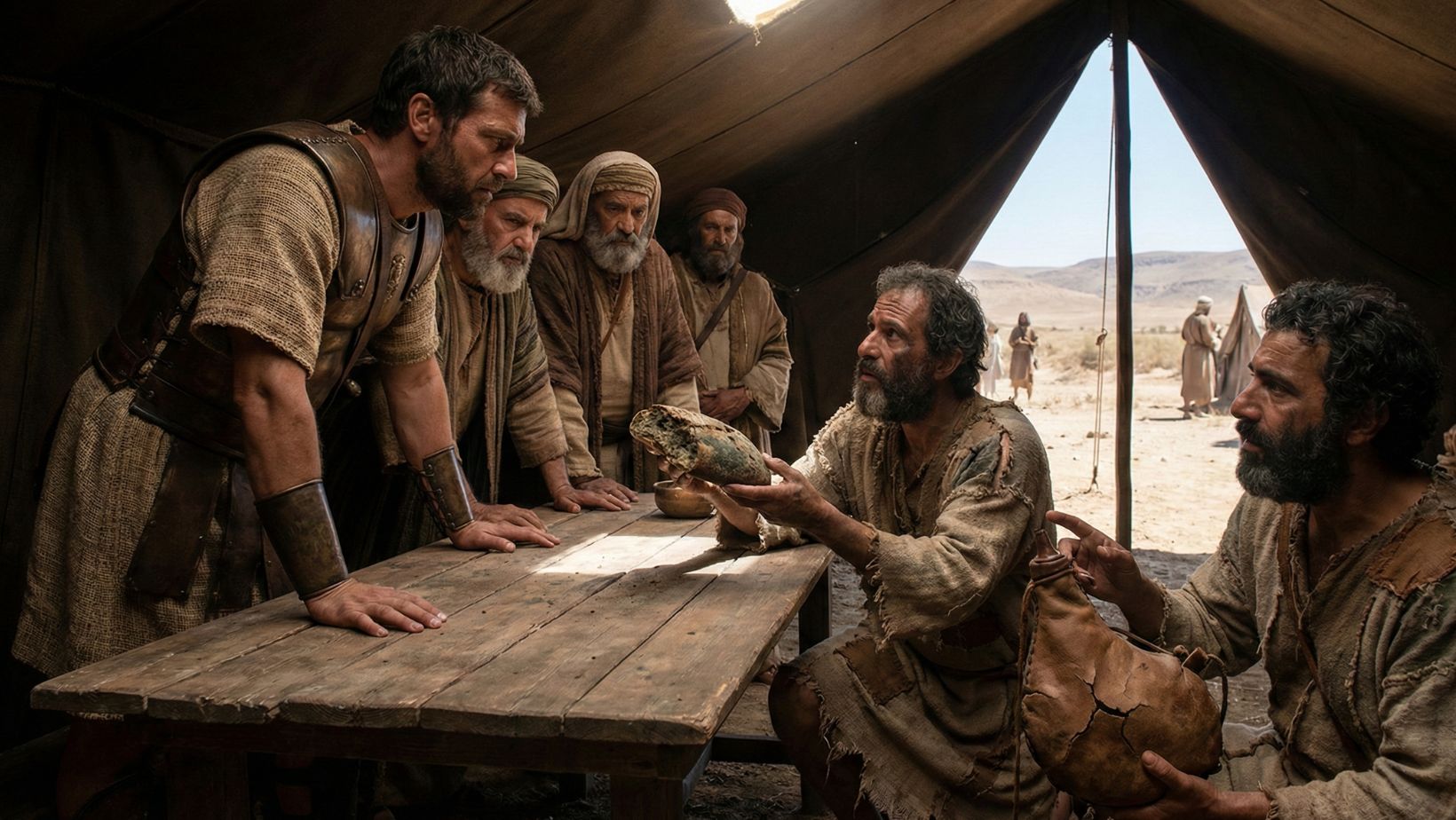
The Gibeonite deception is a dramatic narrative found in Joshua 9 that highlights the tension between human logic and divine counsel. Following the destruction of Jericho and Ai, the panic-stricken inhabitants of Gibeon realized they could not defeat Israel militarily. Instead of fighting, they resorted to an elaborate ruse, disguising themselves as weary travelers from a “far country” to trick Joshua and the elders into a peace treaty. This event serves as a critical lesson on the necessity of prayer before decision-making and the binding nature of a covenant, even when made under false pretenses.
- Event: The Gibeonite Deception
- Scripture Reference: Joshua 9
- Date: ~1400 BCE (Conquest Era)
- Key Characters: Joshua, the Elders of Israel, Gibeonite Ambassadors
- Location: The Camp at Gilgal; Gibeon (central Canaan)
- The Ruse: Old wineskins, patched sandals, worn clothes, moldy bread
- The Consequence: Israel forced to protect Gibeon; Gibeonites become forced laborers
- Key Verse: “The Israelites sampled their provisions but did not inquire of the LORD.” (Joshua 9:14)
Name Meanings and Significance
Gibeon: derived from a root meaning “hill” or “height.” It was a royal city, described as greater than Ai, and inhabited by Hivites (a group often associated with the Horites or Hurrians).
Hivites: One of the seven nations of Canaan destined for destruction under God’s command (Deuteronomy 20:17). Their survival through this deception created a permanent Gentile enclave within Israel.
Historical & Biblical Context
The Divine Command: Israel was under strict orders from God (Deuteronomy 20:10-18) regarding warfare. They could offer peace to distant cities, but for the cities in the Promised Land (Hittites, Amorites, Canaanites, etc.), they were to leave nothing alive to prevent spiritual corruption.
The Fear Factor: The miraculous destruction of Jericho and the strategic annihilation of Ai sent shockwaves through Canaan. While other kings formed a military coalition to fight Israel (Joshua 9:1-2), the Gibeonites chose a strategy of diplomacy through deceit.
The Deception (The Ruse)
The Disguise: The Gibeonites went to great lengths to make it appear they had traveled a long journey. They loaded their donkeys with worn-out sacks and old, cracked wineskins. The men wore patched sandals and tattered clothes.
The Props: The most convincing evidence was their food: “All the bread of their provision was dry and moldy” (Joshua 9:5). They presented this to Joshua at Gilgal as proof that they lived outside the region of Canaan and were therefore eligible for a treaty.
The Fatal Mistake: Joshua and the leaders of Israel were skeptical at first, asking, “Perhaps you live near us?” However, they made a critical error: they trusted their senses rather than God. They looked at the evidence (the bread and clothes) but “did not inquire of the Lord” (Joshua 9:14).
The Consequence & Resolution
The Covenant Ratified: Convinced by the ruse, Joshua made a treaty of peace with them and swore an oath to let them live.
The Discovery: Three days later, the Israelites discovered the truth: the Gibeonites were actually neighbors living just a few miles away. The assembly of Israel grumbled against their leaders, feeling betrayed.
The Verdict: The leaders could not kill the Gibeonites because they had sworn an oath by the Lord, the God of Israel. To break the oath would bring wrath upon Israel.
The Curse/Blessing: Joshua summoned the Gibeonites and cursed them, yet also integrated them. They were spared execution but were consigned to perpetual servitude as “woodcutters and water carriers” for the community and for the altar of the Lord.
Aftermath & Legacy
The Battle for Gibeon: Immediately following this (Joshua 10), the other Canaanite kings attacked Gibeon for defecting to Israel. Joshua was honor-bound to defend them. It was during this battle to save the Gibeonites that God performed the miracle of the sun standing still.
Saul’s Violation: Centuries later, King Saul tried to annihilate the Gibeonites in localized zeal. In 2 Samuel 21, during David’s reign, a three-year famine struck Israel as judgment for Saul’s violation of this ancient treaty, proving that God takes covenants seriously—even those entered into foolishly.
Nethinim: The Gibeonites are believed to be the ancestors of the “Nethinim” (given ones), servants of the temple mentioned in Ezra and Nehemiah who returned from Babylon to serve in the rebuilt temple.
Key Lessons
The Danger of Pragmatism: Israel failed because they walked by sight, not by faith. The moldy bread was “concrete evidence,” but it was a lie. This teaches that logic and physical evidence should never replace prayer and seeking God’s counsel.
The Sanctity of the Oath: Even though the Gibeonites lied, Israel had to keep its word because the oath was sworn in God’s name. This underscores that integrity involves keeping promises even when it hurts or when the terms were unfair.
God’s Grace to Outsiders: Despite their deceit, the Gibeonites had a genuine fear of God’s power (“We feared for our lives because of you”). Like Rahab, they were Canaanites who sought refuge in the God of Israel and were spared, eventually being incorporated into the service of God’s house.
Typology
The Gibeonites as Seekers: They represent sinners who, fearing judgment, come to God. They may come with imperfect motives or understanding, but their desire to be saved from destruction is honored.
Wood and Water: The Gibeonites were assigned to cut wood (fuel for the sacrifice) and carry water (for cleansing). They were permanently attached to the Altar. This symbolizes that even those who enter the Kingdom through “the back door” are given a role in the worship and service of God.







Leave a Reply