
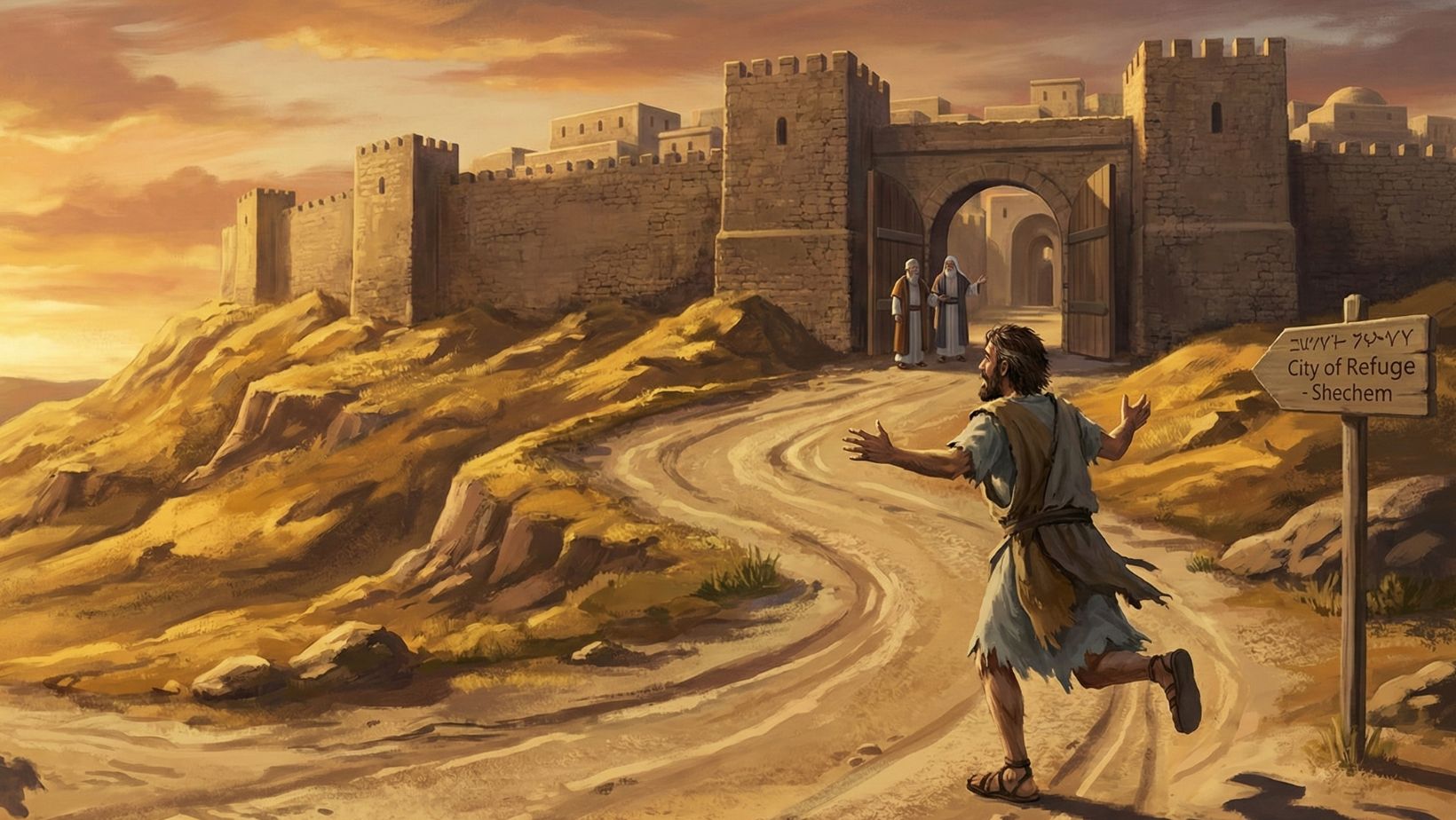
The establishment of the Cities of Refuge is one of the most remarkable examples of justice and mercy in the Mosaic Law. Recorded in Joshua 20 (with instructions also in Numbers 35 and Deuteronomy 19), God commanded the Israelites to set aside six specific cities—three on each side of the Jordan River—as safe havens for individuals who had committed accidental manslaughter. In a culture where “blood feuds” and immediate retribution were the norm, these cities provided a divinely sanctioned pause, ensuring due process and preventing the shedding of innocent blood. They stand as a powerful testament to the sanctity of life and the importance of motive in judgment.
- Event: Designation of the Cities of Refuge
- Scripture Reference: Joshua 20; Numbers 35:9–34
- Date: ~1390 BCE
- Total Cities: 6 (all were also Levitical cities)
- Key Purpose: Protection for the “manslayer” (unintentional killer)
- The Threat: The “Avenger of Blood” (Goel)
- Condition for Freedom: The death of the High Priest
- Key Verse: “Select some towns to be your cities of refuge, to which a person who has killed someone accidentally may flee.” (Joshua 20:2)
The Legal Context: Justice vs. Vengeance
The Avenger of Blood (Goel): In ancient Near Eastern culture, if a person was killed, it was the duty of their nearest male relative (the Goel) to avenge the death by killing the slayer. This deterred murder but risked initiating endless cycles of violence.
Murder vs. Manslaughter: The Cities of Refuge introduced a critical legal distinction between murder (premeditated, acting with malice) and manslaughter (accidental, without malice).
- Intentional Murder: The murderer was to be put to death; the altar of God offered them no protection (Exodus 21:14).
- Unintentional Killing: If a man’s axe head flew off and killed a neighbor (Deuteronomy 19:5), he could flee to a City of Refuge.
The Six Cities and Their Locations
The cities were strategically chosen to be accessible. No one in Israel was more than a day’s run from a place of safety. The roads to these cities were required to be kept clear and well-marked.
West of the Jordan (Canaan):
- Kedesh: Located in Galilee (North), in the mountains of Naphtali. Name means “Holy” or “Sanctuary.”
- Shechem: Located in the central hill country (Ephraim). Name means “Shoulder” (suggesting support or burden-bearing).
- Hebron: Located in the south (Judah). Name means “Fellowship” or “Alliance.”
East of the Jordan (Transjordan):
- Golan: Located in Bashan (Manasseh), a region of cattle and grazing. Name means “Circle” or “Enclosure.”
- Ramoth-Gilead: Located in the central heights (Gad). Name means “Heights” or “Exalted.”
- Bezer: Located in the desert plateau (Reuben). Name means “Fortress” or “Stronghold.”
The Judicial Process
The Flight: Upon the accidental killing, the slayer had to flee immediately. If the Avenger of Blood caught them outside the city limits, the avenger could legally kill them.
The Trial: Arriving at the city gate, the fugitive presented their case to the elders. They were admitted for protection. Later, the congregation would judge the case. If found innocent of malice, they were returned to the City of Refuge.
The Stay: The manslayer was not in prison, but they were in exile. They had to remain within the city walls to be safe. Leaving the city meant losing legal protection.
The Release: The refugee could only return home “after the death of the high priest who was anointed with the holy oil” (Numbers 35:25). The death of the High Priest was seen as an atonement or a concluding event that expiated the blood guilt of the accidental killing, setting the exile free.
Typology & Spiritual Significance
Christ as Our Refuge: The New Testament alludes to this concept in Hebrews 6:18, speaking of those who have “fled for refuge to lay hold upon the hope set before us.” Like the manslayer, sinners are guilty and pursued by the judgment of the Law. Christ is the sanctuary where judgment cannot reach us.
The Accessibility of Grace: Just as the cities were spread out and accessible to all (Israelite and foreigner alike), salvation is available to all who run to it.
The Death of the High Priest: This is a profound picture of Jesus. The exile could only go free when the High Priest died. Similarly, humanity was trapped in sin, unable to return to our true home, until the death of our Great High Priest, Jesus Christ, paid the debt and set the captives free.







Leave a Reply