
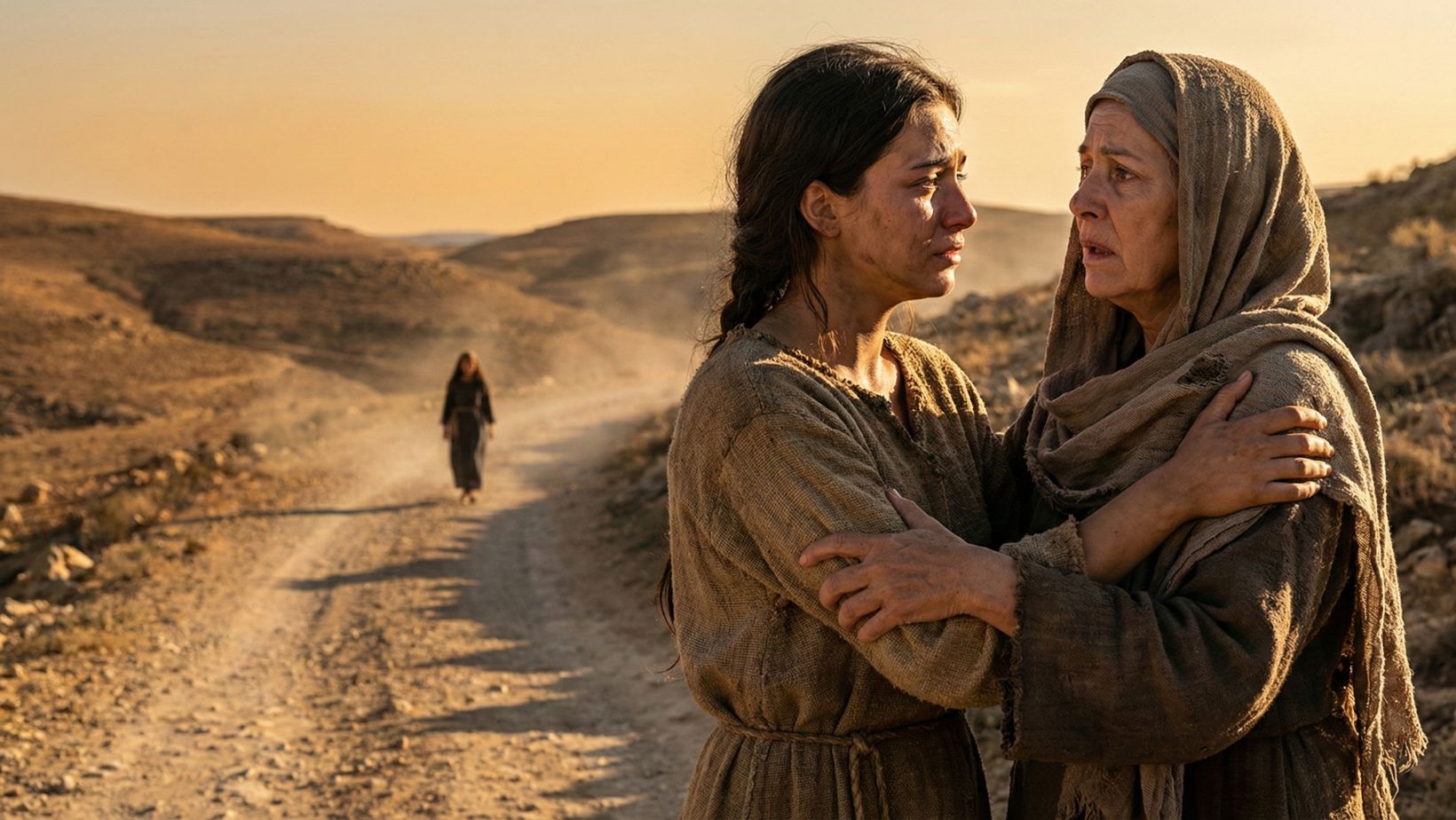
The relationship between Ruth and Naomi is one of the most profound examples of human devotion in Scripture, centering on the Hebrew concept of Hesed (loyal love). While the period of the Judges was characterized by faithlessness and violence, this narrative, found in Ruth 1, offers a stark counter-narrative of sacrificial faithfulness. When tragedy stripped Naomi of her husband and two sons in the land of Moab, she urged her daughters-in-law to abandon her and seek new lives. While Orpah eventually agreed, Ruth refused, swearing a covenant oath that inextricably bound her future, her nationality, and her theology to a desolate widow.
Quick Facts
- Characters: Ruth (Moabite) and Naomi (Israelite)
- Setting: The road from Moab to Bethlehem
- Key Context: Both are widows; Naomi is destitute and bitter
- Key Hebrew Word: Hesed (Loving-kindness / Covenant loyalty)
- The Choice: Orpah returned to her gods; Ruth clung to Naomi
- Key Scripture: Ruth 1:16–17
- Outcome: Ruth becomes the first recorded convert in the book, grafting herself into Israel
The Context: A Triple Tragedy
The Crisis: Elimelech’s family had fled to Moab to escape famine in Judah. Over ten years, Elimelech died, and then his two sons (Mahlon and Chilion) died. This left three widows without support in a patriarchal society.
Naomi’s Despair: Hearing that the Lord had visited his people with food, Naomi decided to return to Bethlehem. However, she felt God’s hand was against her, renaming herself Mara (Bitter) and urging her daughters-in-law to turn back to find security (husbands) in their own land.
The Crossroads: Orpah vs. Ruth
The narrative uses the contrast between the two women to highlight the extraordinary nature of Ruth’s choice.
- Orpah (The Sensible Choice): Orpah loved Naomi (she wept openly), but she ultimately made the logical decision. Returning to her mother’s house offered her the best chance at remarriage and security. She kissed Naomi goodbye and “returned to her people and her gods” (Ruth 1:15).
- Ruth (The Sacrificial Choice): Ruth’s decision made no logical sense. Going with Naomi meant guaranteed poverty, living as a foreigner in a land that despised Moabites, and no prospect of marriage (Naomi was too old to have more sons for her). Yet, the text says Ruth “clung” (dabaq) to her—the same word used in Genesis 2:24 for marriage.
Deep Dive: The Vow (Ruth 1:16–17)
Ruth’s reply to Naomi is considered one of the most beautiful confessions of faith and loyalty in literature. It is a total surrender of her past and future.
1. Geographic Loyalty: “Where you go I will go, and where you stay I will stay.” She abandons her homeland for a foreign existence.
2. Cultural Loyalty: “Your people will be my people.” She renounces her Moabite identity to be identified with the Israelites, a people who historically excluded Moabites (Deuteronomy 23:3).
3. Spiritual Loyalty: “And your God my God.” This is the crux of her conversion. She abandons Chemosh (the god of Moab) to worship Yahweh, even though Yahweh seemed to have treated Naomi harshly.
4. Eternal Loyalty: “Where you die I will die, and there I will be buried.” In the ancient world, to be buried apart from one’s ancestors was a major taboo. Ruth commits to Naomi even beyond death.
Key Virtue: Hesed
The Hebrew word Hesed appears repeatedly in the Book of Ruth. It is difficult to translate into English but encompasses love, mercy, grace, and kindness—specifically the kind of loyalty that goes beyond legal obligation.
- Ruth owed Naomi nothing legally; the marriage bond ended when Mahlon died.
- Her choice to stay was a voluntary act of self-giving love.
- Later, Boaz recognizes this quality in her, calling her a “woman of noble character” because of her kindness to Naomi (Ruth 3:10-11).
Legacy & Impact
Restoration of Naomi: At the end of the book, the women of Bethlehem tell Naomi that Ruth is “better to you than seven sons” (Ruth 4:15). Ruth’s loyalty brought Naomi from bitterness back to joy.
The Line of David: Because Ruth stuck with Naomi, she ended up in the fields of Boaz. Their marriage produced Obed, the grandfather of King David.
The Gospel: Ruth is mentioned in Matthew 1:5 in the genealogy of Jesus. Her loyalty foreshadows the inclusion of the Gentiles in God’s plan of salvation.







Leave a Reply