
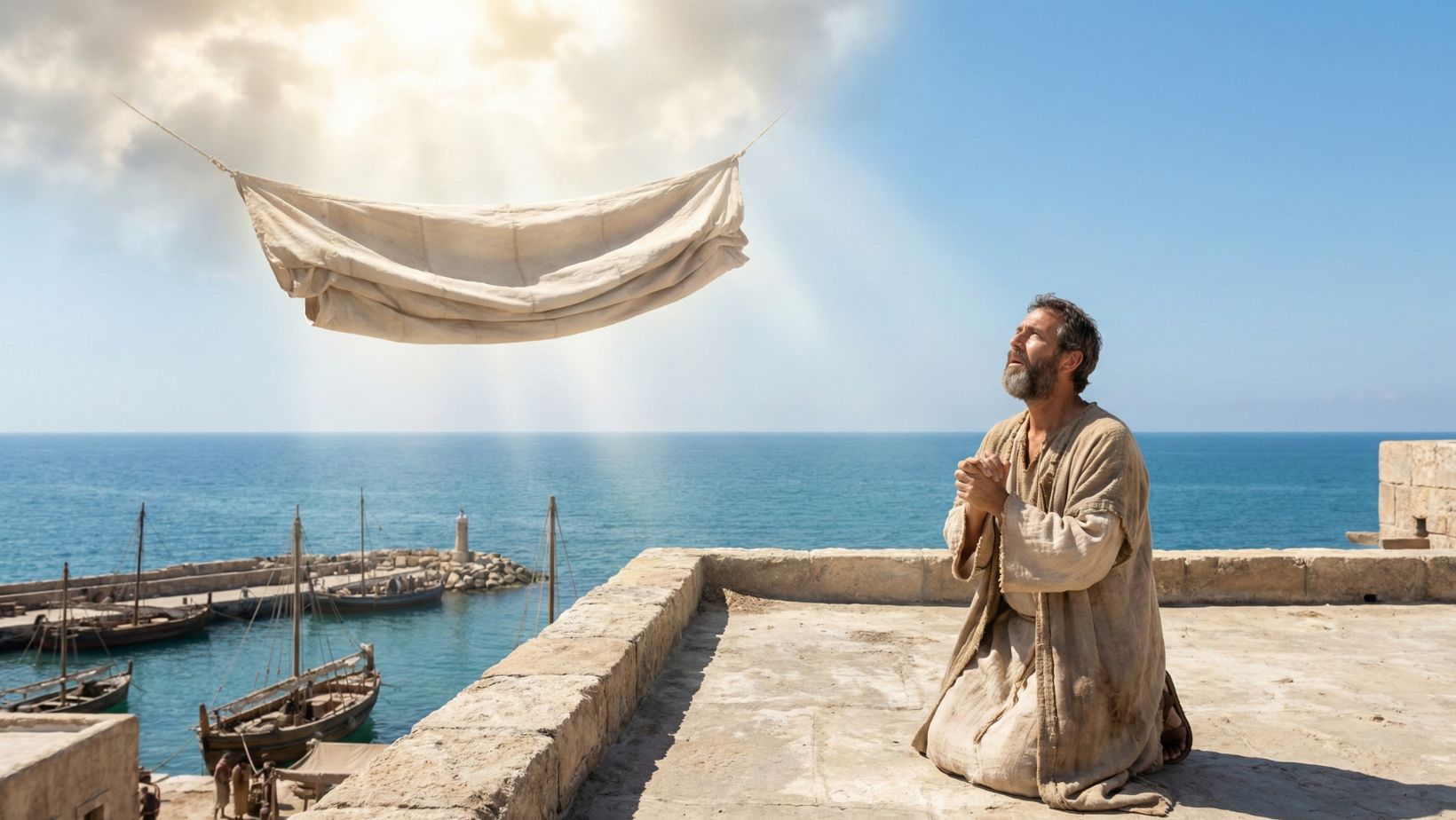
Joppa (known today as Jaffa or Yafo) was the primary seaport of ancient Israel and serves as the backdrop for several critical biblical turning points involving the nations. Located on a high promontory overlooking the Mediterranean Sea, about 35 miles northwest of Jerusalem, it was the only natural harbor between the Bay of Haifa and the Egyptian border. Because of this strategic location, it became the gateway for international trade, the entry point for the materials used to build the Temple, and the spiritual launchpad for the gospel moving from the Jews to the Gentiles.
Quick Facts
- Biblical Name: Joppa (Hebrew: Yafo)
- Modern Name: Jaffa (part of Tel Aviv-Yafo)
- Meaning: “Beautiful”
- Location: Central Mediterranean coast of Israel
- Key Role: Israel’s main seaport; Gateway to Jerusalem
- Key Figures: Jonah, King Solomon, Peter, Tabitha (Dorcas), Simon the Tanner
- Notable Trade: Export of citrus (later history); Import of Lebanon cedars
- Key Events: Jonah fleeing to Tarshish; Peter raising Tabitha; Peter’s vision of clean/unclean animals
Name Meaning
“Joppa” (Yafo) comes from the Hebrew root meaning “Beautiful.” The city is aptly named for its striking view of the Mediterranean coastline from its high cliffs.
Geography & Strategic Importance
The Harbor: In ancient times, the coast of Israel was mostly sand dunes and straight shorelines, making docking difficult. Joppa offered a rare rocky outcrop that created a natural breakwater, making it essential for maritime trade.
Proximity to Jerusalem: It was the closest port to Jerusalem. Consequently, any goods, timber, or pilgrims arriving by sea for the capital would pass through Joppa.
Territory: It was originally allotted to the tribe of Dan (Joshua 19:46), but the Danites failed to hold it against the Philistines and were forced to migrate north.
Old Testament Events
Building the Temples: Joppa was the logistics hub for Israel’s most sacred construction projects.
- Solomon’s Temple: King Hiram of Tyre floated cedar logs from Lebanon down the coast to Joppa, where they were transported overland to Jerusalem (2 Chronicles 2:16).
- The Second Temple: After the exile, cedars were again shipped to Joppa for the rebuilding under Zerubbabel (Ezra 3:7).
Jonah’s Flight: When God called Jonah to preach to Nineveh (Gentiles), Jonah went down to Joppa to find a ship heading for Tarshish (Jonah 1:3).
- Significance: Joppa represented the exit point—Jonah used it to run away from his mission to the nations.
New Testament Events
In the Book of Acts, Joppa becomes the pivotal location where the church realizes the gospel is for all nations.
The Resurrection of Tabitha (Acts 9:36–42): Peter was called to Joppa to minister to a disciple named Tabitha (Dorcas), a woman known for her acts of charity. Peter prayed, said “Tabitha, get up,” and presented her alive to the widows. This miracle led many in Joppa to believe in the Lord.
Peter and Simon the Tanner (Acts 9:43): Peter stayed in Joppa with a man named Simon, who was a tanner.
- Cultural Note: Tanning involved working with dead animal skins, which made a person ritually unclean. By staying with a tanner, Peter was already showing a willingness to prioritize people over rigid ritual customs.
Peter’s Vision (Acts 10): While praying on the roof of Simon the Tanner’s house in Joppa, Peter fell into a trance. He saw a sheet lowered from heaven containing all kinds of animals (clean and unclean) and heard the command, “Kill and eat.”
- The Meaning: God was dismantling the barrier between Jew and Gentile. Immediately after the vision, messengers from Cornelius (a Roman centurion) arrived.
- The Inversion: Unlike Jonah, who left Joppa to flee the Gentiles, Peter left Joppa to welcome them.
Symbolism / Typology
The Tale of Two Prophets: Joppa serves as the hinge between the Old and New Testament attitudes toward the nations.
- Jonah (Old Testament): Went to Joppa to escape God’s mercy toward Gentiles.
- Peter (New Testament): Received a vision in Joppa to extend God’s mercy toward Gentiles.
Cedar and Souls: Just as the physical materials for God’s earthly dwelling (the Temple) entered Israel through Joppa, the spiritual understanding for God’s spiritual dwelling (the Church of all nations) entered through Joppa.







Leave a Reply