
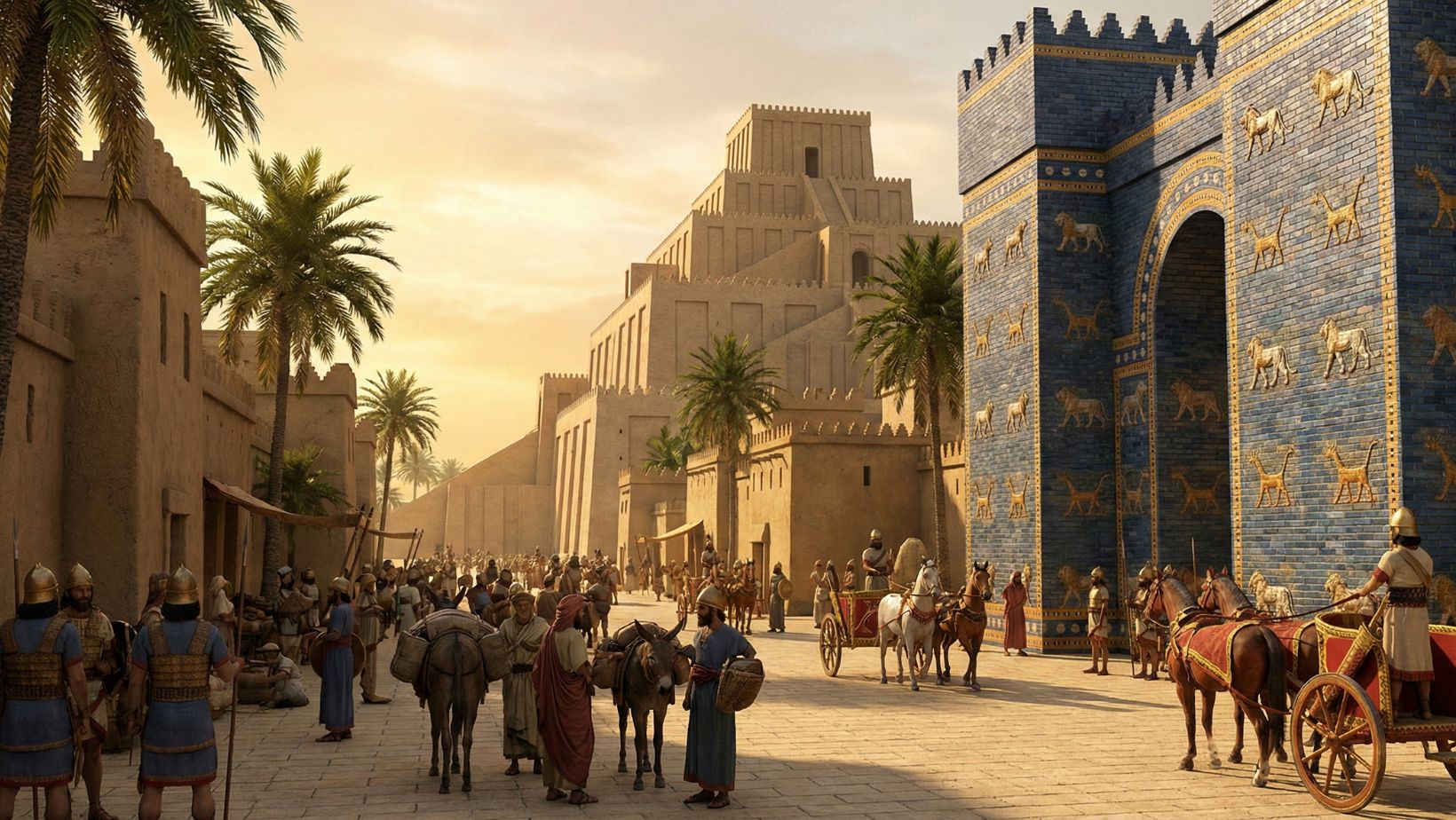
Babylon is one of the most significant cities in biblical history and theology, serving as the archetype of human rebellion against God. Geographically, it was the capital of a superpower empire that destroyed Jerusalem and the Temple in 586 BCE. Spiritually, from the Tower of Babel in Genesis to the “Whore of Babylon” in Revelation, it represents the world system—human civilization organized in opposition to divine rule, characterized by pride, idolatry, and self-sufficiency.
Quick Facts
- Name: Babylon (Hebrew: Bavel; Akkadian: Babilim)
- Location: On the Euphrates River, modern-day Iraq (south of Baghdad)
- Meaning: “Gate of the God” (Akkadian) / “Confusion” (Hebrew)
- Key Empire: The Neo-Babylonian Empire (~626–539 BCE)
- Most Famous King: Nebuchadnezzar II
- Key Event: The destruction of Jerusalem and the Temple (586 BCE)
- Biblical Role: The instrument of God’s judgment on Judah; the place of Exile
- Symbolism: The “City of Man” vs. The “City of God” (Zion/Jerusalem)
Name Meaning / Etymology
Akkadian Origin: The Babylonians called their city Babilim, meaning “Gate of the God” or “Gate of the Gods,” reflecting their belief that it was the religious center of the world.
Hebrew Polemic: In Genesis 11:9, the Bible links the name to the Hebrew verb balal (“to confuse”), mocking their pretension. It is the place where God confused the languages of the builders.
Geography & Architecture
The Euphrates: The river ran directly through the center of the city, providing water for its famous moats and irrigation.
The Ishtar Gate: A massive, blue-glazed brick gate decorated with dragons and bulls (symbols of the god Marduk), through which the Processional Way passed.
Hanging Gardens: One of the Seven Wonders of the Ancient World, allegedly built by Nebuchadnezzar for his Median wife who missed her mountain home (though not explicitly mentioned in Scripture).
Biblical History
1. The Origins (Genesis 11): Babylon (Babel) began with Nimrod. It was the site of the first organized attempt by humanity to unite against God’s command to scatter, building a tower “to make a name for ourselves.”
2. The Instrument of Judgment (Habakkuk 1 / 2 Kings 25): God raised up the Chaldeans (Babylonians) as a “bitter and hasty nation” to discipline His people. Under Nebuchadnezzar, they besieged Jerusalem, burned the Temple of Solomon, and carried the elite of Judah into captivity for 70 years.
3. The Exile (Daniel & Ezekiel): For 70 years, the Jewish people lived in Babylon. Here, stripped of their Temple and land, they transitioned from a national cult to a portable faith centered on the Torah and the synagogue. Key figures like Daniel served in the Babylonian court, witnessing to God’s sovereignty even over pagan kings.
4. The Fall (Daniel 5): The empire fell in a single night (539 BCE) to the Medes and Persians (Cyrus the Great) during a feast held by King Belshazzar, fulfilling the “writing on the wall.”
Major Figures Associated with Babylon
Nebuchadnezzar II: The greatest king of Babylon. He is portrayed as a brilliant but arrogant conqueror who is humbled by God (driven insane like a beast) until he acknowledges the Most High (Daniel 4).
Daniel: A Jewish exile who rose to high office in Babylon, serving as a wise man and interpreter of dreams, maintaining his purity in a pagan culture.
Belshazzar: The last acting king of Babylon, known for his arrogance in using the sacred vessels from the Jerusalem Temple for a drunken party (Daniel 5).
Symbolism: The Tale of Two Cities
Throughout Scripture, Babylon stands as the antithesis of Jerusalem (Zion).
- Jerusalem: Represents the city chosen by God, the place of His dwelling, humility, and salvation.
- Babylon: Represents the city built by man, the place of pride, oppression, and idolatry.
In the Book of Revelation (Chapters 17–18), “Babylon the Great” is depicted as a harlot riding a beast, symbolizing the seductive and persecuting power of the world’s political and religious systems in the end times.
Notable Passages
Psalm 137:1: The cry of the exiles — “By the rivers of Babylon we sat and wept when we remembered Zion.”
Daniel 4:30: The pride of the king — “Is not this the great Babylon I have built as the royal residence, by my mighty power and for the glory of my majesty?”
Revelation 18:2: The final judgment — “Fallen! Fallen is Babylon the Great!”
Legacy & Impact
Preservation of Scripture: During the Babylonian Exile, Jewish scribes likely compiled and organized much of the Hebrew Bible to preserve their identity.
The End of Idolatry: The trauma of the Babylonian Exile cured the Jewish nation of polytheism. When they returned to the land, they never again worshipped Canaanite idols.
Archetype: Babylon remains the ultimate metaphor for any society that idolizes wealth, power, and military might while ignoring God.







Leave a Reply