
Ekron was the northernmost of the five major Philistine cities, located on the dangerous border between Philistia and the Israelite tribes of Dan and Judah. Because of its proximity to Israel, it was a frequent flashpoint for territory disputes and cultural clashes. In Scripture, Ekron is most notorious as the seat of Baal-Zebub, the pagan deity whose oracle was sought by unfaithful Israelite kings, sparking a fiery confrontation with the prophet Elijah. Historically, it was also a massive industrial center, known today by archaeologists as the ancient world’s largest producer of olive oil.
Quick Facts
- Name: Ekron (Hebrew: Eqron)
- Region: Northern Philistia (bordering the Sorek Valley)
- Political Status: One of the five Philistine city-states (Pentapolis)
- Primary Deity: Baal-Zebub (“Lord of the Flies”)
- Key Biblical Events: The return of the Ark; The sin of King Ahaziah; The pursuit after Goliath’s death
- Modern Location: Tel Miqne (Israel)
- Symbol: The Fly / The Olive Press
Name Meaning
Ekron: The name is derived from the Hebrew root ‘aqar, meaning “uprooted,” “torn up,” or “barren.” This etymology is famously used in a pun by the prophet Zephaniah when he declares, “Ekron shall be uprooted (te’aqer)” (Zephaniah 2:4).
Geography / Historical Context
The Border City: Ekron sat at the entrance to the Sorek Valley, the same valley where Samson lived. Its location made it the first line of Philistine defense against Israelite expansion from the hill country.
Industrial Powerhouse: Excavations at Tel Miqne (Biblical Ekron) have uncovered over 100 massive olive oil presses, indicating that Ekron was an industrial superpower in the 7th century BCE, producing oil for export to Egypt and Assyria.
Major Roles / Identity
The Seat of the False Oracle: Ekron was the home of Baal-Zebub, a god reputed to have the power to predict the future and cure illness. This made the city a spiritual snare for Israelites who lacked faith in Yahweh.
The Place of Panic: When the Ark of the Covenant was moved from Gath to Ekron, the Ekronites—aware of the plagues that struck Ashdod and Gath—cried out in terror, “They have brought the ark of the god of Israel to us to kill us and our people!” (1 Samuel 5:10).
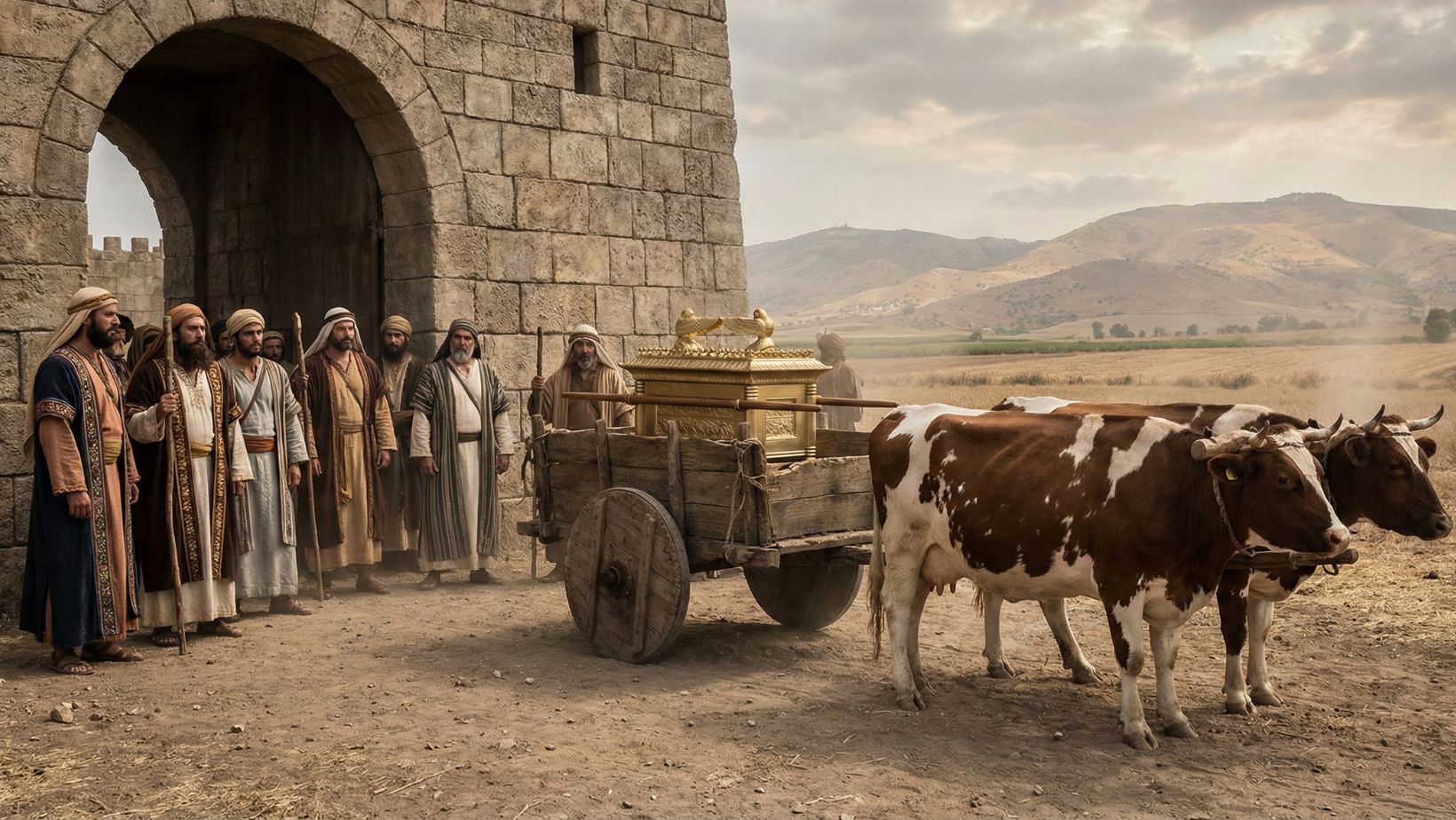
The Final Stop: It was from Ekron that the Philistines finally surrendered the Ark, placing it on a cart pulled by two milk cows to see if the God of Israel was truly guiding it back to Beth Shemesh (1 Samuel 6).
Key Biblical Events
The Aftermath of David and Goliath: After David killed Goliath in the Valley of Elah, the energized Israelite army chased the fleeing Philistines all the way to the “gates of Ekron,” marking a massive territorial victory (1 Samuel 17:52).
The Return of the Ark: The lords of the Philistines met in Ekron to devise a test. They hitched two nursing cows (who would naturally want to stay with their calves) to a cart carrying the Ark. The cows went straight toward Israelite territory, proving the plagues were from God (1 Samuel 6).
Elijah and King Ahaziah: King Ahaziah of Israel fell through a lattice and injured himself. Instead of asking Yahweh for help, he sent messengers to Ekron to consult Baal-Zebub. Elijah intercepted them with a thunderous rebuke: “Is it because there is no God in Israel that you are going to inquire of Baal-Zebub, the god of Ekron?” (2 Kings 1:2–4).
Notable Passages
1 Samuel 5:10: “So they sent the ark of God to Ekron. As the ark of God was entering Ekron, the people of Ekron cried out, ‘They have brought the ark of the god of Israel around to us to kill us and our people!’”
1 Samuel 17:52: “Then the men of Israel and Judah surged forward with a shout and pursued the Philistines to the entrance of Gath and to the gates of Ekron.”
2 Kings 1:16: “Because you have sent messengers to consult Baal-Zebub god of Ekron… you will not leave the bed you are lying on. You will certainly die!”
Zephaniah 2:4: “For Gaza shall be deserted, and Ashkelon shall become a desolation; Ashdod’s people shall be driven out at noon, and Ekron shall be uprooted.”
Legacy & Impact
Baal-Zebub to Beelzebul: The god of Ekron, Baal-Zebub (Lord of the Flies), became synonymous with evil. By the time of the New Testament, the name had morphed into Beelzebul (Lord of the High Place/Dung), a title used by Pharisees to refer to the “prince of demons” or Satan (Matthew 12:24).
The Danger of Syncretism: Ekron stands as a warning against seeking spiritual answers from worldly or occult sources. Ahaziah’s death confirmed that God is jealous and will not share His glory with the idols of Ekron.
Archaeological Confirmation: The discovery of a dedication inscription at Tel Miqne explicitly mentions “Ikausu, son of Padi… ruler of Ekron,” confirming the city’s location and its lineage of kings mentioned in Assyrian texts.







Leave a Reply