
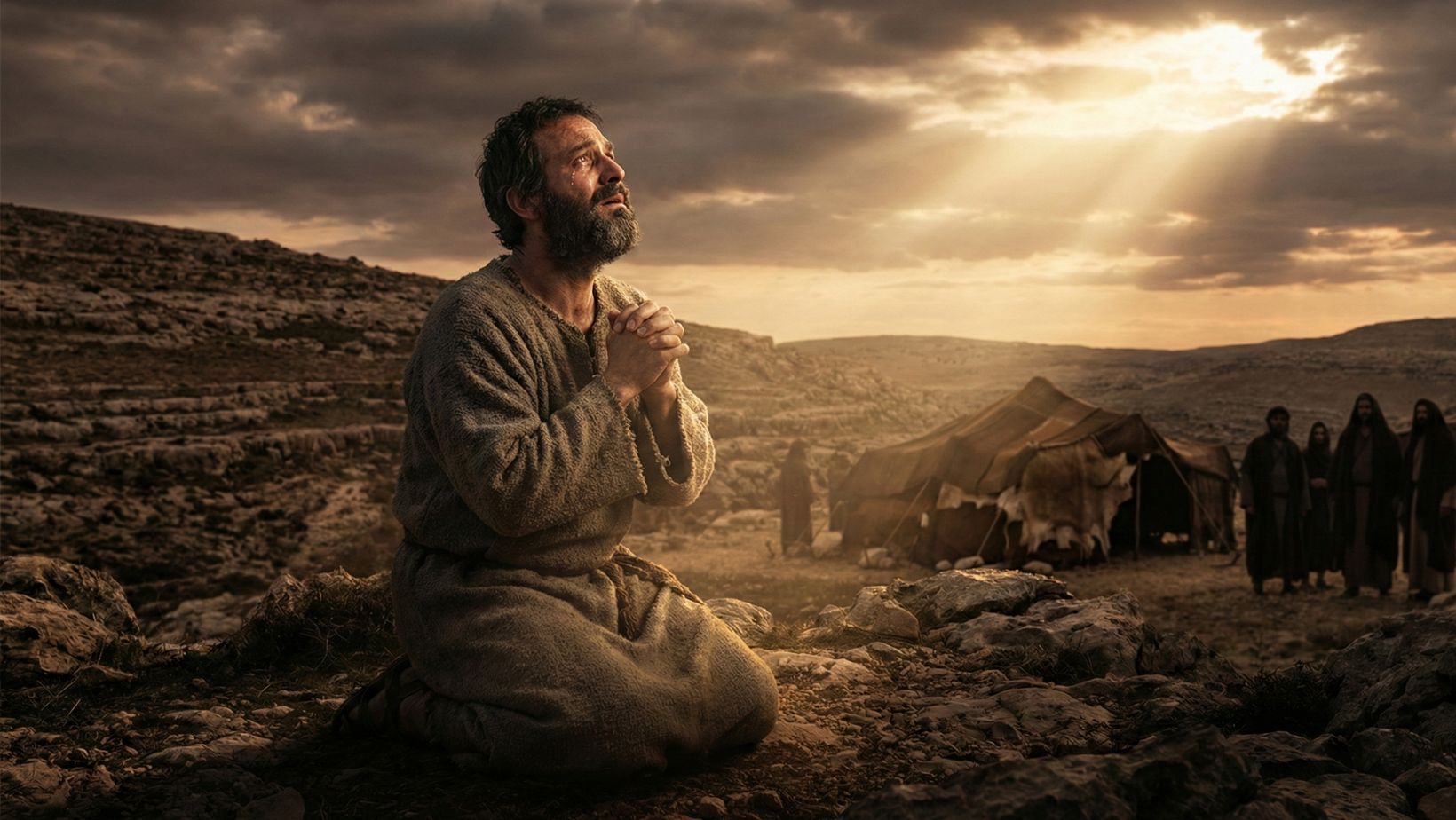
Jabez is a unique figure found in the genealogical lists of the Book of Chronicles. While most names in these chapters are simply listed in a lineage, the biblical narrator pauses to highlight Jabez’s distinct character and his specific, powerful prayer. He is described as being “more honorable” than his brothers, despite a difficult beginning marked by pain. His story is a profound example of how prayer and reliance on God can overcome negative circumstances, labels, or destined sorrow.
Quick Facts
- Name: Jabez (Hebrew: Ya’betz, related to otzev, meaning “pain” or “sorrow”)
- Tribe/Nation: Tribe of Judah
- Scripture Reference: 1 Chronicles 4:9–10
- Era: Period of the Judges or Early Monarchy (precise date uncertain)
- Key Attribute: Honorable
- Legacy: The Prayer of Jabez
- Outcome: God granted his request
Name Meaning
Jabez: The name is derived from the Hebrew root word for pain (otzev). His mother named him this saying, “I gave birth to him in pain.” In biblical culture, a name often prophesied one’s character or destiny; thus, carrying the name “Pain” was a potential burden, suggesting a life destined for sorrow or trouble.
Lineage / Family Background
Tribe: Judah (The royal tribe of Israel).
Clan: He is listed among the descendants of Koz, but his immediate father is not explicitly named in the immediate verses, setting him apart as a standalone figure of importance.
Mother: Unnamed, but significant because she gave him his defining name based on the difficulty of his birth.
Brothers: Mentioned generally (“more honorable than his brothers”), implying he had siblings but surpassed them in spiritual stature or reputation.
Biblical Era / Context
Setting: The account appears in the genealogical records of 1 Chronicles, likely compiled by Ezra or a chronicler after the Babylonian exile.
Literary Context: The genealogies establish the identity of God’s people. Jabez serves as a “narrative break”—a theological pause to show that individual faith matters even within long lists of heritage.
Cultural Context: Names were viewed as determining destiny. To pray against the implications of one’s name was a significant act of faith.
Major Roles / Identity
Man of Prayer: He is primarily defined by his direct petition to God.
Honorable Man: The Scripture explicitly distinguishes him as kibbed (honorable/respected/heavy with glory) compared to his peers.
Cycle Breaker: He refused to let the circumstances of his birth (pain) define the outcome of his life.
Key Character Traits
Faith: He directed his prayer to the “God of Israel,” acknowledging Him as the only source of blessing.
Ambition/Boldness: He was not afraid to ask for large things—blessing, territory, and protection.
Dependence: He recognized that without God’s hand, he would be susceptible to the harm implied by his name.
Piety: His honor likely stemmed from his reverence for God and integrity in life.
Main Life Events
Birth: Born under difficult circumstances, causing his mother significant physical or emotional pain, resulting in his name.
The Prayer: At some point in his life, Jabez prayed a four-fold prayer for blessing, expansion, presence, and protection.
Divine Approval: The short narrative concludes with “And God granted his request,” signaling that his life was transformed from “pain” to blessedness.
Major Relationships
Mother: The source of his name and the narrative tension (pain).
God of Israel: The source of his redemption and the one who rewrote his destiny.
The Scribes of Jabez: 1 Chronicles 2:55 mentions “the clans of scribes who lived at Jabez.” It is historically possible that a city or school of scribes was named after him or founded by him, linking him to the preservation of God’s Word.
Notable Passages
1 Chronicles 4:9: “Jabez was more honorable than his brothers. His mother had named him Jabez, saying, ‘I gave birth to him in pain.’”
1 Chronicles 4:10: “Jabez cried out to the God of Israel, ‘Oh, that you would bless me and enlarge my territory! Let your hand be with me, and keep me from harm so that I will be free from pain.’ And God granted his request.”
Legacy & Impact
The Power of Prayer: Jabez demonstrates that a short, sincere prayer can alter the course of a life.
Overcoming Labels: His life proves that one’s past or family background (even a name meaning “pain”) does not dictate one’s future when God is invited in.
Spiritual Expansion: His request to “enlarge territory” is often interpreted spiritually as asking for greater influence and capacity to serve God, not just land acquisition.
Symbolism / Typology
The Name: Represents the Adamic curse (pain/toil) and the human condition.
The Blessing: Represents the reversal of the curse through God’s grace.
Enlarged Territory: Symbolizes the spread of the Kingdom of God and the breaking of limitations.
Extra-Biblical References
Rabbinic Tradition: In the Talmud and Targum, Jabez is often associated with Othniel (a Judge) or viewed as a great scholar who founded a school of Torah study. The “sorrow” is sometimes interpreted as the toil of deep study.
Christian Literature: The “Prayer of Jabez” became a major focus of modern devotional literature (e.g., Bruce Wilkinson’s book), highlighting the petition for God’s hand and blessing.







Leave a Reply