
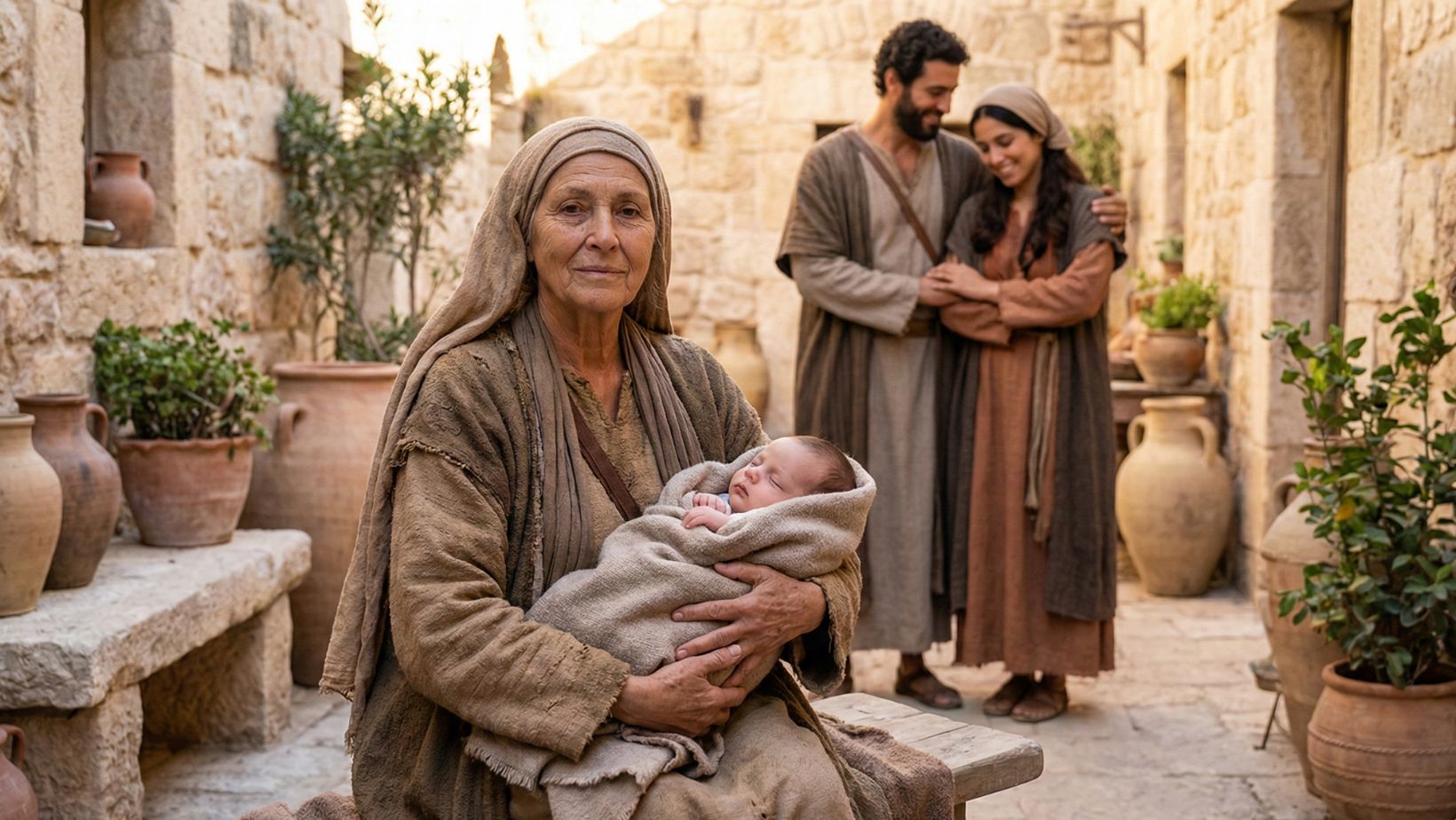
Naomi is the pivotal matriarch in the Book of Ruth, representing a profound journey from tragedy to restoration. Her story is one of the most realistic depictions of grief and resilience in the Bible. After fleeing a famine in Israel for the land of Moab, she loses her husband and both sons, leaving her destitute and bitter. However, through the unwavering loyalty of her daughter-in-law Ruth and the providence of God, Naomi’s life is transformed from “emptiness” to “fullness,” eventually making her a celebrated ancestor in the line of King David.
Quick Facts
- Name: Naomi (Hebrew: No`omi)
- Meaning: “Pleasant,” “Agreeable,” or “My Delight”
- Nickname: Mara (meaning “Bitter”)
- Tribe: Judah (Ephrathite of Bethlehem)
- Era: Time of the Judges (~12th century BCE)
- Home: Bethlehem (Judah) and Moab
- Husband: Elimelech
- Sons: Mahlon and Chilion
- Daughters-in-law: Ruth and Orpah
- Key Struggle: Grief, widowhood, and poverty
- Legacy: Foster mother to Obed; ancestor of David and Jesus
Name Meaning
Naomi: Her given name means “Pleasant” or “My Delight,” reflecting a life originally filled with joy and promise.
Mara: Upon her return to Bethlehem, she instructs the women to call her “Mara,” meaning “Bitter” (Ruth 1:20), claiming that the Almighty had dealt bitterly with her. This name change highlights her intense grief and honesty before God.
Lineage / Family Background
Identity: She was the wife of Elimelech, a man of standing from Bethlehem in Judah. They are described as Ephrathites, an ancient clan name for the region of Bethlehem.
The Tragic Loss: In Moab, she lost her entire immediate family—her husband Elimelech and her two sons, Mahlon and Chilion, who had married Moabite women. This left her without support or legal standing in a patriarchal society.
Biblical Era / Context
Time: The era of the Judges, a violent and unstable period in Israel’s history.
The Famine: The story begins with a famine in the “House of Bread” (Bethlehem), prompting the family’s migration to Moab, a nation that was often an enemy of Israel.
Widowhood: In the ancient Near East, a widow without sons was among the most vulnerable members of society, often facing starvation and total loss of status.
Major Roles / Identity
The Grieving Widow: Naomi represents the honest voice of suffering. She does not hide her pain or her feeling that God has turned against her.
The Wise Mentor: She serves as the strategist behind the scenes. She instructs Ruth on how to navigate the culture, how to glean safely, and how to approach Boaz for redemption.
The Restored Matriarch: By the end of the narrative, she transitions from a bitter widow to a celebrated mother figure, nursing her grandson Obed.
Key Character Traits
Resilience: Despite losing everything, she possesses the strength to make the difficult journey back to Bethlehem to seek survival.
Selflessness: She initially urges Ruth and Orpah to return to their mothers’ homes in Moab, prioritizing their future security over her own need for companionship (Ruth 1:8).
Wisdom: She possesses a sharp understanding of Israelite law and customs, recognizing Boaz as a potential redeemer and guiding Ruth effectively.
Honesty: She is transparent about her emotions and her spiritual crisis, refusing to put on a facade of happiness when she returns home.
Main Life Events
Exile and Loss: Moves to Moab to escape famine, only to bury her husband and two sons over the course of ten years.
The Return: Hearing that the Lord had visited His people with food, she returns to Bethlehem, accompanied by Ruth.
The Strategy: She recognizes God’s hand when Ruth “happens” to glean in Boaz’s field. She devises the plan for Ruth to approach Boaz on the threshing floor (Ruth 3).
The Restoration: When Boaz marries Ruth and they have a son, the women of Bethlehem declare that the child is “a son born to Naomi.” She becomes the child’s nurse, symbolizing her full restoration.
Major Relationships
Ruth: The central relationship of the book. While Naomi is the mother-in-law, Ruth becomes her provider and “better to her than seven sons” (Ruth 4:15).
Boaz: A kinsman of her late husband. Naomi leverages this relationship to secure a future for Ruth and herself.
God (The Almighty/Shaddai): Naomi has a complex relationship with God. She attributes her calamity directly to His hand (“The Almighty has brought calamity upon me”), yet she eventually experiences His restorative grace.
Notable Passages
Ruth 1:13: Her despair: “It is more bitter for me than for you, because the LORD’s hand has turned against me!”
Ruth 1:20-21: Her identity crisis: “Don’t call me Naomi… Call me Mara, because the Almighty has made my life very bitter. I went away full, but the LORD has brought me back empty.”
Ruth 3:1: Her concern for Ruth: “My daughter, should I not try to find a home for you, where you will be well provided for?”
Ruth 4:14: The blessing: “Praise be to the LORD, who this day has not left you without a guardian-redeemer.”
Legacy & Impact
Ancestor of Messiah: Through her guidance of Ruth and the birth of Obed, Naomi preserves the line of Judah, leading to King David and Jesus Christ.
Theology of Suffering: Naomi’s life teaches that bitterness is a valid reaction to tragedy, but it is not the end of the story. God can work through emptiness to bring about abundance.
Intergenerational Blessing: Her story highlights the importance of the older generation guiding the younger, and the younger generation caring for the older.
Symbolism / Typology
Israel: Some scholars view Naomi as a type of Israel—going into exile, suffering loss, and returning to the land to be restored by God.
Emptiness vs. Fullness: Naomi embodies the narrative arc of the book. She begins “full” (with family) but leaves the land; she returns “empty” (widowed) to the land; she ends “full” again (with a redeemer and grandson).
Extra-Biblical References
Jewish Tradition: Midrashic sources often praise Naomi for her righteousness. Some traditions suggest that her husband Elimelech died because he abandoned the land of Israel during a time of trouble, while Naomi was spared because of her good deeds.







Leave a Reply