
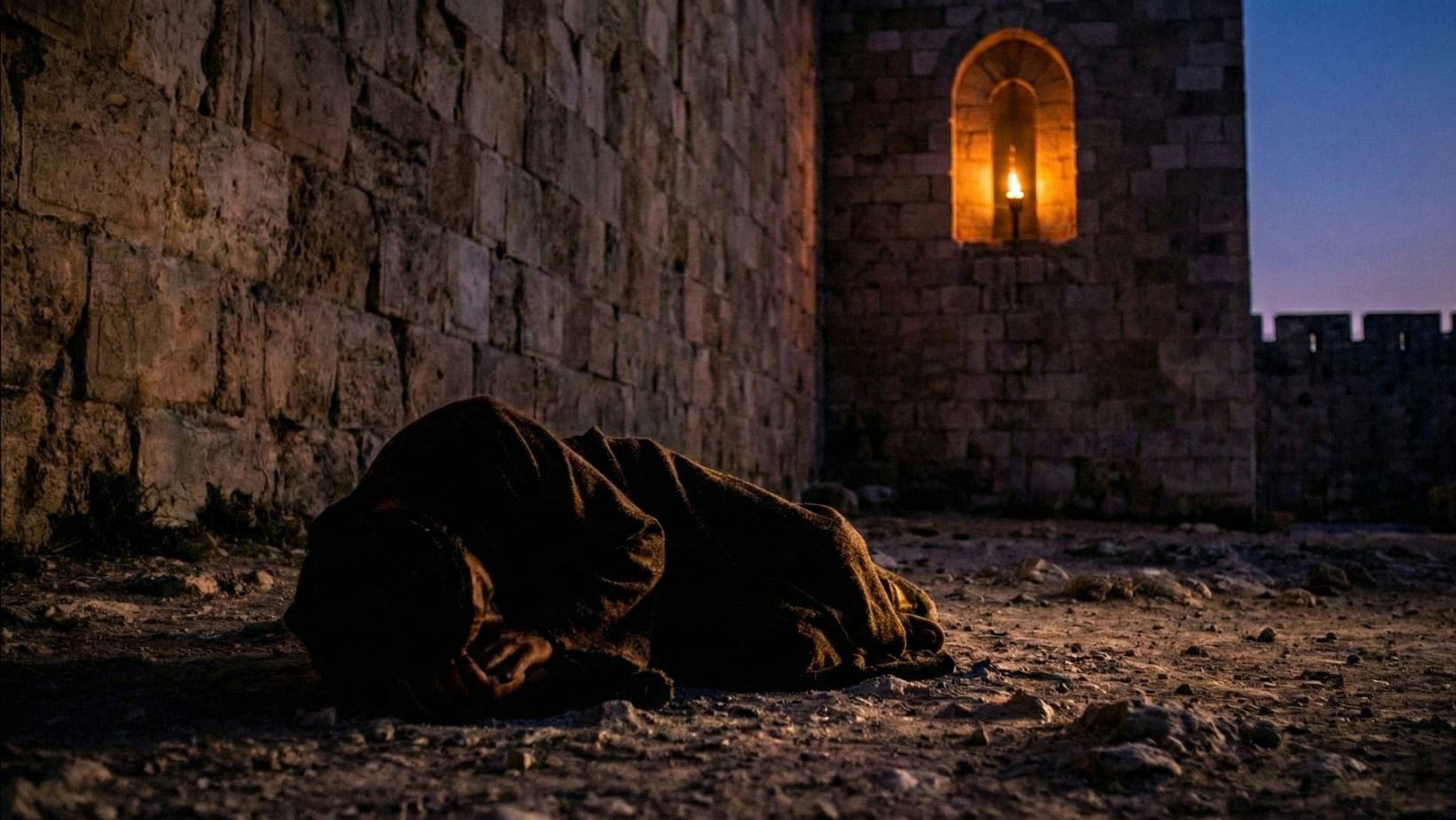
Jeremiah 22:19 delivers one of the most scathing and graphic judgments against a sitting king in the entire Old Testament. The prophecy targets King Jehoiakim of Judah, the son of the righteous King Josiah. While his father was known for justice and reform, Jehoiakim is condemned for his selfishness, oppression of the poor, and construction of lavish palaces using forced labor while the nation crumbled under foreign threats. The verse predicts that despite his royal lineage and architectural ambition, he will die without honor, receiving the disposal—not the burial—of a rotting animal.
1. The Prophetic Judgment (Jeremiah 22:19 NLT)
19 He will be buried like a dead donkey—dragged out of Jerusalem and dumped outside the gates.
2. Detailed Commentary
- Lineage: Jehoiakim was the second son of the godly King Josiah. His original name was Eliakim, but he was renamed and placed on the throne as a puppet king by Pharaoh Neco of Egypt around 609 BC (2 Kings 23:34).
- Character: Unlike his father, Jehoiakim is described in Jeremiah 22:13–17 as a tyrant who built a luxurious palace (“paneled with cedar and painted red”) by withholding wages from his workers. He practiced extortion and shed innocent blood to maintain his lifestyle.
- The Contrast: The surrounding text contrasts him sharply with Josiah, who “judged the cause of the poor and needy” (Jer 22:16). Jeremiah asserts that knowing God is not about lineage or ritual, but about practicing justice.
The “Burial of a Donkey” (Qeburat Chamor)
- Cultural Horror: In ancient Near Eastern culture, a proper burial was essential for honor and rest in the afterlife. To be left unburied was a curse, often viewed as a punishment reserved for the worst criminals or enemies.
- The Metaphor: A “dead donkey” is not mourned. It is a beast of burden that, once useful, becomes a sanitary hazard upon death. It is dragged away from the city to prevent the stench from affecting the living and left for scavengers.
- Total Disgrace: Jeremiah prophesies that there will be no royal funeral, no lamentation (such as “Alas, my brother!” or “Alas, master!” mentioned in verse 18), and no interment in the tombs of the kings.
“Dragged out and Dumped”
- Violent Removal: The Hebrew verbs imply a violent physical removal. The king, who prioritized his physical comfort and palace walls, would be physically ejected from the holy city.
- Outside the Gates: This signifies total rejection by the community. He is treated as “unclean” refuse rather than God’s anointed.
Historical Fulfillment
- The Siege: Jehoiakim revolted against Babylon after serving them for three years. Nebuchadnezzar sent bands of raiders against Judah.
- The Death: The exact circumstances of Jehoiakim’s death are historically debated due to the brevity of 2 Kings 24:6 (“slept with his fathers”). However, the historian Josephus records that Nebuchadnezzar killed Jehoiakim and commanded “that he should be thrown before the walls, without any burial.”
- Chronicles Account: 2 Chronicles 36:6 states he was bound in bronze chains to be taken to Babylon, suggesting he likely died in transit or during the coup, resulting in the shameful disposal Jeremiah predicted.
3. Theological Significance
The Failure of Royal entitlement
- Covenant Responsibility: The Davidic Covenant (2 Samuel 7) promised a perpetual dynasty, but it required the kings to represent God’s justice. Jehoiakim believed the temple and his lineage guaranteed his safety (the “Temple Sermon” issues of Jeremiah 7). Jeremiah 22:19 shatters this illusion: God will discard a wicked king regardless of his ancestry.
Social Justice as Spiritual Litmus Test
- True Knowledge of God: Leading up to verse 19, Jeremiah defines knowing God specifically as defending the rights of the poor and needy (v. 16). Jehoiakim’s exploitation of workers (v. 13) was not just a social crime but a theological rejection of Yahweh.
- Woe to the Oppressor: The severity of the punishment (being treated like roadkill) matches the severity of the crime (dehumanizing the working class for personal luxury).
Divine Sovereignty over Dignity
- Giver of Honor: Human beings can build monuments and amass wealth, but God holds the power over ultimate honor and legacy. Jehoiakim sought to make a name for himself through cedar palaces; God ensured his name would be associated with a rotting carcass.
4. Practical Applications
Leadership Accountability
- Treatment of Subordinates: Leaders (secular or spiritual) are judged by how they treat those who serve them. Withholding fair wages or exploiting labor for personal gain invites divine displeasure.
- Legacy Construction: One cannot build a lasting legacy on the backs of the oppressed. Jehoiakim’s palace is gone; his shame remains recorded in Scripture forever.
The End of Pride
- Mortality: The verse is a stark reminder of mortality (“memento mori”). The pomp of royalty ends instantly at death. Without God’s favor, a king is no different from a beast in the field.
- Priority of Justice: Believers are called to prioritize justice and righteousness over accumulation of wealth. Seeking luxury while ignoring the suffering of others is arguably the quickest way to forfeit God’s blessing.







Leave a Reply