
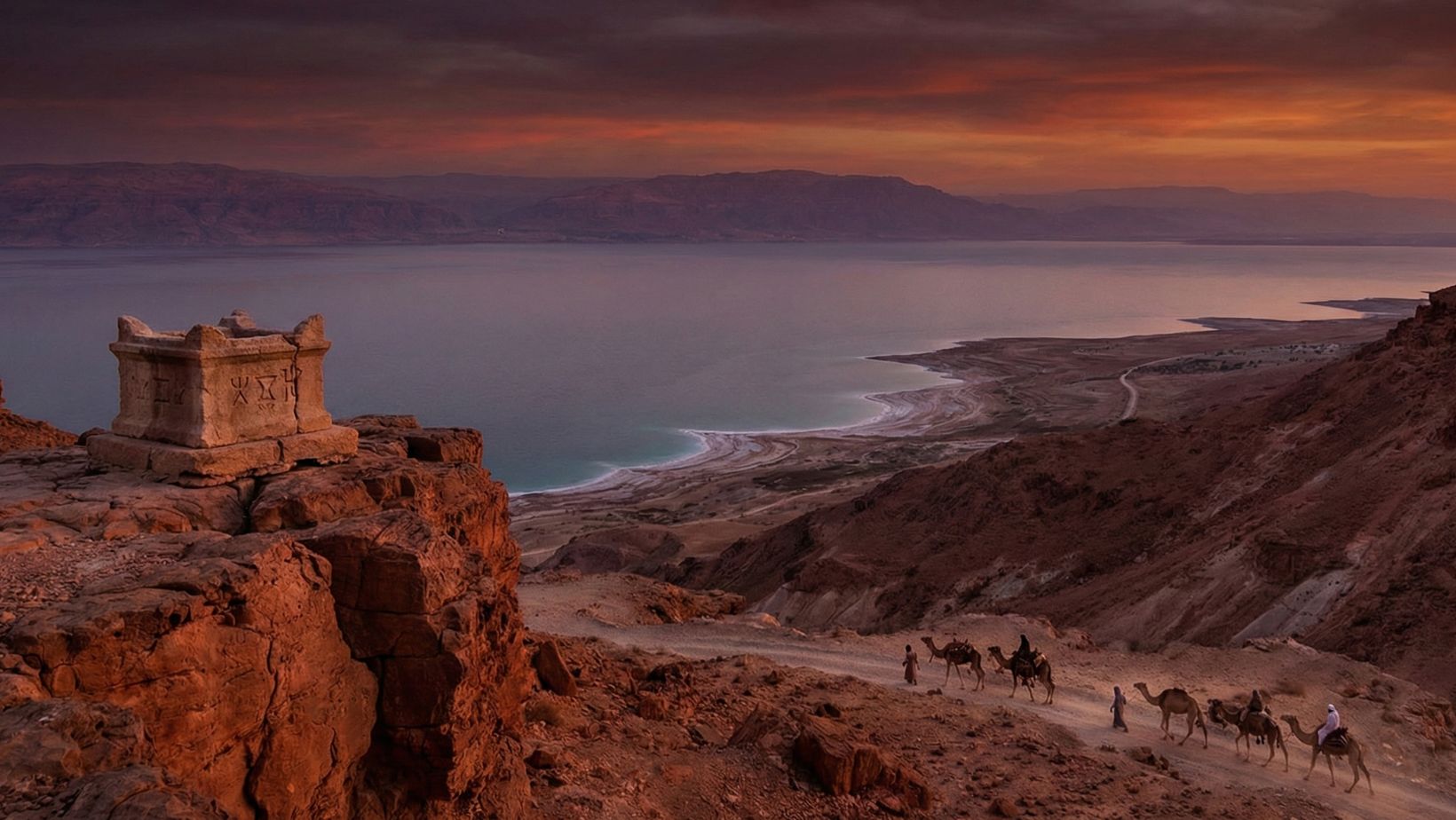
Moab is a complex figure in biblical history, referring both to a man—the son of Lot—and the powerful nation that descended from him. Born from a desperate and illicit union between Lot and his eldest daughter after the destruction of Sodom, Moab became the patriarch of a people who settled on the high plateau east of the Dead Sea. throughout the Old Testament, the nation of Moab stands as a perennial “frenemy” to Israel: a close relative by blood who often served as a bitter military rival and a spiritual stumbling block, yet also the source of Ruth, the virtuous woman who helped build the lineage of King David and Jesus Christ.
- Name: Moab (Hebrew: Mo’av, meaning “From Father”)
- Progenitor: Son of Lot and his eldest daughter
- Tribe/Nation: The Moabites
- Location: East of the Dead Sea (modern-day west-central Jordan)
- Capital: Dibon (later Kir-Hareseth)
- Chief Deity: Chemosh
- Key Figures: King Balak, King Eglon, King Mesha, Ruth
- Relationship to Israel: Cousins (descendants of Lot, Abraham’s nephew); frequent rivals
- Symbolism: Carnal nature, pride, hostility disguised as kinship
Name Meaning
“Moab” sounds like the Hebrew phrase me-av, meaning “From Father.” This name serves as a perpetual reminder of his origin—born of an incestuous union between Lot and his daughter. It underscores a theme of dubious beginnings that often characterized Israel’s view of their eastern neighbors.
Lineage / Family Background
Origin: Born in a cave near Zoar. After the destruction of Sodom and Gomorrah, Lot’s daughters, fearing the end of humanity, intoxicated their father to preserve his line (Genesis 19:30-38).
Parents: Lot (nephew of Abraham) and Lot’s eldest daughter.
Brother/Cousin: Ben-Ammi, the father of the Ammonites (born of Lot’s younger daughter).
Relation to Israel: The Moabites were second cousins to the Israelites. Because of this familial bond, God commanded Israel not to harass or destroy Moab during the Exodus (Deuteronomy 2:9).
Biblical Era / Context
Time: From the Patriarchal age (Genesis) through the entire Old Testament period (Kings and Prophets).
Geography: The “Plains of Moab” and the high plateau east of the Dead Sea. It was a fertile region suitable for sheep herding and agriculture, traversed by the strategic “King’s Highway.”
Religious Context: The Moabites worshiped Chemosh. This worship sometimes involved child sacrifice (2 Kings 3:27), a practice detestable to the God of Israel.
Major Roles / Identity
The Obstacle: King Balak of Moab hired the prophet Balaam to curse Israel as they approached the Promised Land, fearing their vast numbers.
The Oppressor: During the time of the Judges, King Eglon of Moab allied with Ammon and Amalek to subjugate Israel for 18 years until he was assassinated by Ehud.
The Refuge: Ironically, Moab often served as a refuge for Israelites fleeing trouble. The family of Elimelech fled there during a famine (Ruth 1), and David took his parents there for safety while fleeing Saul (1 Samuel 22:3-4).
Key Character Traits (National)
Pride: The prophets, particularly Isaiah and Jeremiah, frequently condemned Moab for its arrogance and conceit (Isaiah 16:6).
Idolatry: They were staunchly devoted to Chemosh, leading to their designation as the “people of Chemosh” (Numbers 21:29).
Seductiveness: Moabite women seduced Israelite men at Peor, leading to a plague and a severe judgment against Israel (Numbers 25).
Main Life Events (National History)
Birth of the Patriarch: Moab is born to Lot’s daughter in the aftermath of Sodom’s destruction (Genesis 19).
The Balaam Incident: King Balak attempts to curse Israel; when that fails, Moabite women entice Israel into idolatry and sexual immorality at Baal of Peor (Numbers 22-25).
Exclusion from Assembly: Because they did not meet Israel with bread and water but hired Balaam against them, Moabites were forbidden from entering the assembly of the Lord to the tenth generation (Deuteronomy 23:3).
Subjugation by David: King David conquered Moab, making them vassal subjects who paid tribute (2 Samuel 8:2).
Rebellion of Mesha: After the death of Ahab, King Mesha of Moab rebelled against Israel, an event recorded in 2 Kings 3 and corroborated by the famous Mesha Stele archaeological find.
Major Relationships
Israel: A relationship defined by tension—blood relatives who were often at war.
Lot: The ancestor connecting Moab to the Abrahamic narrative.
Chemosh: Their national god, whom they believed granted them victory or defeat based on his anger or favor.
Ruth: The “rose among thorns”—a Moabite woman who rejected her nation’s gods to follow Yahweh, redeeming the reputation of her people through her faith.
Notable Passages
Genesis 19:36-37: The origin story — “So both of Lot’s daughters became pregnant by their father. The older daughter had a son, and she named him Moab…”
Numbers 24:17: A prophecy by Balaam predicting the Messiah who would crush the forehead of Moab (symbolizing the defeat of God’s enemies).
Ruth 1:4: The intermarriage — “They married Moabite women, one named Orpah and the other Ruth.”
2 Kings 3:26-27: A horrific scene where King Mesha sacrifices his firstborn son on the city wall to turn the tide of battle.
Legacy & Impact
The Mesha Stele: One of the most significant archaeological discoveries corroborating biblical history. It is a stone slab inscribed by King Mesha of Moab boasting of his victory over Israel and mentioning “Omri” and the “House of David.”
Messianic Lineage: Despite the strict laws excluding Moabites from the assembly, God’s grace allowed Ruth to enter the line of Christ. This demonstrates that grace transcends national boundaries and biological origins.
Prophetic Symbol: In the end times prophecies, Moab often symbolizes the enemies of God who will eventually be judged, yet Jeremiah 48:47 offers a glimmer of hope: “Yet I will restore the fortunes of Moab in days to come.”
Symbolism / Typology
The “Flesh”: In Christian typology, Moab often represents the “flesh” or the carnal nature—closely related to the believer (like a cousin) but hostile to the Spirit, originating from illicit desires (incest).
Washbasin: Psalm 60:8 says, “Moab is my washbasin,” symbolizing God’s subjugation of the proud nation to the status of a lowly servant vessel.
Extra-Biblical References
The Moabite Stone (Mesha Stele): Discovered in 1868 at Dhiban (biblical Dibon), this black basalt stone contains an inscription by King Mesha. It references Israel’s oppression of Moab under King Omri and Mesha’s subsequent revolt, closely paralleling the events of 2 Kings 3 from the Moabite perspective.
Assyrian Records: Various Assyrian inscriptions mention Moabite kings (such as Kammusu-nadbi) paying tribute to Assyrian emperors like Sennacherib and Esarhaddon.








Leave a Reply