
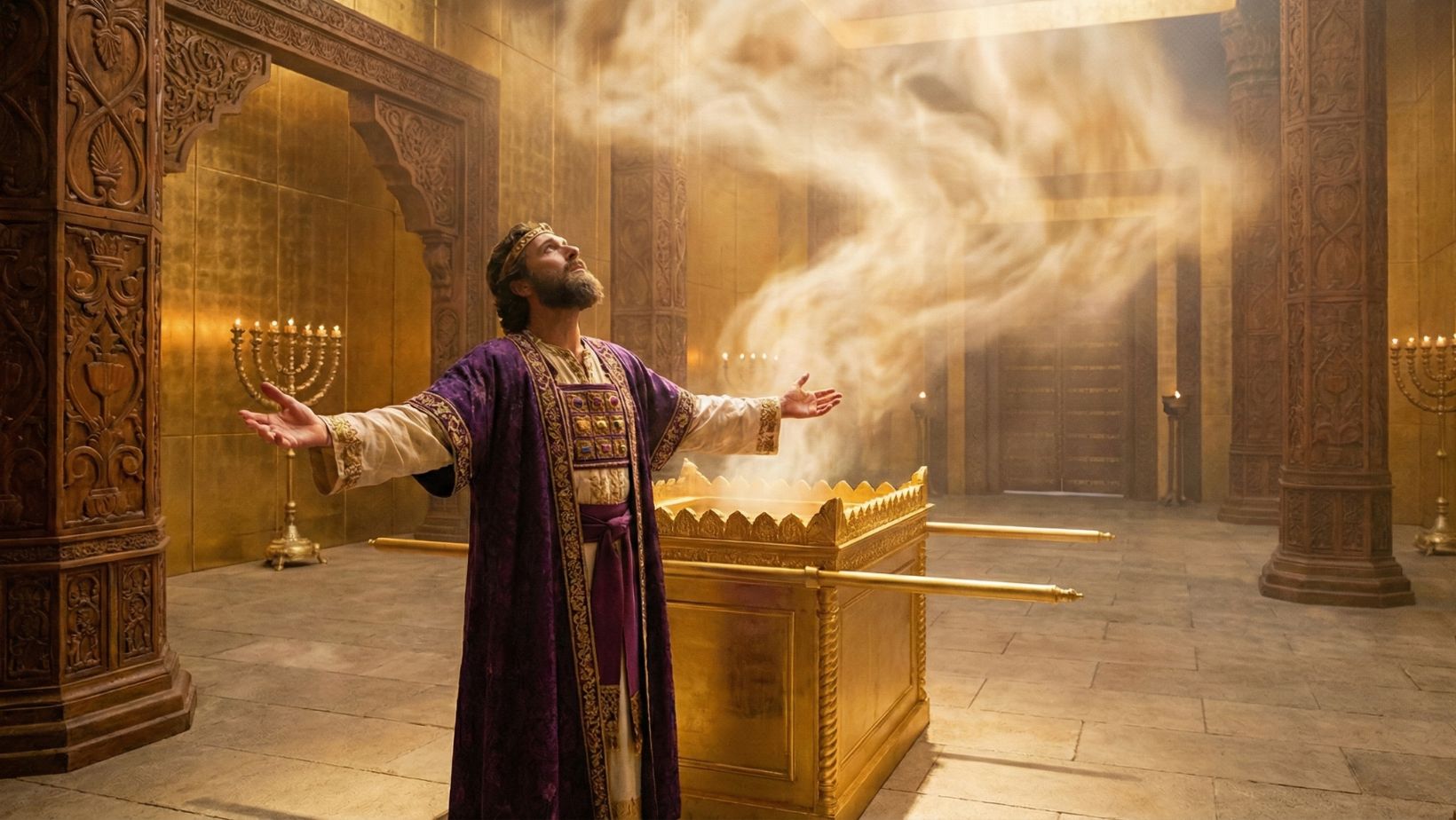
Solomon was the third and final king of the United Kingdom of Israel, presiding over its “Golden Age” of peace, prosperity, and international influence. Famous for his God-given wisdom, immense wealth, and the construction of the First Temple in Jerusalem, Solomon’s reign marked the pinnacle of Israel’s earthly power. However, his life is also a complex paradox: while he penned thousands of proverbs and songs, his later years were marred by spiritual compromise and idolatry caused by his foreign alliances, leading to the eventual division of the kingdom.
- Name: Solomon (Hebrew: Shlomo)
- Other Name: Jedidiah (“Beloved of the LORD”)
- Tribe/Nation: Judah
- Era: United Monarchy (~970–931 BCE)
- Parents: King David and Bathsheba
- Successor: Rehoboam
- Home: Jerusalem (City of David)
- Books: 1 Kings, 2 Chronicles; Author of Proverbs, Ecclesiastes, Song of Solomon
- Key Virtues: Wisdom, Administration, Diplomacy
- Key Vices: Lust, Idolatry, Excessive Excess
- Legacy: Built the First Temple; wisdom literature
Name Meaning
Hebrew: Shlomo, derived from shalom, meaning “Peace.” This was prophetic, as his reign was characterized by a lack of major warfare, contrasting with his father David’s bloodstained reign. Divine Name: God named him Jedidiah through the prophet Nathan, meaning “Beloved of Yahweh” (2 Samuel 12:25).
Lineage / Family Background
Father: King David, the man after God’s own heart.
Mother: Bathsheba, the widow of Uriah the Hittite. Solomon was the second son born to them (the first died as an infant).
Siblings: Adonijah, Absalom, and Tamar (half-siblings); Nathan (full brother).
Children: Rehoboam (his successor, born of an Ammonite woman) and others.
Biblical Era / Context
Time: 10th Century BCE (approx. 970–931 BCE).
Setting: A time of unprecedented stability. With major powers like Egypt and Assyria temporarily weak, Israel controlled the trade routes between Africa and Asia.
Cultural Context: This was an era of heavy international trade. Solomon’s court emulated the grandeur of other Near Eastern empires.
Major Roles / Identity
The Wise King: Renowned globally for his intellect, knowledge of botany and zoology, and judicial discernment.
The Master Builder: Oversaw the construction of the First Temple (the crowning achievement of the Old Testament era) and a lavish royal palace.
The Patron of Wisdom Literature: Credited with writing 3,000 proverbs and 1,005 songs.
The Merchant King: Established a navy and vast trade networks, accumulating 666 talents of gold annually.
Key Character Traits
Wisdom: Asked God for a “discerning heart” to govern rather than long life or riches.
Organization: Created a sophisticated bureaucratic system with 12 district governors to supply the crown.
Diplomacy: Secured peace through treaties and marriage alliances rather than war.
Extravagance: Known for luxury; silver was considered as common as stones in Jerusalem during his reign.
Compromise: His tolerance for the gods of his foreign wives showed a divided heart in his old age.
Main Life Events
Ascension to Throne: Secured the throne after thwarting a coup by his older half-brother Adonijah (1 Kings 1-2).
The Dream at Gibeon: God appeared to him in a dream offering him anything; Solomon chose wisdom (1 Kings 3).
The Judgment of Two Mothers: Famous display of wisdom determining the true mother of a baby by threatening to cut it in half (1 Kings 3:16-28).
Building the Temple: Spent 7 years building the house of the Lord on Mount Moriah, following David’s plans (1 Kings 6).
Visit of the Queen of Sheba: A foreign queen traveled from afar to test his wisdom and marvel at his wealth (1 Kings 10).
Spiritual Decline: Married 700 wives and 300 concubines from foreign nations who turned his heart after other gods like Ashtoreth and Molech (1 Kings 11).
Adversaries Arise: God raised up enemies (Hadad, Rezon, and Jeroboam) to trouble Solomon’s final years due to his disobedience.
Major Relationships
David: His father, who charged him to keep the Law of Moses and deal with political enemies.
Nathan: The prophet who supported his accession to the throne.
Hiram of Tyre: The Phoenician king who supplied cedar, gold, and skilled craftsmen for the Temple.
Queen of Sheba: A diplomatic equal who validated his wisdom and God’s blessing upon Israel.
Jeroboam: A skilled official in Solomon’s workforce who eventually rebelled and took 10 tribes to form the Northern Kingdom.
Notable Passages
1 Kings 3:9: The prayer for wisdom — “So give your servant a discerning heart to govern your people and to distinguish between right and wrong.”
Proverbs 1:7: The foundation of his teaching — “The fear of the LORD is the beginning of knowledge.”
Ecclesiastes 12:13: His retrospective conclusion — “Fear God and keep his commandments, for this is the duty of all mankind.”
1 Kings 11:4: The tragedy — “As Solomon grew old, his wives turned his heart after other gods, and his heart was not fully devoted to the LORD his God.”
Legacy & Impact
Wisdom Literature: His writings (Proverbs, Ecclesiastes, Song of Songs) remain central to Judeo-Christian theology regarding practical living, the meaning of life, and love.
The Temple: Established Jerusalem as the permanent center of Jewish worship for centuries.
The Split Kingdom: His heavy taxation and forced labor policies, combined with his idolatry, set the stage for the civil war that divided Israel immediately after his death.
Symbolism / Typology
Prince of Peace: Solomon is a type of Christ in His glorified reign—ruling in peace, wisdom, and judgment.
Son of David: Just as Solomon was the son of David who built the physical house of God, Jesus is the Son of David who builds the spiritual house (the Church).
Vanity of Life: Through Ecclesiastes, he symbolizes the futility of trying to find satisfaction in earthly pleasure, power, or intellect apart from God.
Extra-Biblical References
Archaeology: The “Solomonic Gates” found at Hazor, Megiddo, and Gezer suggest a centralized building program consistent with the Bible.
Legends: Later Jewish, Islamic, and Ethiopian traditions (like the Kebra Nagast) contain extensive legends about his ability to control spirits and his relationship with the Queen of Sheba.







Leave a Reply