
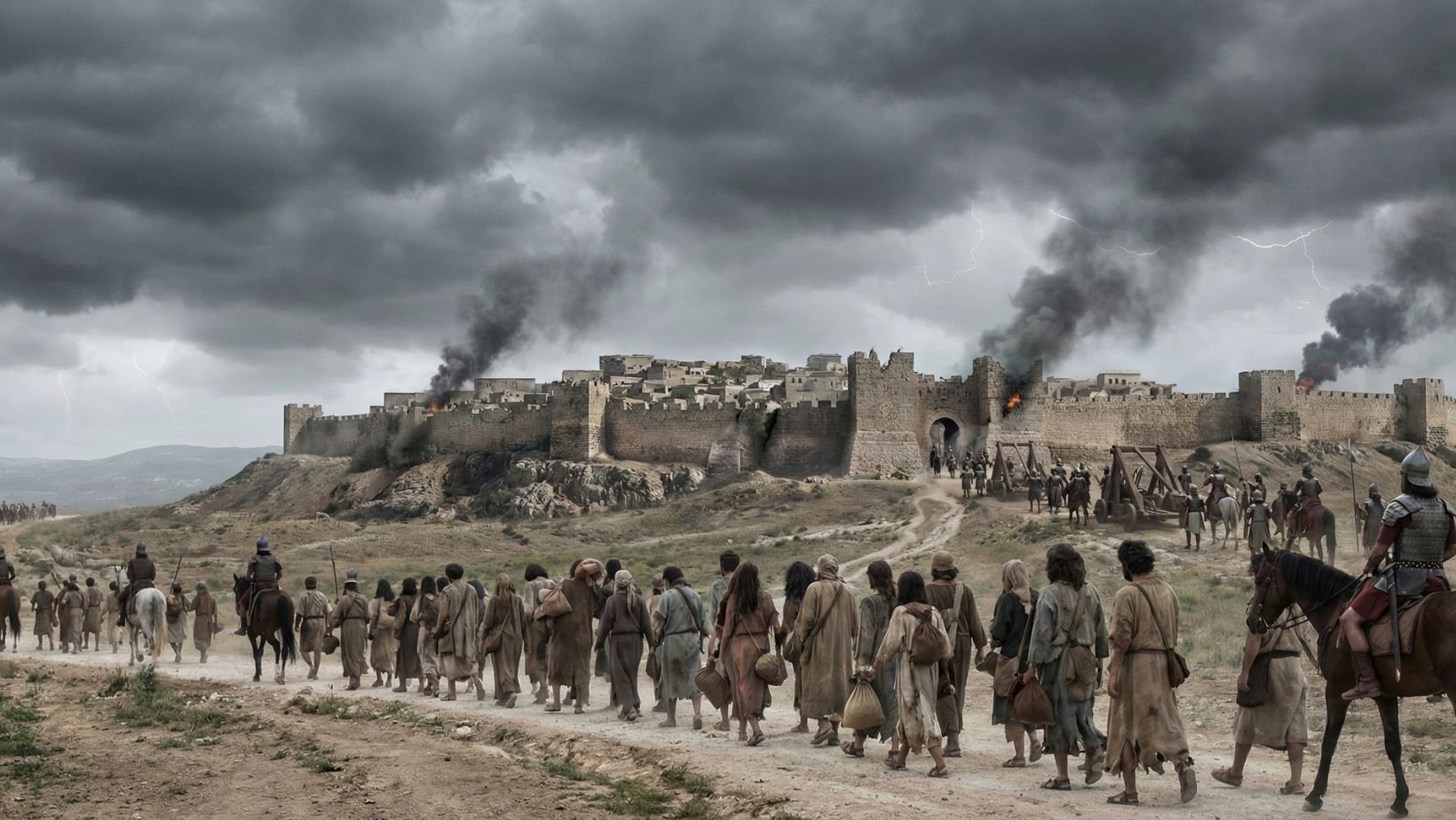
2 Kings 17 is a pivotal chapter in biblical history, marking the end of the Northern Kingdom of Israel. It details the conquest of the capital city, Samaria, by the Assyrian Empire in 722 BC. The chapter is divided into two major parts: a historical account of the siege and exile, and a theological treatise explaining why this tragedy occurred. The narrator makes it clear that the fall of Samaria was not due to Assyrian military might, but Israel’s persistent idolatry and covenant-breaking. The chapter concludes by explaining the origin of the “Samaritans” found in the New Testament—a mixed-race people group formed when the Assyrians repopulated the land with foreigners who blended the worship of Yahweh with pagan practices.
1. The Siege and Exile (2 Kings 17:1–6 NLT)
1 Hoshea son of Elah began to rule over Israel in the twelfth year of King Ahaz’s reign in Judah. He reigned in Samaria nine years. 2 He did what was evil in the Lord’s sight, but not to the same extent as the kings of Israel who ruled before him. 3 King Shalmaneser of Assyria attacked King Hoshea, so Hoshea was forced to pay heavy tribute to Assyria. 4 But later, King Hoshea stopped paying the annual tribute and conspired with King So of Egypt to attack Assyria. When the king of Assyria discovered this treachery, he seized Hoshea and put him in prison. 5 Then the king of Assyria invaded the entire land, and for three years he besieged the city of Samaria. 6 Finally, in the ninth year of King Hoshea’s reign, Samaria fell, and the people of Israel were exiled to Assyria. They were settled in colonies in Halah, along the banks of the Habor River in Gozan, and in the cities of the Medes.
Commentary:
- The Final King (v. 1-2): Hoshea is the last king of the Northern Kingdom. Interestingly, the text notes he was “not as evil” as his predecessors. However, judgment had been accumulating for generations; his relative moderation was too little, too late.
- Geopolitics (v. 3-4): Samaria was caught between two superpowers: Assyria (North/East) and Egypt (South). Hoshea tried to play them against each other, stopping tribute to Assyria and seeking an alliance with “So of Egypt” (possibly a weak Delta ruler or general). This political gamble failed spectacularly.
- The Three-Year Siege (v. 5): Samaria was a heavily fortified hilltop city (built by Omri in 1 Kings 16). It took the mighty Assyrian army three years to starve it into submission.
- The Exile (v. 6): This event (722 BC) is the “Death of Israel” as a sovereign state. The Assyrian policy was deportation and scattering. By moving the Israelites to distant lands (Halah, Gozan, Media), they destroyed their national identity. These exiles became known as the “Lost Ten Tribes.”
Insight: Political maneuvering cannot save a nation that has abandoned its spiritual foundation. Hoshea trusted in Egypt rather than repenting before God, leading to total ruin.
2. The Theological Indictment (2 Kings 17:7–23 NLT)
7 This disaster came upon the people of Israel because they worshiped other gods. They sinned against the Lord their God, who had brought them safely out of Egypt and had rescued them from the power of Pharaoh, the king of Egypt. 8 They had followed the practices of the pagan nations the Lord had driven from the land ahead of them, as well as the practices the kings of Israel had introduced. 9 The people of Israel had also secretly done many things that were not pleasing to the Lord their God. They built pagan shrines for themselves in all their towns, from the smallest outpost to the largest walled city. 10 They set up sacred pillars and Asherah poles at the top of every hill and under every green tree. 11 They offered sacrifices on all the hilltops, just like the nations the Lord had driven from the land ahead of them. So the people of Israel had done many evil things, arousing the Lord’s anger. 12 Yes, they worshiped idols, despite the Lord’s specific and repeated warnings. 13 Again and again the Lord had sent his prophets and seers to warn both Israel and Judah: “Turn from all your evil ways. Obey my commands and decrees—the entire law that I commanded your ancestors to obey, and that I gave you through my servants the prophets.” … 18 Because the Lord was very angry with Israel, he swept them away from his presence. Only the tribe of Judah remained in the land. … 23 until the Lord finally swept them away from his presence, just as all his prophets had warned. So the people of Israel were exiled from their land to Assyria, where they remain to this day.
Commentary:
- The “Why” of History (v. 7): The narrator pauses the history lesson to give a sermon. The fall of Samaria was not an accident of history; it was the inevitable result of breaking the First Commandment (“worshiped other gods”).
- Ingratitude (v. 7): The indictment begins by reminding them of the Exodus. They rejected the very God who liberated them.
- Syncretism (v. 9): The phrase “secretly done many things” suggests hypocrisy—perhaps publicly claiming Yahweh while privately engaging in Canaanite rituals.
- The Asherah Poles (v. 10): They adopted the fertility cults of Canaan, worshipping on “high places” (hilltops) which were believed to be closer to the gods.
- Rejection of Prophets (v. 13): God’s mercy is highlighted here. He did not judge them immediately; He sent prophets (like Elijah, Elisha, Amos, Hosea) “again and again.” The judgment was not impulsive; it was the result of centuries of stubbornness.
- The Sin of Jeroboam (v. 21-22): The text (in verses omitted for brevity) traces the root cause back to Jeroboam I, who set up golden calves in Bethel and Dan to keep people from going to Jerusalem. This state-sponsored idolatry was the cancer that eventually killed the nation.
Insight: God is slow to anger, but He is not soft on sin. The fall of Samaria demonstrates that a nation cannot exist in covenant rebellion forever. God removes His protection when His people consistently remove Him from their lives.
3. The Origin of the Samaritans (2 Kings 17:24–41 NLT)
24 The king of Assyria transported groups of people from Babylon, Cuthah, Avva, Hamath, and Sepharvaim and resettled them in the towns of Samaria, replacing the people of Israel. They took possession of Samaria and lived in its towns. 25 But since these new residents did not worship the Lord when they first arrived, the Lord sent lions among them, which killed some of them. 26 So a message was sent to the king of Assyria: “The people you have sent to live in the towns of Samaria do not know the religious customs of the God of the land. He has sent lions among them to destroy them because they have not worshiped him correctly.” 27 The king of Assyria then ordered, “Send one of the exiled priests back to Samaria. Let him live there and teach the new residents the religious customs of the God of the land.” 28 So one of the priests who had been exiled from Samaria returned to live in Bethel and taught them how to worship the Lord. 29 But these various groups of foreigners also continued to make their own gods. In town after town where they lived, they placed their idols at the pagan shrines that the people of Israel had built. … 33 So they worshiped the Lord, but they also served their own gods according to the customs of the nations from which they came. 34 And this is still going on today. They do not truly worship the Lord, for they do not obey the decrees, regulations, instructions, and commands that the Lord gave to the descendants of Jacob, whose name he changed to Israel. … 41 So while these new residents worshiped the Lord, they also bowed down to their idols. And to this day their descendants do the same.
Commentary:
- Population Replacement (v. 24): Assyria’s strategy was to mix conquered peoples to prevent rebellion. They brought in five foreign nations to inhabit Samaria.
- The Lions (v. 25): The land had become desolate and wild due to war. The new inhabitants, facing lion attacks, interpreted this as the wrath of the “local deity” (Yahweh).
- The Syncritistic Religion (v. 27-28): The Assyrian king views Yahweh as merely a territorial spirit. He sends back a corrupt priest (from the golden calf cult of Bethel) to teach them.
- “They worshiped the Lord, but…” (v. 33, 41): This is the key definition of the Samaritan religion in the Old Testament view. It was a mixture. They added Yahweh to their pantheon of idols rather than worshipping Him exclusively.
- New Testament Connection: This passage explains the deep hostility in the New Testament (e.g., John 4). The Jews viewed the Samaritans as “half-breeds”—both ethnically (mixed with Assyrian transplants) and religiously (worshipping Yahweh alongside other customs, and rejecting the Jerusalem temple).
Insight: Partial obedience is disobedience. The new inhabitants of Samaria wanted the “insurance” of Yahweh worship to protect them from lions, but they didn’t want the relationship that required exclusive loyalty. This “insurance policy” religion is still common today.
Theological Significance of Samaria
- The Justice of God: Samaria stands as a monument to the fact that God will judge His own people. Privilege (being chosen) implies responsibility.
- The Danger of Syncretism: The fall of Samaria began with “tolerance” of other gods and ended with the total loss of identity.
- The Samaritans: This chapter provides the necessary backstory for the Gospels. When Jesus speaks to the Samaritan woman or tells the parable of the Good Samaritan, He is addressing a 700-year-old racial and religious rift that began here in 2 Kings 17.
Practical Applications
- Check Your Foundations: Hoshea tried to save Samaria with politics (Egypt) rather than repentance. We often try to fix spiritual problems with worldly solutions.
- Secret Sins: Verse 9 mentions the Israelites did things “secretly.” Secret sins inevitably lead to public disgrace.
- Exclusive Worship: The Samaritans “feared the Lord” but served their own gods (v. 33). We must ask ourselves if we are worshipping God exclusively, or just adding Him to a life filled with other “idols” (money, career, status).







Leave a Reply