
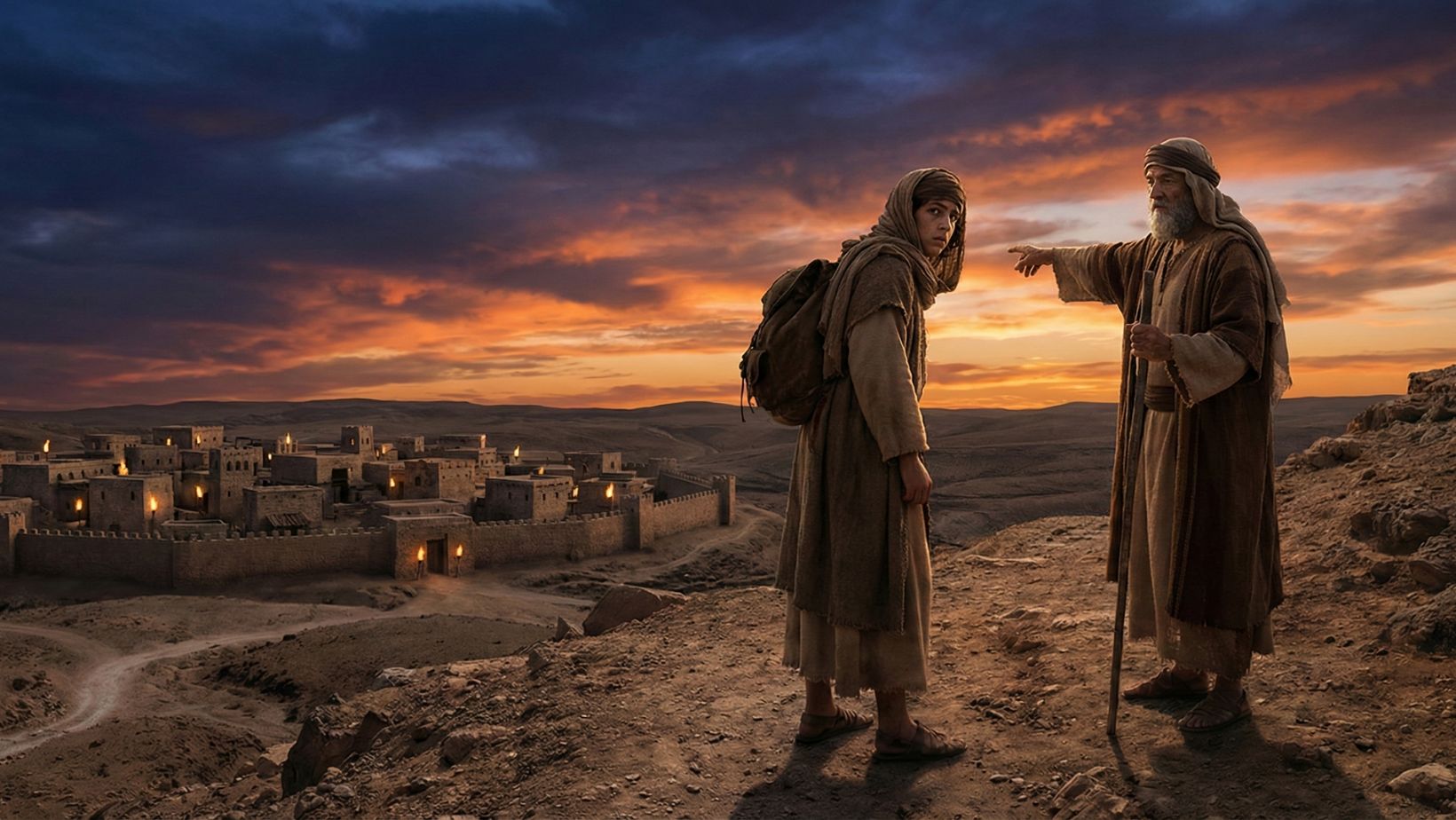
We often mistake the frustration of a closed door for the failure of a mission. We set out with a specific goal in mind—to get the job, to fix the relationship, to find the solution—and when we come up empty-handed, we feel defeated. We view “lostness” as an error in the script of our lives. We hike through the hills of effort and wander through the valleys of worry, only to end up exactly where we started: empty-handed. But what if the thing you are chasing is just an excuse to get you to the place where God is waiting? What if the frustration is not a dead end, but a divine setup? In 1 Samuel 9, we meet a young man named Saul. He thinks he is on a mission to find livestock, but God is on a mission to find a King.
Main Scripture:
1 Samuel 9:3-10 (NIV) “Now the donkeys belonging to Saul’s father Kish were lost, and Kish said to his son Saul, ‘Take one of the servants with you and go and look for the donkeys.’ So he passed through the hill country of Ephraim and through the area around Shalisha, but they did not find them. They went on into the district of Shaalim, but the donkeys were not there. Then he passed through the territory of Benjamin, but they did not find them…”
Quick Insights
- God often uses a frustrated process to lead us to a fulfilled promise.
- We look for the temporary (donkeys), while God is preparing the eternal (destiny).
- Running out of resources is often the prerequisite for running into God’s provision.
- Your disappointment is God’s appointment in disguise.
- The person you are with in the wilderness matters; choose companions of faith.
- God’s geography is perfect; even when you feel lost, you are exactly where He needs you.
Illustration Consider a tapestry. If you look at the back of a beautiful tapestry, all you see is chaos. You see knots, frayed edges, and threads that seem to stop abruptly. It looks like a mistake. It looks like a mess. But if you walk around to the front, those same chaotic threads form a magnificent picture. Saul’s journey looked like the back of the tapestry: wandering, sweating, and failing. But God was weaving the front of the tapestry: the coronation of the first King of Israel. We judge our lives by the knots; God judges them by the design.
1. The Burden of the Lost
The story begins with a deficit. Something valuable is missing. Kish, Saul’s father, loses his donkeys—the tractors and trucks of the ancient world. This was a significant economic blow. Saul is sent on a task that is grueling, unglamorous, and frustrating. Notice the geography of their failure. The text lists place after place: Ephraim, Shalisha, Shaalim, Benjamin. This wasn’t a quick trip; it was a marathon of disappointment. We all have “lost donkeys.” It is the career path that dried up. The medical diagnosis that makes no sense. The child who has wandered from the faith. We expend our energy hiking through the “hill country,” doing everything right, yet finding nothing.
📖 1 Samuel 9:4b “…but they did not find them.” Just because you haven’t found what you are looking for doesn’t mean you aren’t on the right path. God often hides the donkeys to reveal the destiny.
2. The Wall of Weariness
There comes a breaking point in every season of trusting. Saul hits his limit.
📖 1 Samuel 9:5 “When they reached the district of Zuph, Saul said to the servant who was with him, ‘Come, let’s go back, or my father will stop thinking about the donkeys and start worrying about us.’” Saul is sensible. He is logical. He realizes the mission has failed, and he wants to cut his losses. This is where most of us stop. We look at the data, we look at the clock, and we say, “It’s over. God isn’t in this.” But notice the location: Zuph. In Hebrew, Zuph means “honeycomb” or “overflow.” Saul wanted to quit right on the edge of the overflow. The temptation to give up is always strongest when you are nearest to the breakthrough. Trust requires pushing past the logic of “going back.”
3. The Echo of Hope
When Saul runs out of faith, he borrows the faith of his servant. This is a crucial lesson in trust: who is walking with you in the waiting?
📖 1 Samuel 9:6 “But the servant said to him, ‘Look, in this town there is a man of God; he is highly respected, and everything he says comes true. Let’s go there now. Perhaps he will tell us what way to take.’” The servant didn’t see a dead end; he saw a spiritual opportunity. He shifted the focus from the problem (the donkeys) to the source of wisdom (the Man of God). When you are ready to quit, you need a friend who says, “Look.” You need someone who points you to God when you are only looking at your failure. Trust is not a solo sport; sometimes we need to be carried by the faith of another.
4. The Hidden Appointment
Saul raises a practical objection: “If we go, what can we give the man? The food is gone.” (v. 7). He is worried about resources. He thinks he needs to pay for God’s direction. But the servant has a “quarter of a shekel of silver” (v. 8). It wasn’t much, but it was enough. Here is the climax of the trust lesson: They decide to go up to the city.
📖 1 Samuel 9:10 “‘Good,’ Saul said to his servant. ‘Come, let’s go.’ So they set out for the town where the man of God was.” If they had found the donkeys in the first town, they would have gone home happy, but Saul would have remained a farmer. Because they failed to find the donkeys, they kept walking until they found Samuel. And Samuel was holding the anointing oil. The failure was necessary for the future. The frustration was the fuel for the encounter. You are trusting God for a solution to your problem, but God is using the problem to bring you into His presence.
The Anchor in the Pause Quote: “God is too wise to be mistaken and too good to be unkind. When you cannot trace His hand, you can always trust His heart.” — Charles Spurgeon
Theological Point: The doctrine of Providence teaches us that God governs all events—even lost livestock and frustrating delays—to accomplish His sovereign purpose. There are no accidents in the life of a believer, only appointments.
Prayer Guide: Lord, I confess that I am frustrated by the things I cannot find and the doors that will not open. I am tired of looking for “donkeys.” But today, I choose to trust that this detour is leading me to You. Give me the eyes to see Your hand in my failure and the courage to take one more step toward Your presence. Amen.







Leave a Reply