
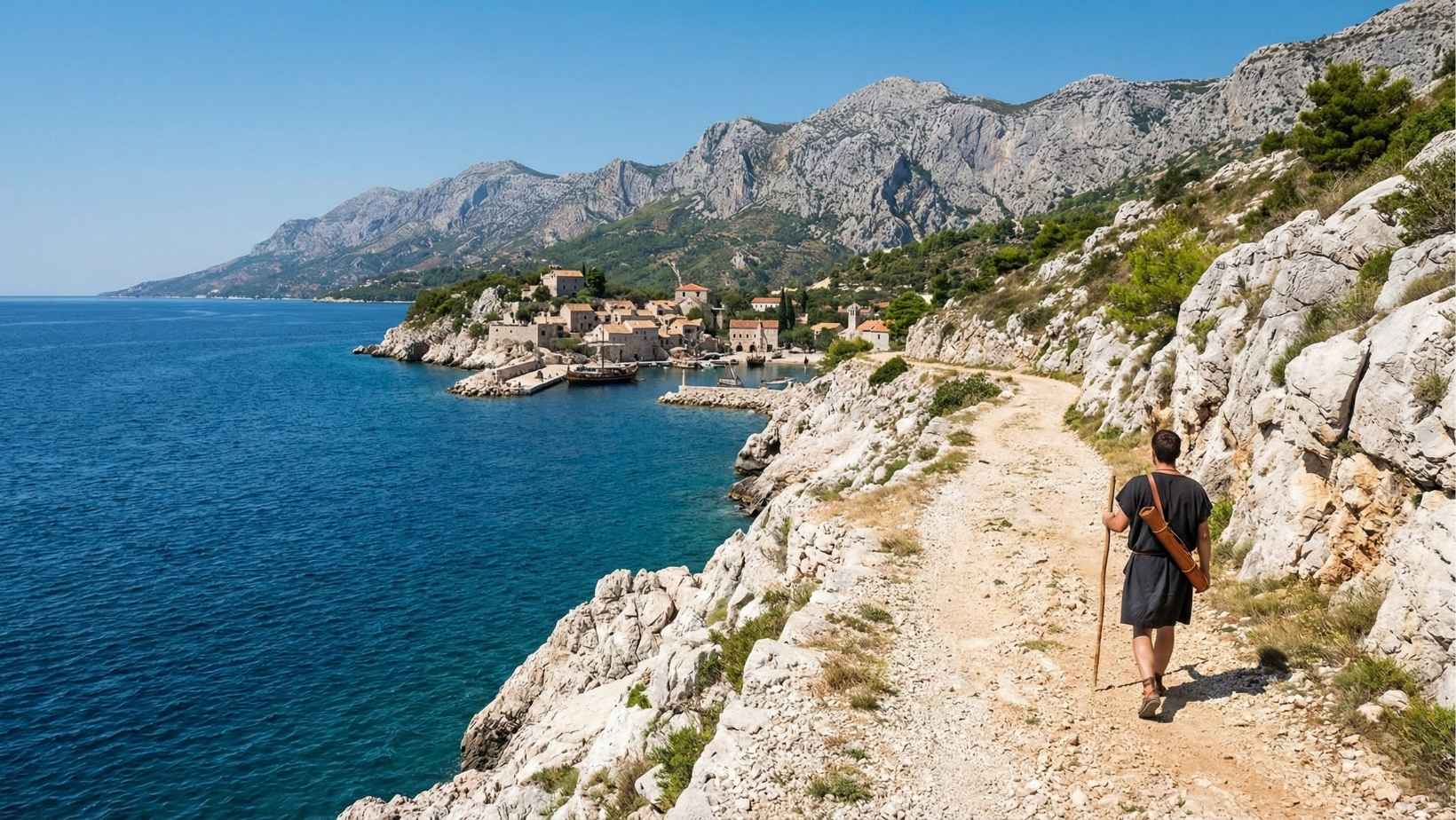
Dalmatia was a rugged, mountainous Roman province located along the eastern coast of the Adriatic Sea (part of modern-day Croatia, Bosnia and Herzegovina, and Montenegro). In the New Testament, it represents the expanding frontier of the early Church. It is specifically mentioned in the Apostle Paul’s final letter, indicating that the gospel had penetrated even into this notoriously difficult and warlike region. Its inclusion in the biblical record highlights the relentless push of the apostles to take the message of Christ to the “ends of the earth.”
Quick Facts
- Name: Dalmatia (derived from the name of an Illyrian tribe, the Dalmatae)
- Region: Part of the larger province of Illyricum
- Location: Eastern coast of the Adriatic Sea, north of Macedonia
- Biblical Reference: 2 Timothy 4:10
- Key Visitor: Titus (sent by Paul)
- Key Context: Paul’s second Roman imprisonment (approx. 67 AD)
- Reputation: Known for fierce warriors, piracy, and difficult terrain
- Modern Equivalent: Primarily Croatia (Dalmatian coast) and parts of Bosnia
Name Meaning
“Dalmatia” comes from the name of the Illyrian tribe, the Dalmatae. The etymology is believed to be connected to the Albanian word dele (sheep), suggesting a land of shepherds or “Sheep Land,” fitting for its mountainous, pastoral terrain.
Geography / Historical Context
Terrain: A long, narrow strip of coast backed by the Dinaric Alps. It was known for its limestone cliffs, many islands, and protected harbors, making it a haven for sailors—and pirates.
Roman Control: The Romans fought a series of brutal wars (the Illyrian Wars) to subdue the region. By the 1st century AD, it was a settled province, though still considered “wild” compared to Greece or Italy.
Strategic Importance: It sat directly across the Adriatic from Italy. The Roman road Via Egnatia ran south of it, but Dalmatia itself was a crucial link between the western and eastern halves of the Empire.
Biblical Role / Significance
The Mission Field: In 2 Timothy 4:10, Paul writes: “For Demas, because he loved this world, has deserted me and has gone to Thessalonica. Crescens has gone to Galatia, and Titus to Dalmatia.”
The Apostolic Strategy: The mention of Dalmatia is significant because it suggests that even as Paul was facing execution in Rome, he was coordinating a strategic missionary expansion. Sending a high-profile leader like Titus implies that Dalmatia was a priority target for evangelism, not just a backwater.
Paul’s Previous Ministry: In Romans 15:19, Paul claims to have preached the gospel “from Jerusalem all the way around to Illyricum.” Since Dalmatia is the southern part of Illyricum, Paul may have visited the borders of this region earlier in his ministry, with Titus later sent to solidify the work.
Key Relationships
Titus: The primary apostolic figure associated with the region. His mission there would have required the same toughness and organizational skill he displayed in Crete.
Paul: The strategist who likely directed the mission to Dalmatia, viewing it as a necessary link in filling the map with the Gospel.
The Illyrians: The native inhabitants, known for their distinct language and warrior culture, were the recipients of this mission.
Legacy & Impact
Christianity in the Balkans: Titus’s mission planted the seeds of the faith in the Slavic/Balkan region. The area has a rich, albeit turbulent, Christian history that continues to this day.
Jerome: Decades later, the famous church father Jerome (translator of the Latin Vulgate Bible) was born in Stridon, a town on the border of Dalmatia and Pannonia, showing the eventual fruit of these early missions.
Diocletian: Ironically, the Roman Emperor Diocletian (a major persecutor of Christians) was also from Dalmatia and retired to his massive palace there (in modern Split, Croatia). The survival of the church in his own backyard is a testament to the resilience of the faith planted by Titus.
Symbolism / Typology
The Hard Ground: Dalmatia represents the “hard ground” of ministry—regions that are culturally resistant or geographically difficult, yet are not abandoned by God’s workers.
Endurance: The mission to Dalmatia, launched during Paul’s final days, symbolizes the Church’s endurance; even when leaders fall (like Paul), the mission expands to new territories.







Leave a Reply