
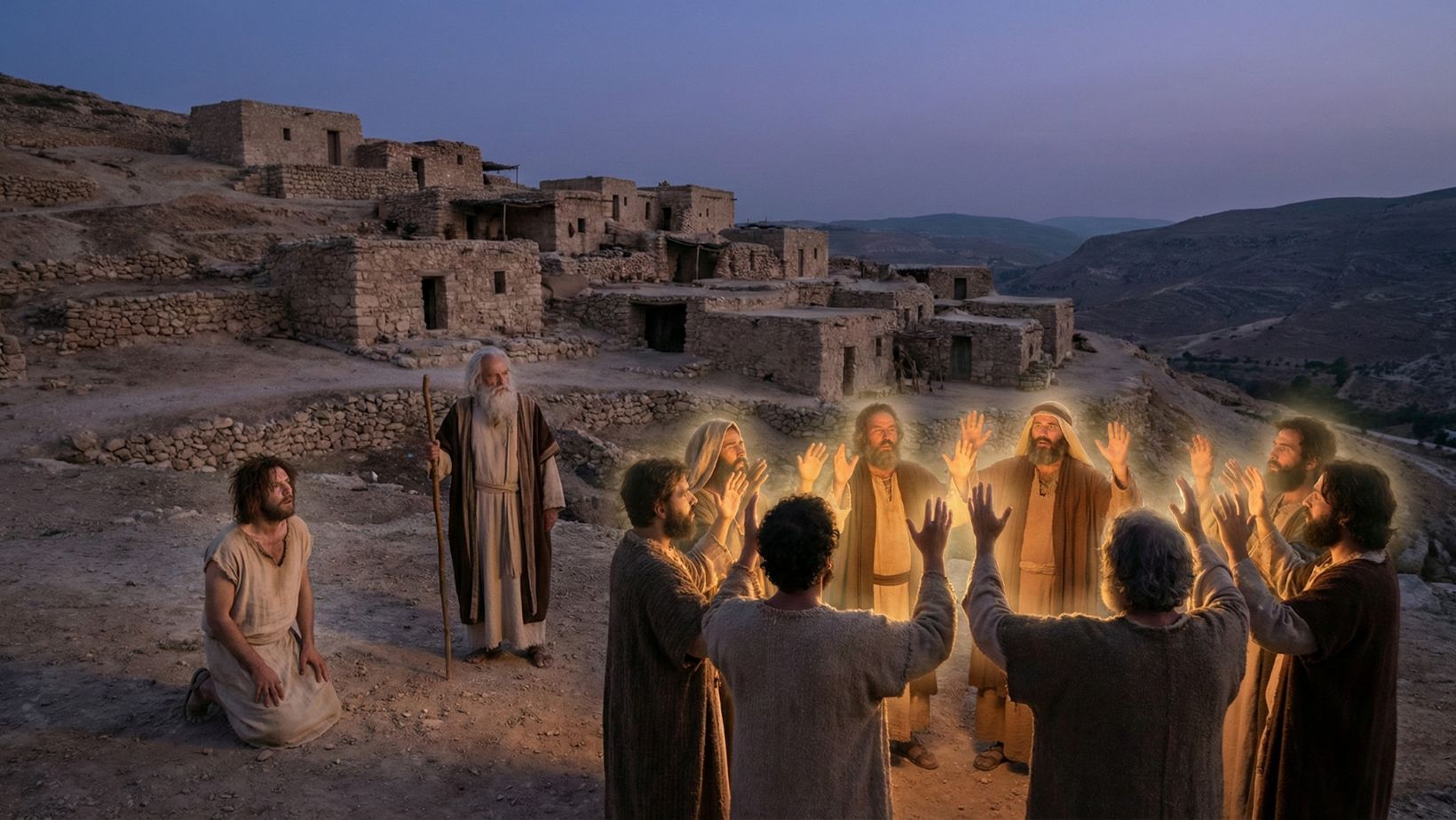
Naioth was a significant biblical location associated with the prophet Samuel and a unique manifestation of the Holy Spirit. Located in Ramah, Naioth served as a prophetic dwelling place or “school of prophets” where Samuel mentored a community of seers. It is most famously known as the sanctuary where David fled for refuge from King Saul. It was here that the Spirit of God powerfully intervened, causing even Saul and his aggressive messengers to fall into a prophetic trance, thereby protecting David. It represents a center of spiritual instruction, divine protection, and the overwhelming presence of God.
Quick Facts
- Name: Naioth (Hebrew: Nâyôth, likely meaning “Dwellings,” “Habitations,” or “Dormitories”)
- Location: Within Ramah (Samuel’s hometown)
- Region: Territory of Benjamin, hill country of Ephraim
- Associated Prophet: Samuel (leader of the prophets there)
- Key Visitor: David (fleeing for safety)
- Antagonist: King Saul (pursuing David)
- Scripture Reference: 1 Samuel 19:18–24; 20:1
- Function: School of the prophets; place of refuge; center of worship
- Key Event: Saul and his messengers are overcome by the Spirit of God and prophesy
Name Meaning
“Naioth” is believed to mean “dwellings,” “habitations,” or “abodes.” The plural form suggests a cluster of buildings or a compound. Most scholars interpret this as the specific dormitories or residential quarters for the school of prophets established by Samuel within the town of Ramah. It implies a place of community, study, and spiritual residence.
Location / Geographical Context
Region: Ramah, in the hill country of Ephraim (within the tribal territory of Benjamin).
Significance: Ramah was Samuel’s birthplace, home, and eventual burial place. Naioth was likely a specific district or compound within Ramah dedicated to housing the company of prophets.
Atmosphere: A place of intense spiritual activity, removed from the political chaos of Saul’s court, serving as a sanctuary for those seeking Yahweh.
Biblical Era / Context
Time: Late in the reign of King Saul (~11th century BCE).
Political Context: The relationship between King Saul and David had fractured completely. Saul was actively seeking to kill David out of jealousy and fear.
Spiritual Context: While the kingdom was suffering under Saul’s erratic leadership, Samuel was cultivating a faithful remnant of prophets who worshiped Yahweh, creating a spiritual counter-culture at Naioth.
Major Roles / Identity
School of the Prophets: A center for theological training and spiritual formation under Samuel’s tutelage.
City of Refuge: A physical sanctuary where David sought protection from Saul.
Zone of Divine Intervention: A location where the presence of God was so tangible that it neutralized violent intent through prophetic ecstasy.
Key Events
David’s Flight: David escapes Saul’s assassination attempts and flees to Samuel at Ramah; they dwell together in Naioth (1 Samuel 19:18).
The Messengers’ Prophecy: Saul sends three successive groups of messengers to capture David. Upon entering Naioth and seeing the prophets prophesying with Samuel standing over them, the Spirit of God comes upon the messengers, and they too begin to prophesy (1 Samuel 19:20–21).
Saul’s Prophecy: Finally, Saul goes himself. The Spirit of God comes upon him even before he arrives. He strips off his royal robes and prophesies before Samuel all day and night, lying on the ground (1 Samuel 19:22–24).
David’s Escape: The spiritual incapacitation of Saul gives David the opportunity to flee again, moving on from Naioth to Nob (1 Samuel 20:1).
Major Relationships
Samuel: The spiritual father and leader of Naioth; he stood as head over the company of prophets.
David: The refugee seeking wisdom and safety; Naioth provided him a brief respite and spiritual strengthening before his long exile.
The Company of Prophets: A community of seers living and worshipping together, creating an atmosphere of praise that affected everyone who entered.
King Saul: The intruder whose hostile intent was overpowered by the Holy Spirit.
Notable Passages
1 Samuel 19:19–20: “Word was soon brought to Saul: ‘David is in Naioth at Ramah.’ At this, he sent men to capture him. But when they saw a man prophesying… the Spirit of God came on Saul’s men, and they also prophesied.”
1 Samuel 19:23–24: “So Saul went to Naioth at Ramah. But the Spirit of God came even on him… He stripped off his garments… and lay that way all that day and all that night. This is why people say, ‘Is Saul also among the prophets?’”
Significance & Theology
The Power of the Spirit: Naioth demonstrates that God’s Spirit is sovereign and can overpower human will, turning would-be captors into unwilling worshippers.
Divine Protection: God protected David not through weapons, walls, or armies, but through a spiritual atmosphere that disarmed his enemies.
Corporate Worship: The “company of prophets” suggests that communal worship and prophetic environments generate a spiritual reality that impacts the physical world.
Prophetic Training: Naioth is the first biblical indication of a formal “school” for prophets, a tradition that likely continued with Elijah and Elisha.
Symbolism / Typology
Naioth as Sanctuary: Represents the Church or the believer’s “secret place”—a refuge where the world’s hostility cannot penetrate and where God’s presence is the ultimate defense.
The Stripping of Saul: Symbolizes the removal of Saul’s royal authority and dignity before God; he lay humble and naked (without royal robes) before the true King.
The Overwhelming Spirit: Foreshadows the New Testament outpouring of the Spirit, where God’s presence captures hearts and transforms speech.







Leave a Reply