
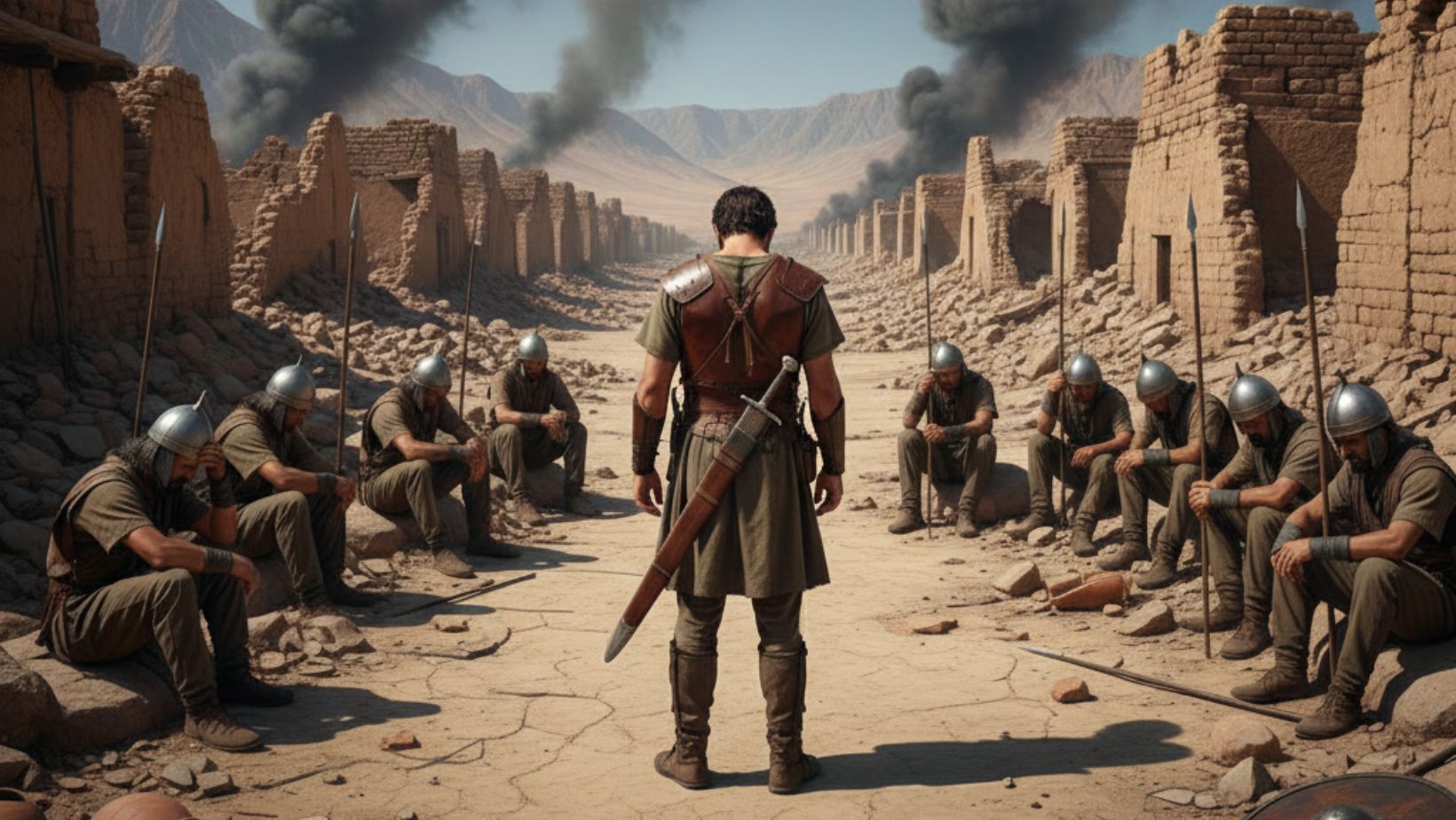
Ziklag is a significant city in the narrative of King David, serving as his refuge, military headquarters, and the setting for a defining test of his leadership. Originally a town allotted to the tribe of Simeon but controlled by the Philistines, it was gifted to David by the Philistine King Achish of Gath. Ziklag represents a transitional period in David’s life—wandering in the wilderness to avoid King Saul, yet poised on the brink of kingship. It is most famous for the tragic raid by the Amalekites and David’s subsequent miraculous recovery of “all that was lost.”
Quick Facts
- Name: Ziklag
- Type: City / Fortress
- Region: The Negev (Southern Judah)
- Original Allotment: Tribe of Simeon (within Judah)
- Rulers: Philistine Lords (Gath), then David, then Kings of Judah
- Key Resident: David (during his exile from Saul)
- Key Event: The Amalekite raid and burning of the city (1 Samuel 30)
- Books: Joshua, 1 Samuel, 2 Samuel, 1 Chronicles, Nehemiah
Name Meaning
Etymology: The meaning of “Ziklag” is uncertain and likely of non-Semitic (possibly Philistine/Aegean) origin. Some scholars suggest it relates to “winding” or “pressed down.”
Modern Identification: Its exact location is debated by archaeologists. Leading candidates include Tell es-Seba (near Beersheba), Tell el-Khuweilfeh, or most recently, Khirbet a-Ra’i.
Location / Geography
The Negev: Located in the arid southern region of Canaan. It sat on the borderlands between the Philistine coastal plain and the Judean hill country.
Strategic Importance: Its position allowed David to buffer the southern flank of Judah against desert raiders (like the Amalekites) while pretending to serve the Philistines.
Biblical Era / Context
Time: ~1012–1010 BCE (The end of King Saul’s reign).
Political Context: David was a fugitive. Realizing Saul would never stop hunting him in Israel, David defected to Philistia. He convinced Achish, King of Gath, to give him a country town to live in to avoid scrutiny in the royal city.
The “Ziklag Period”: This marks the lowest point of David’s exile but also the formation of his professional army. It was here that the “Mighty Men” (1 Chronicles 12) defected from Saul to join David.
Major Roles / Identity
The City of Refuge: It was the only place David could live safely with his 600 men and their families away from Saul’s reach.
The Double-Agent Base: From Ziklag, David raided Israel’s enemies (Geshurites, Girzites, Amalekites) while telling King Achish he was raiding Judah, thus gaining the Philistines’ trust while actually protecting Israel.
The Crucible of Leadership: Ziklag is where David faced mutiny. When the city was burned and families kidnapped, his own men threatened to stone him. His response—”David strengthened himself in the Lord”—is a pivotal moment in his spiritual biography.
Main Life Events (History of the City)
Allotment: Joshua 19:5 lists Ziklag as part of the inheritance of the Tribe of Simeon.
Philistine Control: Despite the allotment, the Israelites failed to hold it, and it remained under Philistine control until David’s time.
Gift to David: Achish granted Ziklag to David (1 Samuel 27:6). The text notes, “therefore Ziklag belongs to the kings of Judah to this day.”
The Amalekite Raid: While David and his men marched north with the Philistines (and were sent back), the Amalekites raided the defenseless Ziklag, burned it with fire, and took all women and children captive (1 Samuel 30).
The Recovery: David pursued the raiders, defeated them, and recovered everyone and everything, plus a massive spoil which he distributed to the elders of Judah.
News of Saul’s Death: An Amalekite arrived in Ziklag to tell David that Saul and Jonathan were dead (2 Samuel 1). David executed the messenger and mourned.
Departure: From Ziklag, David moved to Hebron to be anointed King of Judah (2 Samuel 2).
Key Character Traits (Of the Narrative)
Desolation: The sight of the burning city represents total loss and the consequences of leaving the homefront unguarded.
Resilience: Ziklag became the stage for a “comeback” victory.
Generosity: After the victory at Ziklag, David established a statute that “he who goes down to battle and he who stays by the supplies shall share alike,” and he sent spoils to the towns of Judah to build political alliances.
Notable Passages
1 Samuel 27:6: “So on that day Achish gave him Ziklag. Therefore Ziklag has belonged to the kings of Judah to this day.”
1 Samuel 30:1–3: “David and his men reached Ziklag on the third day. Now the Amalekites had raided the Negev and Ziklag. They had attacked Ziklag and burned it…”
1 Samuel 30:6: “David was greatly distressed because the men were talking of stoning him… But David strengthened himself in the LORD his God.”
1 Samuel 30:18: “David recovered everything the Amalekites had taken, including his two wives. Nothing was missing…”
Legacy & Impact
Political Launchpad: Ziklag was the final stepping stone before David became King. It was where he solidified his military strength and his political ties with the elders of Judah (through gifts of spoil).
Spiritual Metaphor: In Christian preaching, “Ziklag” often symbolizes a place of crisis where the enemy attacks your family or purpose, and the necessity of “encouraging yourself in the Lord” to recover what was stolen.
The Statute of Ziklag: The military rule regarding the equal sharing of spoils (1 Sam 30:24) became a standing ordinance in Israel.
Symbolism / Typology
Refuge: Symbolizes God’s provision in enemy territory.
The Burning: Represents the “dark night of the soul” or the trial by fire before promotion.
Restoration: The recovery of “all” symbolizes God’s power to redeem lost time and possessions.







Leave a Reply